
DanGer Shock update: Impella CP heart pump linked to long-term survival benefit
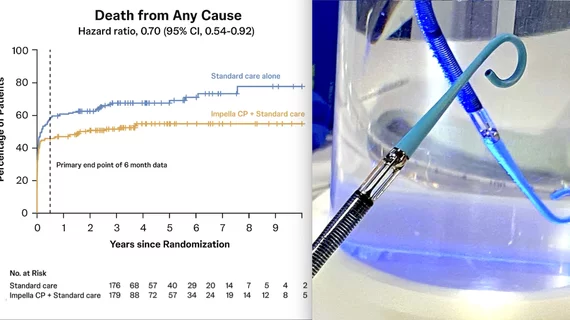
Treatment with the Impella CP percutaneous heart pump is associated with a long-term survival benefit after up to 10 years, according to new DanGer Shock trial data presented at ESC Congress 2025, the annual meeting of the European Society of Cardiology. DanGer Shock, ongoing since 2013, is the largest randomized controlled trial to look at the best way to treat cardiogenic shock, which has a high mortality rate.
According to these new findings, which were simultaneously published in the New England Journal of Medicine, treating patients who have had a heart attack with cardiogenic shock leads to an absolute mortality reduction of 16.3%.[1] When compared to the control arm at 10 years, Impella CP patients gained an average of 600 additional days alive.
"The long-term data from the DanGer Shock randomized controlled trial validates the original findings and confirms that the survival benefit of Impella CP is durable and increases year-over-year," Navin Kapur, MD, chief medical and scientific officer for heart recovery with Johnson & Johnson MedTech, said in a statement.
The initial six-month data from this trial had found that routine use of Impella CP reduced a patient's absolute risk of mortality by 12.7%. This update further boosts the evidence for the use of Impella in cardiogenic shock due to ST-elevation myocardial infarction (STEMI). The American College of Cardiology (ACC) and American Heart Association (AHA) upgraded the use of Impella to a class 2a recommendation for cardiogenic shock patients based on DanGer Shock data first presented at ACC.24.[2]
The data were presented at ESC by the trial's principal investigator, Jacob Møller, MD, PhD, DMSc, with Copenhagen University Hospital in Denmark. He outlined the key takeaway that Impella had a lasting effect on patients. However, he also noted that using the device on very sick patients included in the trial also carried a high rate of complications.
The trial enrolled 360 participants at 14 sites in Denmark, Germany and the United Kingdom between 2013 and 2023
Finding new ways to reduce cardiogenic shock mortality has been a priority for years, with a death rate of over 50%. About 750,000 people in the United States experience a STEMI each year with an incidence rate of cardiogenic shock up to 10%. Cardiogenic shock is the leading cause of in-hospital mortality in patients with STEMI.

Dave Fornell has covered healthcare for more than 17 years, with a focus in cardiology and radiology. Fornell is a 5-time winner of a Jesse H. Neal Award, the most prestigious editorial honors in the field of specialized journalism. The wins included best technical content, best use of social media and best COVID-19 coverage. Fornell was also a three-time Neal finalist for best range of work by a single author. He produces more than 100 editorial videos each year, most of them interviews with key opinion leaders in medicine. He also writes technical articles, covers key trends, conducts video hospital site visits, and is very involved with social media. E-mail: [email protected]