
New technique could help when cardiologists repair 2 leaky heart valves at once
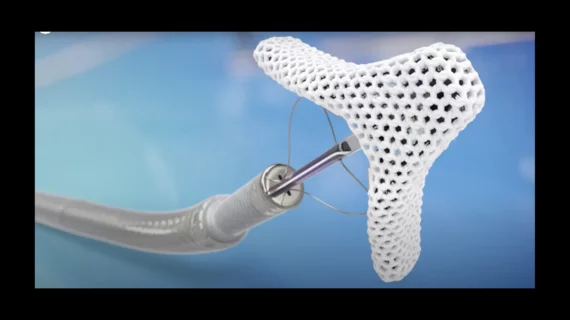
Using a single guide catheter to combine two different transcatheter edge-to-edge repair (TEER) procedures appears to be both safe and effective, according to new data published in Circulation: Cardiovascular Interventions.[1]
Researchers explored the potential of performing mitral valve TEER (M-TEER) with Abbott’s MitraClip device and tricuspid valve TEER (T-TEER) with Abbott’s TriClip device—all through the use of a single TriClip steerable guide catheter (SGC). Typically, the group explained, clinicians would use a MitraClip SGC for the M-TEER procedure and then replace it with a TriClip SGS for the T-TEER procedure.
“This study evaluates a novel approach—using a single TriClip SGC for combined MitraClip and TriClip TEER (STriC-TEER),” wrote first author Chak-yu So Kent, MBChB, a researcher with the Chinese University of Hong Kong, and colleagues. “During StriC-TEER, the TriClip SGC was strategically inserted into the left atrium. The MitraClip Clip Delivery System was then inserted in a standard blue-to-blue keyed manner. After M-TEER, the Clip Delivery System was withdrawn, the SGC retracted into the right atrium, and the TriClip Clip Delivery System was inserted into the same SGC to complete T-TEER.”
This analysis focused on 40 patients with a mean age of 76.8 years old. Patients were treated in Hong Kong, Taiwan, Thailand or Australia from 2023 to 2025. While 70% of patients were men, 97.1% presented with atrial fibrillation. Four patients also underwent left atrial appendage occlusion at the same time.

Single TriClip Steerable Guide for Combined MitraClip and TriClip Transcatheter Edge-to-Edge Repair (STriC-TEER). Image courtesy of Circulation: Cardiovascular Interventions & So Kent et al.
The median number of MitraClip and TriClip devices required for each procedure were one and two, respectively. In addition, the mean device times were 47 minutes for M-TEER and 53.5 minutes for T-TEER, respectively.
Overall, the device success rates were 95% for M-TEER and 87.5% for T-TEER. Compared to procedures performed at the same time that did not use a single SGS, there were no significant differences in success rate or procedure length.
“This represents the largest international series of STriC-TEER,” the authors wrote. “The procedure demonstrated high success rates with this novel approach, even in the early experience of T-TEER, following their initial 10 cases at each site. The use of a single TriClip SGC did not impair the steering of the M-TEER, as evidenced by comparable success rates and device times to standalone M-TEER. Additionally, the septal/lateral knob of the TriClip SGC provides an extra maneuver to gain or shed height when needed, although this was only used in 5% of cases in our cohort.”
The group also noted that this technique could potentially reduce healthcare costs by requiring fewer guide catheters. For now, however, they concluded that additional research is still required.
“Further bench testing is needed to understand knob functions,” the authors wrote. “Prospective randomized trials are required to compare STriC-TEER with conventional methods and assess its impact on efficiency, outcomes, and cost-effectiveness.”
Click here for the full study.

Michael has more than 19 years of experience as a professional writer and editor. He has written at length about cardiology, radiology, artificial intelligence and other key healthcare topics.