
PVL after TTVR linked to much lower survival rate, fewer clinical benefits
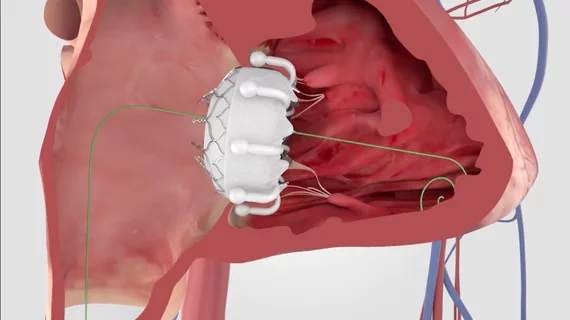
Heart patients who develop paravalvular leak (PVL) after transcatheter tricuspid valve replacement (TTVR) experience significantly worse clinical outcomes, according to new findings published in JACC: Cardiovascular Interventions.[1]
“PVL has been extensively studied in the context of transcatheter aortic and mitral valve replacement, in which its presence has been linked to adverse outcomes, including heart failure (HF) symptoms, hemolysis, and increased mortality,” wrote first author Andrea Scotti, MD, an interventional cardiologist with Montefiore Medical Center, and colleagues. “In the tricuspid position, the implications of PVL remain less clearly defined, given the unique anatomical challenges of the tricuspid annulus, frequent annular dilation, and lower pressure right-sided circulation.”
Scotti et al. explored real-world data from the TRIPLACE registry to learn more about this topic. Their analysis included nearly 400 TTVR patients. The mean age was 76.6 years, and 65.2% of patients were women. Patients were treated with a variety of TTVR devices. The most commonly implanted device was the U.S. Food and Drug Administration-approved Evoque system from Edwards Lifesciences.
Overall, moderate or greater PVL was identified in 6.1% of patients. Among those patients, 71% had moderate PVL and 29% had severe PVL.
Mild PVL, meanwhile, was identified in 22.3% of patients. The remaining patients had no or trace PVL.
The authors found that moderate or greater PVL was associated with a much higher rate of all-cause mortality after one year (39.7%) than mild PVL (12.6%) and no or trace PVL (10.5%). A multivariable Cox regression analysis confirmed that moderate or greater PVL was independently associated with an increased mortality risk after one year.
“The clinical consequences of moderate or greater PVL in patients in the present analysis were profound,” the authors wrote.
The one-year rates of cardiac mortality and heart failure hospitalization were also higher for patients with moderate or greater PVL following TTVR. In addition, while treatment did improve reported symptoms for all patients, clinical improvement was still “significantly compromised” in patients with moderate or greater PVL.
“This suggests that residual PVL may limit the hemodynamic improvements typically observed after TTVR, perpetuating right atrium (RA) volume overload and venous congestion,” the authors wrote.
Finally, a large RA volume, device malposition and type IV valve morphology were all independently linked to an increased risk of moderate or severe PVL after TTVR. The data on valve malposition were especially striking; the one-year rates were 20.8% for patients with moderate or greater PVL, 1.1% for patients with mild PVL and 1.4% for patients with no or trace PVL.
“Malposition can impair circumferential sealing, create asymmetrical anchoring or leave portions of the annulus uncovered, thereby facilitating PVL,” the authors explained. “This finding underscores the critical importance of meticulous preprocedural imaging, device sizing, learning curve and deployment techniques to ensure optimal alignment and annular coverage.”
The group emphasized that the continued development of new and improved TTVR devices “will be essential to reduce the risks of PVL and optimize clinical outcomes following orthotopic TTVR.”
Click here to read the full study in JACC: Cardiovascular Interventions, an American College of Cardiology journal.

Michael has more than 19 years of experience as a professional writer and editor. He has written at length about cardiology, radiology, artificial intelligence and other key healthcare topics.