
Why patient selection is so important when performing M-TEER
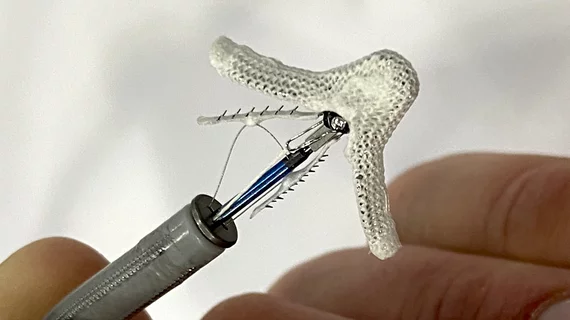
Reinterventions after failed mitral transcatheter edge-to-edge repair (M-TEER) are associated with an increased risk of poor patient outcomes, according to new data published in JACC: Cardiovascular Interventions.[1] The study’s authors emphasized the importance of identifying the best treatment approach when patients present with degenerative mitral regurgitation.
“The use of M-TEER has surpassed that of surgical repair among Medicare beneficiaries in the United States, and the procedure has expanded to lower risk patients,” wrote corresponding author Derrick Y. Tam MD, PhD, a cardiac surgeon with Sunnybrook Health Sciences Centre in Toronto, and colleagues. “Thus, a better understanding of mitral reintervention after failed M-TEER and its impact on long-term outcomes is needed.”
Tam et al. explored U.S. Centers for Medicaid and Medicare Services data on more than 13,000 patients who underwent isolated M-TEER from 2013 to 2019. The overall reintervention rate was 6%. Isolated M-TEER grew significantly more common over the course of the study, going from just 177 procedures in 2013 to 4,617 in 2019. Reinterventions became more common as well, increasing from just 8 in 2013 to 260 in 2019.
Of the patients who required a reintervention, 51% underwent repeat M-TEER after a median of 196 days, 374 underwent surgical replacement after a median of 141 days and 2% underwent surgical repair after a median of 92 days. After three years, the patients treated with a surgical reintervention had a survival rate of 61.3%. Patients treated with repeat M-TEER, meanwhile, had a survival rate of 44.8%.
Patients requiring a reintervention tended to be slightly younger and were less likely to have significant comorbidities. These patients were also linked to an increased risk of all-cause mortality or a heart failure-related hospital readmission.
“Careful patient selection and ensuring procedural success are critical to minimizing the need for reintervention and improving long-term outcomes,” the authors wrote.
Click here for the full research letter.

Michael has more than 19 years of experience as a professional writer and editor. He has written at length about cardiology, radiology, artificial intelligence and other key healthcare topics.