
FDA approves autoinjector for third-generation cholesterol drug
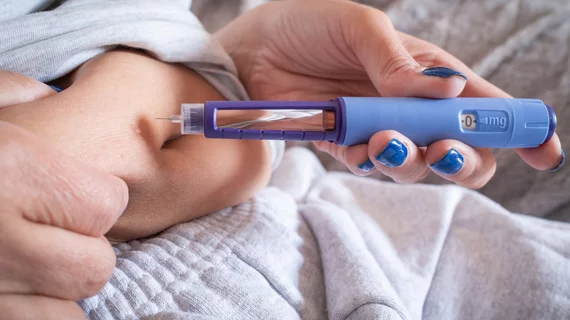
The U.S. Food and Drug Administration (FDA) has approved a new autoinjector for lerodalcibep-liga, a third-generation PCSK9 inhibitor sold by Cincinnati-based LIB Therapeutics under the brand name Lerochol.
Lerochol/lerodalcibep-liga is used as an adjunct to diet and exercise to reduce LDL-C in adult patients with hypercholesterolemia, including heterozygous familial hypercholesterolemia. This newly approved autoinjector was designed to deliver self-administered subcutaneous injections once per month. The drug can be stored at room temperature for up to three months, helping it stand out compared to other PCSK9 inhibitors on the market.
The FDA also approved updated labeling for Lerochol that emphasizes the fact that taking PCSK9 inhibitors in addition to statin therapy has been shown to help patients reduce their long-term risk of major adverse cardiovascular events.

Image courtesy of LIB Therapeutics. This is a syringe of Lerochol (lerodalcibep-liga), not the newly approved autoinjector.
“Numerous clinical trials over nearly 40 years have repeatedly established that lowering LDL cholesterol with statins and, more recently, with PCSK9 inhibitors when added to statins, further lowers the risk of major cardiovascular events, and we’re pleased that FDA has added labeling across the PCSK9 class converging around that body of evidence,” Evan Stein, MD, PhD, founder, CEO and chief scientific officer of LIB Therapeutics, said in a prepared statement. “These studies have resulted in worldwide consensus and alignment of guidelines on new lower targets, and greater additional reductions in LDL-C, for the millions of patients who cannot reach guideline-directed LDL-C goals on maximally tolerated statin therapy. The challenge now, with this newest class of very effective LDL-C lowering agents, is how to make them simple and affordable enough for patients, who must maintain them for what is life-long treatment. Lerochol was designed with a patient perspective in mind to achieve exactly that: a robust and sustained LDL-C reduction from a single, small monthly injection that patients self-administer, with room temperature storage of up to 90 days and now in a modern autoinjector device.”
“My patients really appreciate having only once-monthly dosing with Lerochol, and now the availability of the autoinjector further simplifies this important treatment option,” added Dean J. Kereiakes, MD, chairman of The Christ Hospital Heart and Vascular Institute and a professor of medicine at the University of Cincinnati
LIB Therapeutics first launched Lerochol in the United States in May. This autoinjector, expected to be available by January 2027, is seen as a straightforward way to improve patient access and long-term adherence.

Michael has more than 19 years of experience as a professional writer and editor. He has written at length about cardiology, radiology, artificial intelligence and other key healthcare topics.