
FDA approves new drug for genetic heart disease
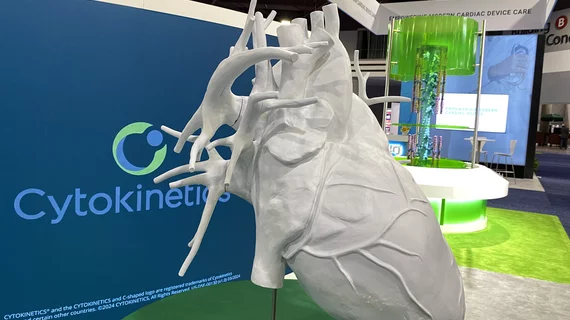
Cytokinetics, a San Francisco-based biopharmaceutical company, has secured U.S. Food and Drug Administration (FDA) approval for aficamten, the company’s new drug for the treatment of symptomatic obstructive hypertrophic cardiomyopathy (HCM).
Aficamten is an allosteric and reversible inhibitor of cardiac myosin motor activity. Cytokinetics will market and sell the drug under the brand name Myqorzo.
“This is a historic moment for our company and for the patients we serve, as we fulfill our promise to translate our science into medicines that may make a meaningful difference in patients’ lives,” Robert I. Blum, president and CEO of Cytokinetics, said in a statement. “Our first FDA approval stands as a testament to the strength of our science and the bold, trailblazing research that has defined Cytokinetics’ leadership in muscle biology.”
“HCM is a heart muscle disease associated with a significant symptom burden,” added Martin Maron, MD, director of the HCM center at Lahey Hospital and Medical Center. “This approval of a new drug, Myqorzo, represents a meaningful addition to the treatment options available for symptomatic obstructive HCM patients.”
Aficamten was approved in four different doses: 5 mg, 10 mg, 15 mg and 20 mg. The drug will include a boxed warning about a potential risk of heart failure; this is because it reduces a patient’s left ventricular ejection fraction, which is known to result in heart failure. Echocardiogram evaluations are required both before and after treatment to monitor the patient for signs of systolic dysfunction. Due to these risks, aficamten will only be made available through a restricted program.
The FDA’s decision was largely based on data from SEQUOIA-HCM, a clinical trial that explored data from 282 patients randomized to aficamten or a placebo. The mean age was 59.[1] years old. After 24 weeks, aficamten was associated with significant improvements in peak oxygen uptake. The analysis was published in The New England Journal of Medicine in 2024.[1]

Michael has more than 19 years of experience as a professional writer and editor. He has written at length about cardiology, radiology, artificial intelligence and other key healthcare topics.