
Abbott’s Navitor TAVR valve linked to positive real-world outcomes
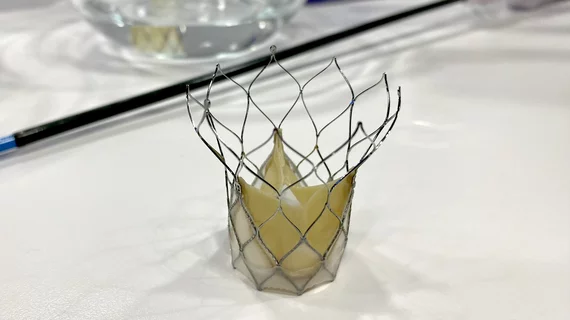
Abbott’s Navitor transcatheter aortic valve replacement (TAVR) system is associated with positive clinical and hemodynamic outcomes in a real-world setting, according to new data published in JACC: Cardiovascular Interventions.[1]
The intra-annular, self-expanding device first gained U.S. Food and Drug Administration (FDA) approval in 2023 for the treatment of high-risk heart patients with severe aortic stenosis. It includes a new-look fabric cuff sealing skirt and three radiopaque markers designed to improve valve visibility during implants.
“Since FDA approval, U.S. real-world experience with this transcatheter heart valve has not been published,” wrote first author Santiago Garcia, MD, interventional cardiologist and director of the structural heart program at The Christ Hospital in Cincinnati, Ohio, and colleagues. “Our study herein reports the early clinical and hemodynamic outcomes of this contemporary TAVR system.”
Garcia et al. explored data from nearly 3,000 TAVR patients who underwent treatment from January 2023 to December 2024. The mean age was 81.4 years old, 62.4% were women and the mean Society of Thoracic Surgeons score was 6.6%. All data came from the Society of Thoracic Surgeons/American College of Cardiology Transcatheter Valve Therapies (STS/ACC TVT) registry.
Overall, the technical success rate was 97.9%. The study’s primary outcome—a composite of all-cause mortality and stroke after 30 days—was reported in 5.2% of patients. The call-cause mortality rate was 2.7%. Major vascular complications, meanwhile, were reported in 1.8% of TAVR procedures.
The mean patient gradient improved from 39.9 mm Hg to 7.3 mm Hg after 30 days. The mean aortic valve area improved from 0.75 cm2 to 1.98 cm2. Moderate or greater paravalvular leak (PVL), always a troubling complication after TAVR, occurred in 1.8% of patients. In addition, significant improvements were seen in both Kansas City Cardiomyopathy Questionnaire Overall Summary scores and New York Heart Association classifications.
“Several characteristics of the intra-annular, self-expanding Navitor transcatheter heart valve are of clinical interest, including a shorter neoskirt height than predicate self-expanding valves to facilitate TAVR-in-TAVR, a curved aortic section of the frame to minimize risk of aortic injury, large cells throughout the stent to facilitate coronary access, the presence of an inner cuff and active outer cuff that optimize paravalvular sealing against PVL and a highly-flexible low-profile delivery system (FlexNav) with an integrated sheath that enables transfemoral access in small vessels,” the authors wrote. “These properties of the Navitor THV and delivery system likely account for the high procedural success rate and low rates of PVL and major vascular complications in our early experience in the United States.”
The group did emphasize that ongoing clinical trials are exploring this valve’s potential to treat low- and intermediate-risk patients. Additional studies will also evaluate long-term patient outcomes.
Click here for the full analysis.

Michael has more than 19 years of experience as a professional writer and editor. He has written at length about cardiology, radiology, artificial intelligence and other key healthcare topics.