
Cardiologists highlight early success with leaflet modification device for valve-in-valve TAVR
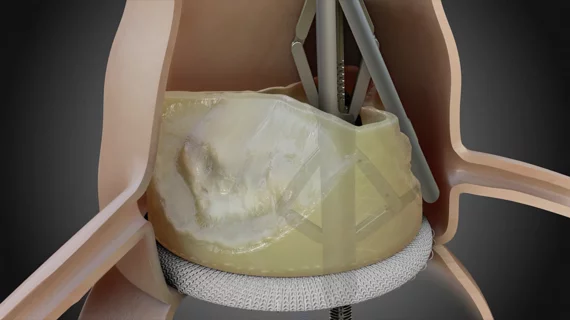
A new leaflet modification device built for valve-in-valve transcatheter aortic valve replacement (ViV TAVR) is associated with a high success rate, according to new real-world findings published in JACC: Cardiovascular Interventions.[1] Some serious complications did occur, however, highlighting the care clinicians must take when performing these procedures.
The ShortCut leaflet modification device from Pi-Cardia was cleared by the U.S. Food and Drug Administration (FDA) in September 2024. The authors of this latest study were among the first cardiologists in the United States to treat commercial patients with the device once that FDA clearance was finalized.
“As ViV TAVR expands into more complex anatomies and redo-TAVR becomes an increasingly important component of structural heart practice, strategies to reduce the risk of coronary compromise have assumed growing importance,” wrote first author Raj R. Makkar, MD, a veteran cardiologist with Cedars Sinai, and colleagues. “Preventive strategies include chimney stenting and BASILICA (Bioprosthetic or Native Aortic Scallop Intentional Laceration to Prevent Iatrogenic Coronary Artery Obstruction), but both rely on nondedicated devices and have limitations in complexity, durability, or scalability. These experiences validate leaflet modification as a mechanistic solution but highlight the need for a simpler, dedicated technology that can perform mechanical leaflet splitting reproducibly. ShortCut is the first dedicated transfemoral catheter designed to mechanically split bioprosthetic leaflets before ViV TAVR, preserving coronary inflow.”
Makkar et al. reviewed data from 150 patients treated with ViV TAVR from February to November 2025. The mean age was 78.9 years old and 60% of patients were women. While nearly two in three patients had originally undergone surgical aortic valve replacement, the remaining patients originally underwent TAVR.
CT imaging results found that 87.3% of patients faced an increased risk of coronary obstruction during treatment. After ViV-TAVR with the ShortCut device, however, coronary obstruction occurred in 2% of patients. The rate of conversion to surgery, meanwhile, was 1.3%.
“Taken together, these findings suggest that dedicated mechanical leaflet modification in a contemporary U.S. real-world practice is feasible and facilitates ViV TAVR in a cohort that is at high risk of coronary obstruction,” the group wrote.
All-cause mortality was reported in 2% of patients. Two deaths were from left ventricular perforation and another occurred after the patient experienced a stroke. The perforation deaths, Makkar and colleagues explained, were “likely related to the stiffer wire platform required for leaflet splitting.”
“These events suggest that, although the technology appears feasible and generally safe in routine practice, attention to wire management remains an important procedural consideration,” they wrote.
Click here to read the full study in JACC: Cardiovascular Interventions, an American College of Cardiology journal.

Michael has more than 19 years of experience as a professional writer and editor. He has written at length about cardiology, radiology, artificial intelligence and other key healthcare topics.