
FTC challenge to Edwards JenaValve acquisition could delay FDA approval
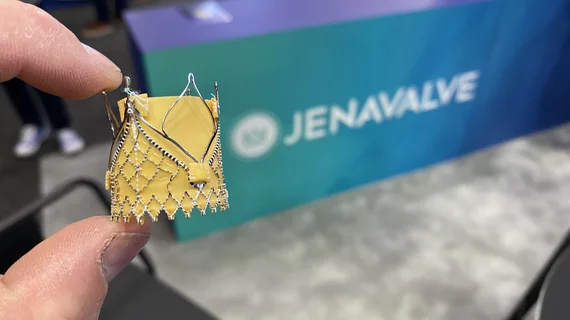
Edwards Lifesciences asked the U.S. Federal Trade Commission (FTC) this week to dismiss the complaint against the company to block its acquisition of JenaValve. A healthcare market analysis firm also said the FTC actions may impact the timing of a U.S. Food and Drug Administration (FDA) clearance of the JenaValve Trilogy heart valve.
The FTC issued an administrative complaint Aug. 6 to block Edwards's proposed acquisition of JenaValve Technology Inc. due to concerns that the acquisition would create a monopoly on transcatheter aortic valve replacement for aortic regurgitation (TAVR-AR) and limit patient access to the lifesaving medical devices. JenaValve had a positive pivotal trial and submitted for FDA clearance, which was hoped for by the end of 2025. But the FTC has concerns because Edwards also acquired JC Medical in August 2024. This is the only other company focused developing on AR treatment devices in the U.S. currently, which could help Edwards corner the market for TAVR-AR therapy. JC Medical initiated its J-Valve Transfemoral Pivotal Study (JOURNEY) in October 2024.
At stake is a minimally invasive therapy that could serve a market of at least 8 million Americans over age 50 who suffer from aortic regurgitation. Untreated, AR can lead to the left ventricle enlargement and heart failure. But the FTC challenge to the JenaValve acquisition could result in delays in FDA approval of its valve, said the healthcare market analysis from GlobalData.
FTC action could delay JenaValve FDA clearance
“TAVR-AR devices are likely to be a significant step forward for the treatment of aortic valve regurgitation. However, the FTC inquiry into the acquisition of JenaValve could delay the entry of both products into the market. Although Edwards Lifesciences has already contested the case, it remains to be seen if the company can successfully prove to the FTC that it will continue to innovate within the TAVR-AR market space, despite having the only devices on the market,” explained David Beauchamp, MS, a medical analyst at GlobalData in a statement.
The acquisition of JenaValve was initially announced in July 2024, but it is subject to regulatory approval. If Edwards is allowed to complete the acquisition, Beauchamp said it would allow the company to become the sole manufacturer of the most advanced devices on market for TAVR-AR, which could have adverse effects on patient outcomes due to lack of active competition.
TAVR, which now makes up more than 80% of U.S. aortic valve replacements, is currently only indicated to treat aortic stenosis (TAVR-AS). Edwards is already established as a leader in TAVR, but competes heavily in the space with Medtronic, and Abbott is a third competitor in the U.S. market, and there are others TAVR vendors outside the U.S. But no TAVR devices are approved anywhere in the world for use in TAVR-AR.
“Neither Abbott nor Medtronic has indicated plans to develop a heart valve for the treatment of aortic valve regurgitation, leaving Edwards Lifesciences and JenaValve as the only two companies with any short-term plans to enter the market,” Beauchamp explained.
JenaValve and Edwards ask FTC to dismiss its case
Both companies responded to the FTC, denying most of the allegations in the complaint and calling on the FTC to dismiss the case because it lacks merit.
The Edwards response filed Aug. 18, stated the complaint fails to outline a valid product market, since there are currently no TAVR-AR devices available to sell. Edwards also said the complaint fails to account for companies outside the United States that are likely to enter FDA clinical trials, pointing to companies that are in the same position JC Medical was in before it was acquired by Edwards.
"The complaint fails to allege that the proposed transaction will plausibly harm consumers or competition, including because the complaint fails to account for alternative means of innovation and the probability of fast entry after a TAVR-AR device receives approval," Edwards said in its defense in the response.
All new device technologies need to undergo the rigorous FDA pre-market approval process, but competitors are allowed to follow the much less rigorous 510(k) approval route if their product is substantially similar to the original PMA-approved device their will be competing against. Edwards argues other AR valve vendors will be able to enter the U.S. market much faster and easier using the 510(k) approval process.
JenaValve also responded to the FTC complaint Aug. 19. It also asked for the case to be dismissed. The company denied the core complaints from the FTC and said the agency fails to account for the merger-specific benefits a deal with Edwards could bring. This Edwards having more resources than the startup companies to further develop, manufacture and commercialize the Trilogy and the JC valves at scale.

Dave Fornell has covered healthcare for more than 17 years, with a focus in cardiology and radiology. Fornell is a 5-time winner of a Jesse H. Neal Award, the most prestigious editorial honors in the field of specialized journalism. The wins included best technical content, best use of social media and best COVID-19 coverage. Fornell was also a three-time Neal finalist for best range of work by a single author. He produces more than 100 editorial videos each year, most of them interviews with key opinion leaders in medicine. He also writes technical articles, covers key trends, conducts video hospital site visits, and is very involved with social media. E-mail: [email protected]