
Newest TAVR valve from Edwards Lifesciences improves survival, real-world data confirm
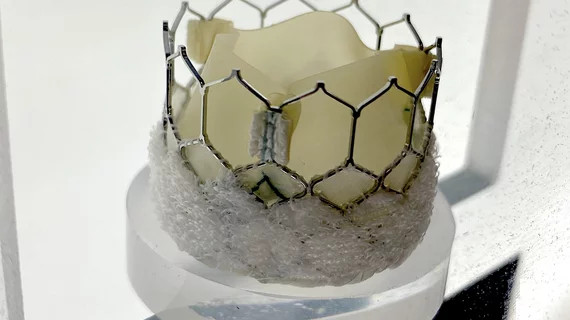
The fifth-generation Sapien 3 Ultra Resilia transcatheter aortic valve replacement (TAVR) valve from Edwards Lifesciences is associated with notable improvements compared to the company’s previous offerings, according to a new real-world analysis published in Cardiovascular Intervention and Therapeutics.[1]
The U.S. Food and Drug Administration approved the Sapien 3 Ultra Resilia TAVR valve in 2022. It represents a combination of the company’s Resilia tissue technology with its Sapien 3 Ultra TAVR device.
A 2024 analysis confirmed the new device was associated with better one-year patient outcomes than the Sapien 3 and Sapien 3 Ultra TAVR valves.[2] However, that study was based on data from the Society of Thoracic Surgeons/American College of Cardiology Transcatheter Valve Therapy Registry. For this latest analysis, researchers turned to real-world data from more than 300 patients who received a Sapien 3 Ultra Resilia valve. Using propensity-score matching, those patients were compared to another group of similar patients who received a Sapien 3 or Sapien 3 Ultra TAVR valve.
Fifth-generation TAVR valve outperforms predecessors
The fifth-generation Sapien 3 Ultra Resilia TAVR valve was linked to 30-day rates of all-cause mortality, cardiac mortality and stroke that were similar to the previous Edwards Lifesciences devices. After a full year, however, all-cause mortality was significantly lower for the newest valve.
Functional improvements and aortic valve reintervention rates, meanwhile, were similar for the older and newer devices after one year.
Overall, the authors found that their findings closely aligned with the previous registry research into this valve’s safety and effectiveness.
“This difference was driven primarily by more favorable early outcomes in the S3UR group rather than inferior performance of the Sapien 3/Sapien 3 Ultra valves,” wrote senior author Rajendra R. Makkar, MD, an interventional cardiologist with the Smidt Heart Institute at Cedars Sinai, and colleagues. “Several center-specific factors may explain this difference. The Sapien 3 Ultra Resilia’s extended outer skirt and larger effective orifice area enabled operators to avoid aggressive dilatation, likely reducing procedural risk. In addition, a learning-curve effect may have further amplified the intrinsic advantages of the Sapien 3 Ultra Resilia, whereas such center-specific effects are less apparent in large multicenter registries.”
Makkar et al. emphasized that the Sapien 3 Ultra Resilia valve appeared to help decrease the risk of residual paravalvular leak (PVL) among these patients. This improvement in PVL may help explain the one-year mortality benefit the group identified.
“Although the impact of mild PVL remains controversial and has traditionally been considered clinically acceptable after TAVR, emerging evidence suggests that even mild PVL may be associated with an increased risk of mortality after TAVR,” the authors wrote. “As moderate or severe PVL at discharge with contemporary TAVR devices has declined over the years and was absent in both device groups in our study, the impact of mild PVL on outcomes may have become more pronounced. Long-term implications of mild PVL on patient outcomes warrant further investigation.”
Another key takeaway from this real-world study was the fact that life-threatening bleeding did not differ between the two patient groups. In the previous registry-based analysis, life-threatening bleeding events had been a concern.
Click here to read the full analysis.

Michael has more than 19 years of experience as a professional writer and editor. He has written at length about cardiology, radiology, artificial intelligence and other key healthcare topics.