
SMART update: Self-expanding TAVR valves still linked to superior durability after 3 years
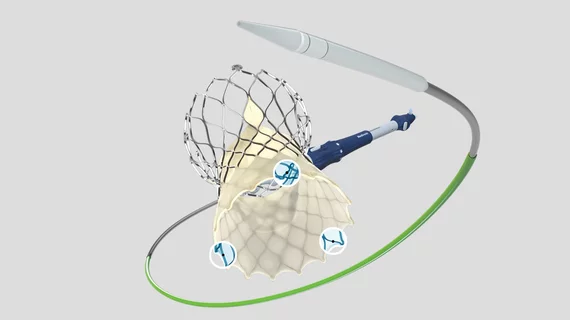
Self-expanding transcatheter aortic valve replacement (TAVR) valves are associated with better patient outcomes than balloon-expandable valves for patients who present with a small aortic annulus, according to new data presented at EuroPCR in Paris.
This represents a major update to the SMART trial, one of the most noteworthy TAVR trials in recent memory. SMART is a head-to-head comparison of self-expanding Evolut TAVR valves from Medtronic and balloon-expandable Sapien 3 TAVR valves from Edwards Lifesciences in patients with small aortic annuli. Nearly 90% of patients enrolled in the trial were women. One-year data found that the self-expanding Evolut devices outperformed the balloon-expandable Sapien 3 devices in terms of bioprosthetic valve dysfunction (BVD), prosthesis-patient mismatch, and aortic valve mean gradient. Two-year data showed that those benefits were still present after another 12 months.
Now, these latest data confirm that the differences in valve performance persist for at least three years.
Overall, self-expanding TAVR valves were linked to a significantly lower BVD rate (16.3% vs. 54.4%) than balloon-expandable valves after three years. The thrombosis rate was also significantly lower in terms of both VARC-2 and VARC-3 criteria.
Researchers also noted that the two valve platforms were linked to a comparable safety profile after three years.
“The continued superior hemodynamic outcomes demonstrated at three years provide important evidence of Evolut TAVR’s advantage in treating patients with aortic stenosis and a small aortic annulus,” lead investigator Howard C. Herrmann, MD, director of the TAVR program at the Perelman School of Medicine at the University of Pennsylvania, said in a statement. “Additionally, these findings deliver new insights, including lower rates of valve thrombosis with Evolut. Clinical valve thrombosis is a serious complication that can drive rising gradients, valve dysfunction, and heart failure symptoms, often necessitating anticoagulation or repeat intervention, with added bleeding risk and long-term management burden.”
“Outcomes from the SMART Trial continue to build on the clinical evidence supporting the safety and performance of Evolut TAVR,” added Kendra J. Grubb, MD, MHA, MSc, vice president and chief medical officer of Medtronic’s structural heart division. “These latest findings further suggest the potential for improved long-term outcomes for patients with small aortic valve annuli, including women, and reinforce the role of Evolut TAVR in enabling more individualized treatment approaches that may help inform the future of valve care.”
The SMART trial will follow these patients for another two years.
Click here for a full video interview with Herrmann.

Michael has more than 19 years of experience as a professional writer and editor. He has written at length about cardiology, radiology, artificial intelligence and other key healthcare topics.