
TAVR linked to higher reintervention rate than SAVR in Evolut Low Risk trial update
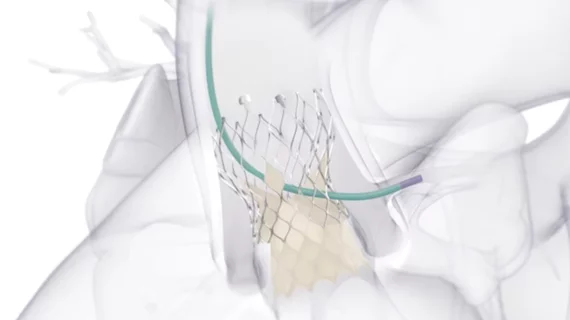
Transcatheter aortic valve replacement (TAVR) with a self-expanding valve is associated with a higher risk of reintervention than surgery for low-risk patients, according to a new six-year update of the Evolut Low Risk trial. In addition, the available seven-year data suggest the gap between these two treatment techniques may widen as time goes on.
“These findings underscore the importance of long-term surveillance to monitor valve durability and inform patient counseling,” wrote first author John K. Forrest, MD, director of interventional cardiology at Yale School of Medicine, and colleagues. “Further analyses are planned to better understand the etiology and impact of these findings over time.”
The full analysis was published in JACC, the flagship journal of the American College of Cardiology.[1] The researchers did note that TAVR and SAVR were still associated with comparable mortality and stroke rates after six years.
A long-term update to a critical trial
The Medtronic-funded Evolut Low Risk trial has been one of cardiology’s most closely watched studies for years. More than 1,400 low-risk patients with severe aortic stenosis (AS) were randomized to either undergo TAVR with a supra-annular, self-expanding valve from Medtronic or surgical aortic valve replacement (SAVR). While the primary endpoint is a composite of all-cause mortality and disabling stroke, secondary endpoints include reintervention, permanent pacemaker use and valve durability. Initial results were published in The New England Journal of Medicine in 2019.[2] Researchers plan on following these patients for a total of 10 years.
For the first five years after treatment, TAVR and SAVR were linked to comparable outcomes. In this new six-year update, however, TAVR was linked to a noticeably higher reintervention rate (5.5%) than SAVR (3.3%). The primary endpoint of all-cause mortality and disabling stroke, meanwhile, occurred in 23.3% of TAVR patients and 20.4% SAVR patients, a difference not large enough to be considered statistically significant.
To learn more about this trend, researchers went one step further and reviewed the available seven-year data. According to data from 555 TAVR patients and 480 SAVR patients, the reintervention rates were 9.8% for TAVR and 6% for SAVR.
What explains this increased risk of reintervention for TAVR patients? Reviewing the seven-year findings, the authors pointed to aortic regurgitation (AR) as the primary culprit. The reintervention rates for AR were 5.6% for TAVR and 1.6% for SAVR. The reintervention rates for AS, on the other hand, were nearly identical.
AR was more likely in patients treated with Medtronic’s Evolut R valves than it was for those treated with an Evolut PRO valve. In addition, reintervention due to AR was more common when postdilation did not closely follow specific manufacturer recommendations.
“Importantly, although reinterventions for regurgitation were highest in patients with off-guidance postdilation, reinterventions were observed across multiple valve sizes and postdilation categories, and the rate of reintervention for regurgitation for each of these groups was numerically higher than it was for surgery (1.6%),” the authors wrote.
Cardiologists share their outside perspective on these trends
Two interventional cardiologists shared their perspective on these new data in a related editorial.[3]
“At six years, the central message remains familiar—mortality and disabling stroke rates are similar with transcatheter and surgical replacement,” wrote co-authors Aakriti Gupta, MD, MS, of the Smidt Heart Institute at Cedars-Sinai, and David J. Cohen, MD, MSc, of the Cardiovascular Research Foundation. “The reintervention rates, however, paint a different picture.”
Gupta and Cohen did note that the seven-year data explored in this study were incomplete. Even with that limitation in mind, they wrote, “the divergence in reintervention rates” shows that “longer-term durability differences may be emerging” when it comes to treating low-risk AS patients.
One key takeaway from the editorial is that Gupta and Cohen believe reintervention is an “imperfect surrogate for valve performance.”
“Mortality can mask failure in high-risk patients, while delayed thresholds for re-do procedures can obscure dysfunction in low-risk patients,” they wrote. “Accordingly, the field has shifted from inconsistent notions of ‘structural valve deterioration’ toward harmonized definitions of bioprosthetic valve dysfunction and failure … A late reintervention signal such as described here should prompt deeper phenotyping to link hemodynamic trajectories and anatomic findings to clinical events.”
The authors also emphasized that these findings should not sway care teams from performing TAVR when appropriate. In fact, they said, these data “reinforce the critical role of heart team-based discussions” and show that both TAVR and SAVR can still deliver high-value care for this patient population.
Click here to read the full analysis. Click here for the full editorial.

Michael has more than 19 years of experience as a professional writer and editor. He has written at length about cardiology, radiology, artificial intelligence and other key healthcare topics.