
Cardiologists use endovascular device for brain aneurysms to treat high-risk heart patients
A team of interventional cardiologists and radiologists with Mayo Clinic have found a new use for a reliable medical device. Multiple heart patients have already benefited for the group’s outside-the-box thinking.
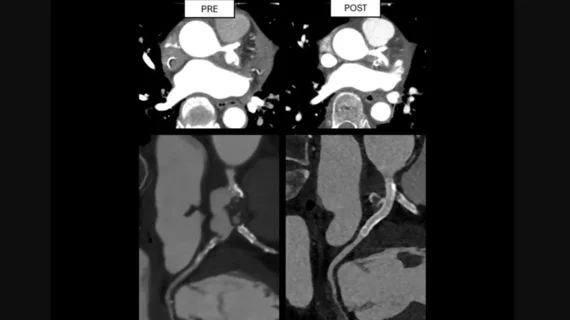
The group’s breakthrough involves using the WEB SLS II device, an intrasaccular flow disruptor from Terumo designed to treat intracranial bifurcation aneurysms, to treat saccular coronary aneurysms in the heart. The group shared its first experience with this strategy in JACC: Cardiovascular Interventions and then went on to treat other patients with the same approach.[1]
“There is considerable excitement about these successful cases because until now we haven't had good options,” senior author Rajiv Gulati, MD, PhD, chair of interventional cardiology and ischemic heart disease at Mayo Clinic, said in a statement. “These saccular aneurysms are not accessible to the cardiac surgeon and have not been ideal for treatment with standard endovascular techniques. We now have an option to safely, quickly and efficaciously address these rare but serious cases.”
That initial case was performed on a 74-year-old man who underwent preoperative imaging prior to aortic valve replacement and coronary artery bypass grafting. A multidisciplinary heart team determined that the patient’s anatomy was suboptimal for stent-assisted coiling and thought that trying an endovascular device offered the best path forward. Dual antiplatelet therapy was administered, the group noted, and the imaging-guided procedure proved to be a success.
“The procedure was tolerated well, and no acute complications were observed,” the authors wrote at the time. “Follow-up computed tomography angiography confirmed correct device placement and absent residual flow to the coronary aneurysm at day one and six months postprocedure. The patient was discharged on low-dose aspirin for six weeks.”
Technique provides care teams with a powerful new treatment option
The treatment of saccular coronary aneurysms can be challenging, the Mayo Clinic specialists emphasized. When they first turned to this new strategy, it was because the patient’s anatomy raised significant concerns.
“The aneurysm morphology strongly resembled a bifurcation aneurysm commonly treated in intracranial circulation,” Jason H. Anderson, MD, an interventional cardiologist director of the congenital cath lab at Mayo Clinic and co-author of the JACC: Cardiovascular Interventions analysis, explained in the same statement. “We consulted with our neurointerventional radiology colleague. Given the shared physiologic principles between cerebral and coronary circulation, particularly the need to preserve adjacent vascular perfusion, we felt this paradigm could be translated safely to the coronary setting.”
Anderson added that he and his colleagues see this as a “shift in thinking” that could impact patient care at Mayo Clinic for years to come.
“Coronary aneurysms, particularly complex saccular lesions, may be better approached using flow modification strategies instead of relying solely on mechanical exclusion with traditional coronary tools,” he said.
For Gulati, Anderson and the other Mayo Clinic specialists involved in these cases, this new approach to treating certain coronary aneurysms stands out as a shining example of the benefits of multidisciplinary collaborations.
“When physicians encounter uncommon anatomy or an unmet clinical need, another specialty may already have addressed similar challenges and developed technologies that can be adapted safely,” Anderson said.
“It's one of Mayo Clinic's defining strengths,” added Gulati. “Care is not isolated within a single specialty but instead integrates expertise from interventional cardiology, congenital cardiology and neurointerventional radiology.”
Potential next steps include studying the long-term safety of this treatment and working to develop medical devices specifically built to take on these complex cases.
Click here to read the original case study in JACC: Cardiovascular Interventions, an American College of Cardiology journal.

Michael has more than 19 years of experience as a professional writer and editor. He has written at length about cardiology, radiology, artificial intelligence and other key healthcare topics.