
Catheter-based treatment linked to major benefits for intermediate-risk PE
Catheter-based thrombolysis is associated with significant benefits for intermediate-risk acute pulmonary embolism (PE) patients, according to new data published at ACC.26 in New Orleans. The findings were simultaneously published in The New England Journal of Medicine.[1]
In high-risk PE patients, early thrombus removal through the use of thrombolysis has been proven to be an effective treatment option. However, the clot-busting drugs are associated with certain risks that typically make care teams think twice about even considering thrombolysis in intermediate-risk patients; those individuals are often given anticoagulation instead.
This latest analysis was designed to track the safety and effectiveness of ultrasound-facilitated, catheter-directed thrombolysis in intermediate patients. This process is associated with lower doses of the clot-busting drugs than previous research on the potential benefits of thrombolysis in in this patient population.
The HI-PEITHO randomized clinical trial included 544 patients from nine different countries. All patients had intermediate-risk PE, presenting with at least two clinical signs of cardiorespiratory stress and high serum troponin levels. Patients were randomized to either undergo ultrasound-facilitated, catheter-directed thrombolysis with Boston Scientific’s EKOS Endovascular System in addition to anticoagulant therapy or undergo anticoagulant therapy only.
Overall, the trial’s primary composite 30-day endpoint—PE-related death, cardiorespiratory decompensation or collapse or symptomatic PE recurrence within seven days—occurred in 4% of patients in the thrombolysis group and 10.3% of patients in anticoagulation group. This was primarily driven by a much lower risk of cardiorespiratory decompensation or collapse in the thrombolysis group.
“This trial shows that a catheter intervention can indeed be effective and improve the prognosis for patients with severe PE and elevated risk of early death or life-threatening complications,” lead author Stavros V. Konstantinides, MD, PhD, professor of medicine and clinical trials at University Medical Center of the Johannes Gutenberg University in Mainz, Germany, explained. “If the right patients are selected for this procedure, it can prevent patients from deteriorating and it can do so at an acceptably low risk of bleeding complications.”
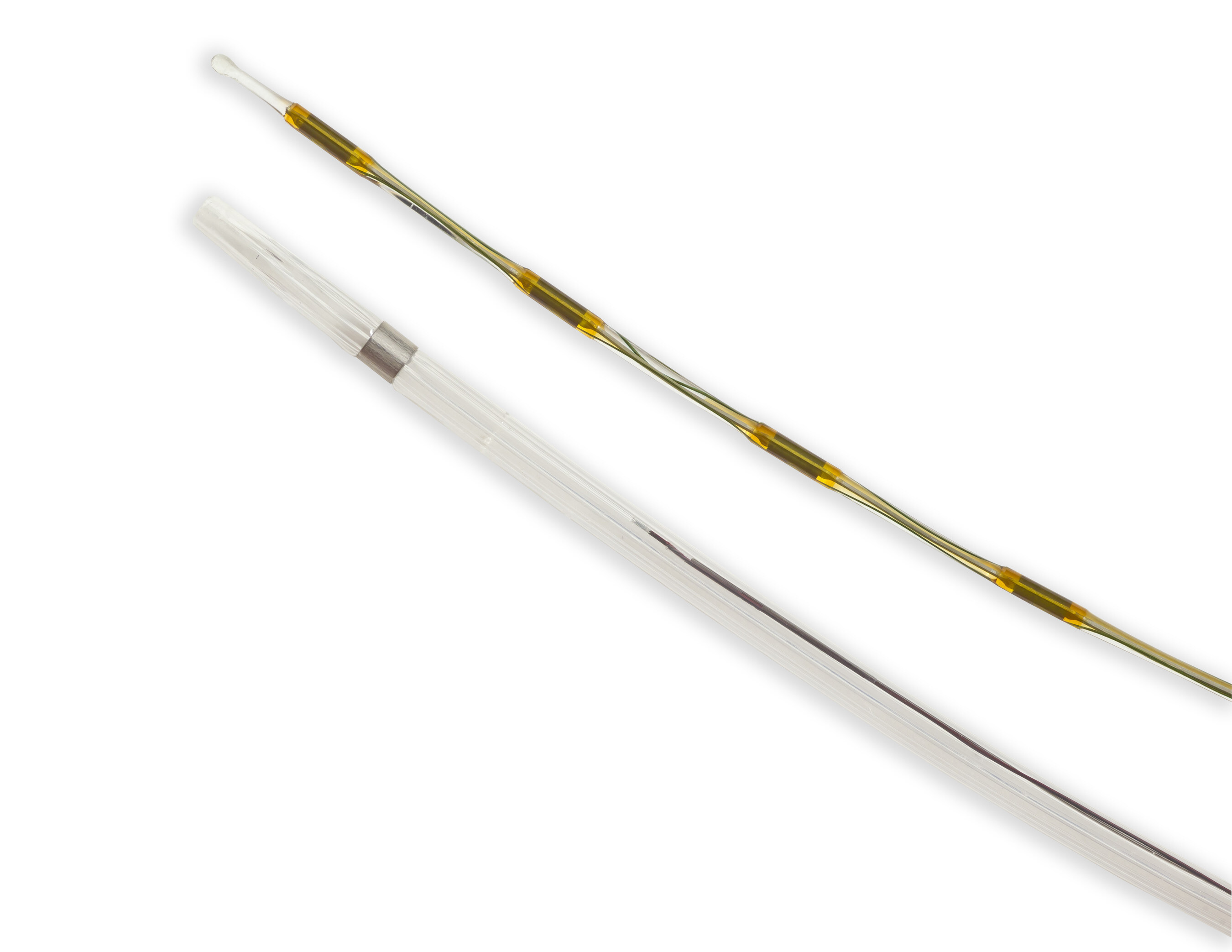
Image courtesy of Boston Scientific.
‘The start of a new day’
Joshua Beckman, MD, chief of vascular medicine at UT Southwestern Medical Center in Dallas, was a panelist when Konstantinides shared these findings at the annual American College of Cardiology (ACC) conference.
“This is the start of a new day in understanding the management of pulmonary embolism,” he said. “I don’t remember a time at any ACC meeting in the past where there has been a large randomized clinical trial testing the key question in this field—when to apply thrombolysis and then catheter-directed thrombolysis—in this population. If you take a look at the abstract that was submitted for this study, the members of that team have more than 200 years of experience in the management of PE and we are looking at the leadership of this disease process. Concerning the disease itself, there really was no understanding before this trial as to how to manage patients in the high-intermediate zone. We've known that for PE, you may present to an emergency department and be sent home, or you may require acute open heart surgery for a cervical thrombectomy or everything in between.”
Beckman also emphasized that it made sense the primary difference in the two patient groups was cardiorespiratory decompensation or collapse and not mortality; intermediate-risk PE is generally not associated with a high mortality rate.
Another key takeaway from Beckman’s analysis of HI-PEITHO was that these 30-day data are just the beginning. The planned six- and 12-month data will be even more important, he said, because there have been no clinical trials to date focused on whether or not thrombolysis can truly help intermediate-risk patients feel better for the rest of their lives.
“Congratulations to executing just an incredible trial,” he said. “Thank you for bringing PE into the future.”
Boston Scientific puts spotlight on positive outcomes
Boston Scientific was quick to celebrate the positive outcomes associated with its EKOS technology.
“The HI-PEITHO trial evaluated clear, clinically meaningful endpoints using rigorous patient enrollment criteria and demonstrated a definitive impact with the EKOS system over the standard of care for treating acute PE,” Michael R. Jaff, DO, Boston Scientific’s vice president and chief medical officer of vascular therapies, said in a statement. “For the first time, we have robust randomized clinical trial data available to inform treatment decisions by interventionalists and referring physicians and support consideration of EKOS plus anticoagulation as a first-line therapy.”
Jaff, who has years of experience as a clinician and researcher in the vascular health space, was also one of this study’s co-authors.

Michael has more than 19 years of experience as a professional writer and editor. He has written at length about cardiology, radiology, artificial intelligence and other key healthcare topics.