
FDA approves new stent for deep venous disease
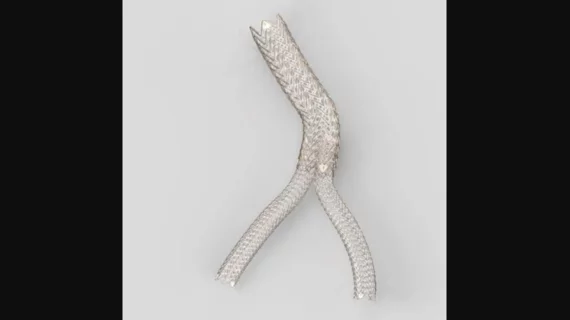
Gore, the medical division of W.L. Gore & Associates, has received U.S. Food and Drug Administration (FDA) approval for a new stent designed to help treat deep venous disease in the inferior vena cava (IVC), iliac and iliofemoral veins.
The Gore Viabahn Fortegra Venous Stent represents the latest addition to the company’s Viabahn family of medical devices. It includes an open-structure, self-expanding wire-wound frame made of nitinol and a polytetrafluoroethylene polymer lattice.
According to Gore, the newly approved device was built with conformability, strength and fracture resistance in mind. In addition, it can be used to treat a wide range of patients due to the availability of several sizes.
The FDA’s decision was largely based on data first presented at the VEINS Conference in Las Vegas in November 2025. In an international clinical trial of 89 patients with deep venous disease, the device was found to be both safe and effective; its 12-month primary patency rate was 83.4%, for example, and no stent embolizations/migrations, fractures, vascular injuries or clinically significant pulmonary embolisms were reported.
“The Fortegra Venous Stent represents a significant advancement in the treatment of patients with the most difficult-to-treat venous obstructive pathology; occlusion of the IVC, iliac veins and inflow femoral veins,” Kush Desai, MD, a vascular and interventional radiologist with Northwestern Medicine, said in a statement. “Patients will benefit from a device that is designed specifically for this disease and its unique anatomic and physiologic challenges, including preservation of optimal flow dynamics through iliocaval confluence and side branch preservation.”
Gore building momentum: Announcement follows a key acquisition
Gore announced this approval just one day after its parent company, W.L. Gore & Associates, entered a definitive agreement to acquire New Hampshire-based Conformal Medical, the company behind the CLAAS AcuFORM left atrial appendage occlusion system. While that device has not yet secured FDA approval, W.L. Gore & Associates and Gore are hoping data from an ongoing clinical trial could help change that in the near future.

Michael has more than 19 years of experience as a professional writer and editor. He has written at length about cardiology, radiology, artificial intelligence and other key healthcare topics.