
SCAI outlines broken Medicaid reimbursement model for congenital heart disease
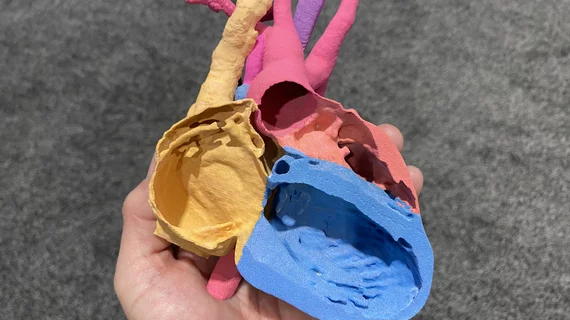
More than 50% of pediatric congenital heart disease (CHD) surgeries and 40% of adult CHD hospital encounters are billed to Medicaid, yet Medicaid physician fees average only 72% of Medicare rates. This has resulted in pediatric cardiologists being among the lowest paid cardiac subspecialties who deal with some of the most complex cases.
This spurred a new policy statement this week from the Society for Cardiovascular Angiography and Interventions (SCAI) that highlights broken reimbursement models, undervalued procedures and the barriers to cardiac pediatric device innovation.
SCAI said many children and adults living with congenital heart disease are being left behind by a system that does not adequately value their care. The statement, “Economic Barriers to Interventional Cardiology Care for Adults and Children With Congenital Heart Disease and Potential Policy Solutions,” was published today in JSCAI.[1] It calls for Medicaid payment parity, fairer valuation of CHD procedures, new compensation models and faster regulatory pathways for pediatric device approval.
“The practice of interventional cardiology for congenital heart disease requires advanced expertise, significant time, and highly specialized technology. Yet, too often, these realities are not reflected in reimbursement structures or policy decisions,” said Lyndon C. Box, MD, FSCAI, lead author of the policy in a statement. “By shining a light on these barriers, we hope to spur reforms that support the physicians providing this care and, most importantly, improve outcomes for the patients and families who rely on it.”
The low payment issue impacts a large number of number of CHD patients. The Centers for Disease Control and Prevention (CDC) indicates that congenital heart disease affects about 40,000 newborns in the U.S. each year, with 1 in 4 requiring an invasive procedure in the first year of life. More than 2.4 million adults in the U.S. are living with CHD as well, creating a lifelong need for access to highly specialized care. The society said this statement will be the basis for advocacy with legislators and the Centers for Medicare and Medicaid Services (CMS) to change the payment policies.
RVUs undervalue pediatric care
The work relative value unit (wRVU) system used to calculate payments for Medicare and Medicaid undervalues pediatrics, SCAI explained. Balloon atrial septostomy, a life-saving procedure for newborns, carried a CPT code for more than 25 years, but had a zero wRVU valuation until 2018. In the past three years, CMS has rejected the recommended wRVU values for 20 of 24 congenital catheterization codes, SCAI explained.
Pediatric compensation lags that of adult counterparts. Pediatric interventional cardiologists may earn only 50–65% of what adult interventional cardiologists make. At the same time, they can perform just 2–3 procedures per day compared to 8–10 in adult cath labs, due to patient complexity and safety demands, SCAI said.
Doximity recently published its 2025 physician compensation report, which offered a breakdown for the average pay for various specialties. It showed a sizable gap in pay between average cardiologist salaries of $587,360, and $352,197 for pediatric cardiologists. And pediatric cardiologists are not alone, the survey also found similar gaps for other pediatric specialities in gastroenterology, neurology, pulmonology, hematology, oncology infectious disease, rheumatology and endocrinology, which were all grouped at the bottom of the list.
“The barriers outlined in this statement directly affect the ability of physicians to deliver care and the outcomes our patients experience,” Frank F. Ing, MD, MSCAI, a member of SCAI’s Congenital Heart Disease Council, and coauthor of the policy, explained in a statement. “Achieving meaningful change will require collaboration among clinicians, policymakers, industry, and patient advocates. SCAI is committed to leading that effort so that children and adults living with congenital heart disease are no longer disadvantaged by the very systems designed to support them.”
More than 60% of congenital heart procedures use off-label devices
Another big barrier for CHD patients and physicians is the lack of devices for pediatrics. Because the market for pediatric medical devices is very small compared to the adult market, there is little ROI for companies to develop these devices. There are grant programs, some partly funded by the U.S. Food and Drug Administration (FDA), but these do not cover the costs of brining new devices to market, which can take years and is very expensive. As a result, 63% of CHD interventions rely on off-label devices, SCAI said.
An FDA survey found 74% of unmet device needs pertain to children, leaving many pediatric patients dependent on tools never designed for them.

Dave Fornell has covered healthcare for more than 17 years, with a focus in cardiology and radiology. Fornell is a 5-time winner of a Jesse H. Neal Award, the most prestigious editorial honors in the field of specialized journalism. The wins included best technical content, best use of social media and best COVID-19 coverage. Fornell was also a three-time Neal finalist for best range of work by a single author. He produces more than 100 editorial videos each year, most of them interviews with key opinion leaders in medicine. He also writes technical articles, covers key trends, conducts video hospital site visits, and is very involved with social media. E-mail: [email protected]