
Cardiovascular care groups urge Congress to make 4 changes to Medicare Physician Fee Schedule
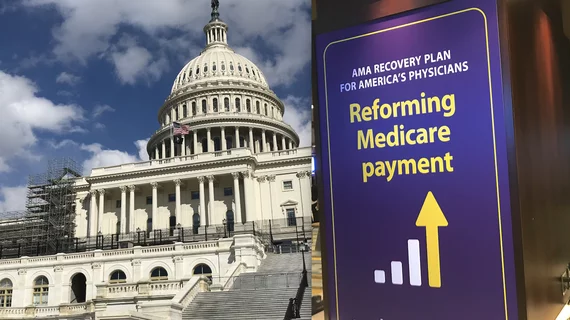
Nine cardiovascular societies are among the voices urging Congress to make four reforms to the 2027 Medicare Physician Fee Schedule (PFS).
The American Medical Association (AMA) wrote a letter to key policymakers asking for changes to the Medicare PFS that could provide near-term stability to American healthcare system and pave the way for more predictable, inflation-based payment updates in the future. More than sixty healthcare organizations signed the letter, including the American College of Cardiology (ACC), American Society for Echocardiography (ASE), Heart Rhythm Society (HRS), American Society of Nuclear Cardiology (ASNC), Society for Cardiovascular Angiography and Interventions (SCAI), Society for Vascular Surgery (SVS), Society of Cardiovascular Computed Tomography (SCCT), Society of Interventional Radiology (SIR), and Society of Thoracic Surgeons (STS).
The letter warns that Medicare physician payments have fallen about 33% since 2001 when adjusted for inflation in practice costs. Unlike hospital payments, physicians do not receive inflationary payment increases. The healthcare groups said these payment cuts are widening the gap between patient access to care and practice sustainability.
The letter outlined four specific policies Congress should consider including in any year-end legislative packages prior to the 2027 PFS going into effect on Jan. 1:
• 1. Extend the 2.5% physician payment update through 2027. The Centers for Medicare and Medicaid Services (CMS) projects a 2.5% increase in practice costs next year. Continuing the update Congress provided for 2026 would help narrow the gap between Medicare payment and rising costs. The AMA noted that the Medicare Payment Advisory Commission has recommended increasing the 2027 physician payment update above current law.
• 2. Enact the bipartisan Provider Reimbursement Stability Act (H.R. 8163/S. 5180). Approved 44–0 by the House Ways and Means Committee, this legislation would require CMS to correct budget neutrality adjustments when actual service use differs substantially from its estimates. The Congressional Budget Office identified two CMS overestimates since 2015 that together lowered physician payment rates by about 1.8%. Physicians and patients should not face permanent cuts to offset spending that never occurred, the AMA and these other groups believe.
• 3. Delay the modifier 25 payment reduction for one year. The 2027 PFS includes a payment reduction for the lower-valued service when a separately identifiable office visit and certain procedures are provided on the same day. The AMA said existing valuation processes already address overlapping work, and this payment cut may threaten independent office-based practices. The letter also noted that more than 80 bipartisan members of Congress urged CMS not to finalize this reduction.
• 4. Cap Merit-based Incentive Payment System (MIPS) penalties at 2% and ensure physicians receive timely, actionable performance data. The AMA said doctors often receive feedback long after the performance year, leaving no opportunity to improve care. As a result, about 40 percent of solo clinicians were penalized in this year based on 2024 MIPS scores. The medical societies said quality improvement should be driven by useful data provided during the performance year, not with penalties of up to 9% after the fact with no recourse.
"Medicare patients need access to physicians, and physicians need a payment system that works," AMA President Willie Underwood III, MD, MSc, MPH, said in a statement. "Congress has an opportunity to protect access to care and give physician practices the stability they need to keep serving Medicare patients. These four reforms are practical, bipartisan steps Congress can take now to strengthen Medicare and protect patients.”
American College of Cardiology shares its concerns
In addition to signing on to this letter, the ACC has spent a considerable amount of time communicating with its members about the Medicare PFS. In one post dated Nov. 6, for example, the group said this latest round of cuts "creates long-term financial instability in the Medicare physician payment system, threatening patient access to medicare-participating physicians and services."
"Advocating for comprehensive, long-term reform of the Medicare payment system is a key ACC Advocacy priority," according to the ACC's analysis.

Dave Fornell has covered healthcare for more than 17 years, with a focus in cardiology and radiology. Fornell is a 5-time winner of a Jesse H. Neal Award, the most prestigious editorial honors in the field of specialized journalism. The wins included best technical content, best use of social media and best COVID-19 coverage. Fornell was also a three-time Neal finalist for best range of work by a single author. He produces more than 100 editorial videos each year, most of them interviews with key opinion leaders in medicine. He also writes technical articles, covers key trends, conducts video hospital site visits, and is very involved with social media. E-mail: [email protected]