
Office-based interventional labs see boost in pay in 2026
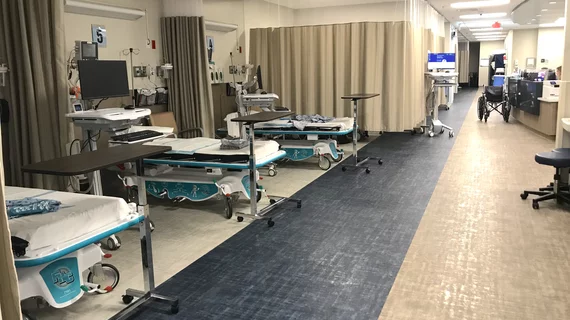
The Centers of Medicare and Medicaid Services (CMS) has made it a priority to increase payments for procedures performed by office-based labs (OBLs) and ambulatory surgical centers (ASCs). This was reflected in policy changes made as part of the 2026 Medicare Physicians Fee Schedule (MPFS).
Several groups, including the Office-Based Facility Association (OBFA) and Society for Cardiovascular Angiography and Interventions (SCAI), have applauded this trend due to the fact that it benefits both physicians and the patients they serve.
OBFA this week released a statement noting strong support from primary care, specialty and consumer organizations for the CMS update to the Indirect Practice Expense (IPE) policy under the MPFS, which went into effect Jan. 1. OBFA said the change reduces the portion of the facility practice expense relative value units (PE RVUs) allocated based on work RVUs to half the amount allocated to non-facility PE RVUs. This policy translates into increased MPFS reimbursement to office-based providers for the first time in several years.
"This is a critical step toward providing long-overdue reimbursement stability for independent and private practice providers that deliver high-quality care to Medicare beneficiaries outside of hospital settings," the OBFA said. "This is reflecting a growing consensus around the need for more equitable, site-neutral Medicare payment policies."
The organization said the new policy change has drawn support from several healthcare organizations, including primary care and consumer advocates. The Primary Care Collaborative (PCC), a coalition of 70 organizations committed to a high-value health system, emphasized in a letter to CMS last fall that this update to the PE methodology would help correct long-standing payment imbalances and better support care delivered in community-based settings.
Similar support for the change came from Consumers First, a coalition of national consumer organizations, which cited the importance of controlling costs, promoting site-neutrality and protecting beneficiary access to affordable care in its September letter to CMS.
The group said indirect PE RVUs, which represent overhead costs like rent, utilities and administrative labor, have not received updates for years, partly because CMS relies on outdated survey data from the American Medical Association. (AMA) Physician Practice Information (PPI) Survey.
"As a result, the current indirect practice expense methodology has not kept pace with changes in the way healthcare is delivered today. For example, physician employment patterns, practice structures, and the location of where healthcare is delivered have changed significantly over the last two decades," Consumers First wrote in its letter to CMS. "This payment distortion has resulted in overpaying for services delivered in facility settings where indirect costs are already accounted for, has fueled consolidation by giving hospital-owned practices a payment advantage, and contributed to the persistent undervaluation of primary care, behavioral health and other community-based services."
SCAI and ACC support ASC and OBL expansion
SCAI has seen a growing interest in ASCs and OBLs from private practice physicians who want to maintain autonomy. Healthcare systems are also looking to offload low-acuity cases to outpatient settings..
SCAI has partnered with the consulting firm Corazon to help practices navigate the business and regulatory complexities of starting an ASC or OBL, explained Arnold Seto, MD, SCAI treasurer and chair of the SCAI Advocacy Committee, cath lab director at the Long Beach VA Medical Center, and professor of medicine at Charles Drew University. In a recent interview with Cardiovascular Business, he said SCAI has seen a definite shift in how CMS views this topic.
“We’ve already seen CMS effectively remove all the percutaneous coronary intervention (PCI) codes from the inpatient only list, and actually talk about removing everything from the inpatient only list,” Seto said. “As a whole, the professional societies are supportive, understanding that there is this big pressure from CMS to also reduce costs.”
The American College of Cardiology (ACC) also has advocated for site-neutral payments and legislation to address discrepancies in reimbursement rates between hospital outpatient departments and independent outpatient labs. ACC said site neutrality in payments is needed to help maintain less expensive care options to increase access to healthcare and help reduce overall healthcare costs.
"There is no doubt that we need to have lower-cost alternatives, and OBLs and ASCs are two of those, and they are absolutely here to stay. We need to be able to deliver care in the least expensive environment safely and appropriately," explained former ACC President Cathie Biga in a previous interview with Cardiovascular Business.
ACC said the total impact of the new payment policy change is estimated to be around –6% for facility-based cardiology services and about +5% for office-based cardiology services. The negative impact for many facility-based procedures is around 10% for services like pacemaker implants, transcatheter aortic valve replacement, PCI and EP lab ablations.
ACC developed a chart showing impacts to select codes and a new Medicare PFS calculator to better understand impacts between 2025 and 2026 reimbursements. However, ACC said a portion of these reductions would be offset by the 3.8% increase in conversion factor, though that only applies for 2026.

Dave Fornell has covered healthcare for more than 17 years, with a focus in cardiology and radiology. Fornell is a 5-time winner of a Jesse H. Neal Award, the most prestigious editorial honors in the field of specialized journalism. The wins included best technical content, best use of social media and best COVID-19 coverage. Fornell was also a three-time Neal finalist for best range of work by a single author. He produces more than 100 editorial videos each year, most of them interviews with key opinion leaders in medicine. He also writes technical articles, covers key trends, conducts video hospital site visits, and is very involved with social media. E-mail: [email protected]