
Trump administration warns public about risk of fraudulent testing schemes
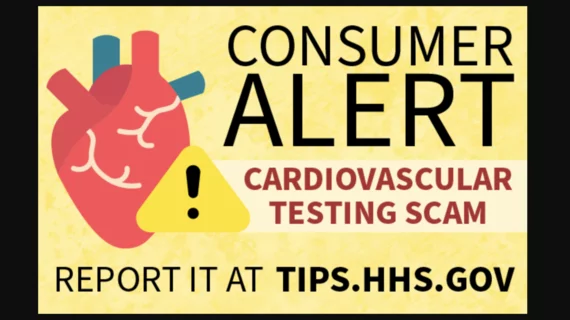
The U.S. government is warning the public about fraudulent cardiovascular testing scams that use "fear-based marketing" to put young people at risk.
Healthcare facilities are exploiting fears about sudden cardiac arrest by pushing for unnecessary electrocardiograms and echocardiograms to be performed on large groups of student athletes, according to the new alert. In some instances, diagnoses are being falsified and test results are not even being properly reviewed.
The Department of Health and Human Services, Centers for Medicare and Medicaid Services and Office of Inspector General all collaborated on the alert, noting that these schemes “harm patients, place student athletes at risk and defraud taxpayers and insurers.”
One recommendation included in the warning is that families should be cautious about suspicious testing offers. If no doctors appear to be involved or every participant is going to undergo the exact same testing, for example, the program may not be legitimate. Another key takeaway from the alert is to be suspicious of any companies offering gift cards or other incentives for undergoing medical tests.
Anyone who believes they have encountered one of these fraudulent programs is urged to contact the Office of Inspect General.
“Awareness and quick reporting help prevent harm and hold bad actors accountable,” according to the alert.
Click here to read the full warning.
ACC highlights risks of ‘one-size-fits-all’ approach to testing
The American College of Cardiology (ACC) responded to this alert by pointing to its own 2025 guidance on competitive sports participation among patients with cardiovascular abnormalities.[1] The group also shared a recent statement related to screening policies for competitive athletes.[2]
“For athletes and physically active individuals, cardiovascular screening should be guided by current evidence and published ACC recommendations and individualized based on symptoms, family history, training level and clinical risk factors—not through a one-size-fits-all approach," Ankit B. Shah, MD, chair of ACC's Sports and Exercise Cardiology Member Section, said in a statement. “Athletes and families should be cautious of unsolicited cardiovascular screening programs that promise to detect hidden heart disease through broad testing without an appropriate clinical evaluation and interpretation.”

Michael has more than 19 years of experience as a professional writer and editor. He has written at length about cardiology, radiology, artificial intelligence and other key healthcare topics.