
American College of Cardiology highlights the cardiovascular risks of various cancer treatments

The American College of Cardiology (ACC) has issued a concise clinical guidance (CCG) document on the diagnosis and management of adverse cardiovascular effects from targeted oncology therapies. The full document is published in the Journal of the American College of Cardiology.[1]
Advances in cancer treatment have decreased cancer-related mortality, but many cancer therapies have adverse cardiovascular impacts. This has led to a growth in cardio-oncology programs that monitor and address such concerns. These programs were largely started due to damage to the myocardium that can reduce heart function or lead to heart failure with anthracycline chemotherapy agents, but newer treatments resulted in even more concerns that need to be monitored and addressed, prompting this latest update.
This new guidance specifically focuses on three classes of the commonly used anticancer therapies: Bruton’s tyrosine kinase (BTK) inhibitors, immune checkpoint inhibitors (ICIs) and vascular endothelial growth factor inhibitors (VEGF). It offers recommendations related to the best clinical practices when using these agents.
"The goal is to assist practicing clinicians by providing succinct and point-of-care guidance on diagnosing and managing the commonly associated cardiovascular toxicities observed with these agents. In alignment with this objective, we have presented pragmatic, real-world scenarios depicting cardiovascular toxicity associated with each of these agents, their FDA-approved indications, epidemiology, predisposing risk factors for toxicity, baseline risk assessment, and proposed approaches to diagnosing and managing cardiovascular toxicity in these individuals," chair Sarju Ganatra, MD, vice chair Ana Barac, MD, PhD, and the rest of the writing committee wrote.
The authors said modern cancer therapeutics, including targeted agents and immunotherapy, have changed the landscape of cancer treatment with higher levels of survival. Compared with conventional chemotherapy, many targeted therapies are associated with less systemic toxicity, but the authors of the guidance said they may present with a wide spectrum of cardiovascular complications. Recent U.S. Food and Drug Administration (FDA) approvals now make about 44% of all U.S. adults with cancer eligible for treatment with newer ICIs, so cardiologists need information on how to manage these patients.
BTK inhibitors are mainly indicated in B-cell malignancies. VEGF inhibitors are used in the treatment of a range of solid tumors, including renal cell carcinoma, hepatocellular carcinoma, colorectal cancer, non–small cell lung cancer and others. ICIs are indicated for a broad range of malignancies, including melanoma, non–small cell lung cancer, renal cell carcinoma, hepatocellular carcinoma, urothelial carcinoma, head and neck squamous cell carcinoma and some gastrointestinal cancers
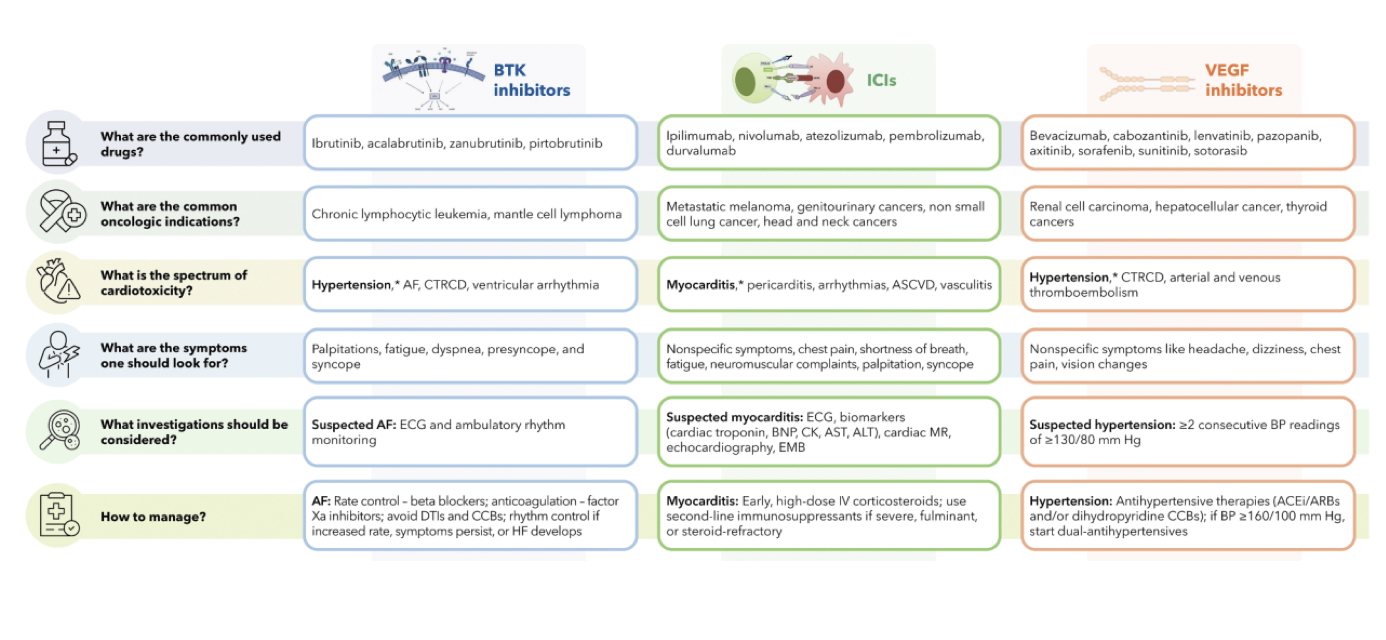
Figure 1 from the new ACC concise clinical guidance "Diagnosis and Management of Cardiovascular Adverse Effects of Targeted Oncology Therapies."
Each of these agents has potential cardiovascular side effects. For example, the guidance states that BTK inhibitors are associated with hypertension and arrhythmias. ICIs can activate the immune system and complicate immune-related adverse events, including myocarditis and myositis. VEGF inhibitors make up a large group of cancer-fighting agents and are associated with hypertension, but cases of myocardial infarction, venous thromboembolism, arrhythmias and left ventricular dysfunction have also been reported.
ACC shifting toward concise clinical guidance to help cardiologists stay up-to-date
CCG documents highly focused and limited in scope to provide timely recommendations where none currently exist. These documents will also outline actions required for evidence to be implemented in practice for specific patient populations and illustrate clinical decision-making processes by using tools such as figures, tables and checklists.
"The concept places emphasis on making clinical information easier to consume, share, integrate and update. To this end, the ACC has shifted from developing isolated documents to creating integrated 'solution sets.' Solution sets address key questions facing care teams and offer practical guidance to be applied at the point of care. Because solution sets reflect current evidence and ongoing gaps in care, the associated tools will be refined over time to match changing evidence and member needs," explained Gurusher S. Panjrath, MD, MBBS, chair of the ACC Solution Set Oversight Committee.

Dave Fornell has covered healthcare for more than 17 years, with a focus in cardiology and radiology. Fornell is a 5-time winner of a Jesse H. Neal Award, the most prestigious editorial honors in the field of specialized journalism. The wins included best technical content, best use of social media and best COVID-19 coverage. Fornell was also a three-time Neal finalist for best range of work by a single author. He produces more than 100 editorial videos each year, most of them interviews with key opinion leaders in medicine. He also writes technical articles, covers key trends, conducts video hospital site visits, and is very involved with social media. E-mail: [email protected]