
Cardiologists share vaccine recommendations for heart patients: Flu, COVID-19 and more
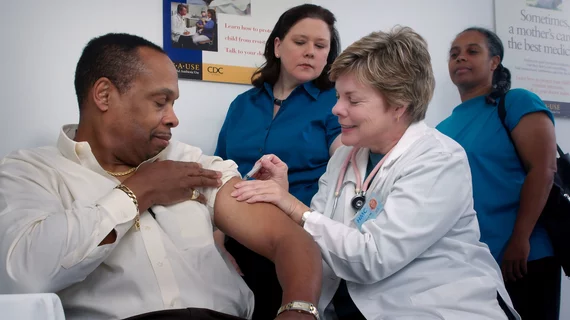
The American College of Cardiology (ACC) has shared a new concise clinical guidance (CCG) detailing specific vaccine recommendations for adults and children with a history of cardiovascular disease (CVD).[1] The group reviewed its own evidence-based guidelines as well as updated resources developed by the American College of Physicians and U.S. Centers for Disease Control and Prevention.
“Patients with heart disease face a higher risk of adverse outcomes, including hospitalization and death, following respiratory virus infection compared with the general population,” wrote first author Paul A. Heidenreich, MD, a cardiologist with Stanford University and chair of the CCG’s writing committee, and colleagues. “Additionally, the likelihood of infection after exposure may be elevated in this population.”
Heidenreich et al. also emphasized that both randomized clinical trials and observational studies have consistently demonstrated the advantages of vaccination. Adverse side effects, the group added, are “exceedingly rare and are far outweighed by the demonstrated benefits.”
How often should heart patients be vaccinated?
Patients with a history of heart disease should receive an influenza vaccine each year beginning at the age of 6 months old. Nasal vaccines are not recommended for patients over the age of 50 years old, the authors explained.
COVID-19 vaccines are also recommended annually from the age of 6 months on. While these vaccines have been a source of controversy over the years, the writing group highlighted the fact that annual COVID-19 vaccines have been linked to reduced risks of myocardial infarction, stroke, heart failure events and all-cause mortality.
A one-time vaccine for pneumococcal disease is recommended for adults 19 years old and older. The PCV20 or PCV21 vaccines are preferred. A one-time dose is also recommended for respiratory syncytial virus (RSV) for any patients 50 years old and older.
A two-dose zoster/shingles vaccine, meanwhile, is recommended for any patients 50 years or older. These two doses should be administered two to six months apart from one another.
Cardiologists can make a real difference by communicating with patients
One key takeaway from the new CCG is that care teams should play an active role in ensuring their patients stay up to date with these various vaccines.
“Cardiology clinics are a key setting for identifying unvaccinated or under-vaccinated patients,” the authors wrote. “Many patients with CVD will see a cardiovascular specialist first—for post-hospitalization follow-up, post-procedure visits, or ongoing management of heart failure or heart transplant—before re-engaging with primary care. Vaccination should be considered in the suite of secondary therapies for patients with recent myocardial infraction or CVD, and clinicians should familiarize themselves with recommended vaccination schedules and distribution in their clinical setting. Where vaccination cannot be provided directly, referral should be routine rather than an afterthought.”
Click here to read the full document in JACC.

Michael has more than 19 years of experience as a professional writer and editor. He has written at length about cardiology, radiology, artificial intelligence and other key healthcare topics.