CVB homepage

This is the first time the FDA has authorized market access for non-tobacco, non-menthol electronic nicotine delivery systems. 

Emergency Department room ED ER EM

When patients land in the emergency room, a history of cannabis use may increase their risk of an adverse outcome.

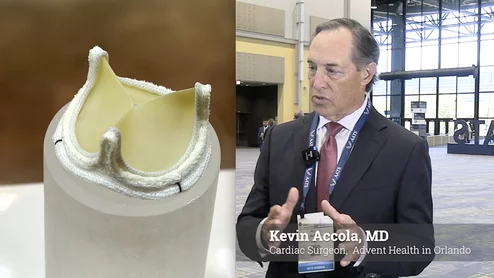
Kevin Accola, MD, a cardiac surgeon at Advent Health in Orlando, Florida, explains the 10-year results from the COMMENCE aortic trial that shows long-term durability and sustained performance of its Resilia surgical aortic valve. The data were presented at the American Association for Thoracic Surgery (AATS) 2026 annual meeting this week. #AATS #AATS26 #AATS2026

Kevin Accola, MD, spoke to Cardiovascular Business about new 10-year data on the performance of surgical valves featuring Resilia tissue. The findings are good news for Edwards Lifesciences, which also includes the tissue on many of its TAVR devices.

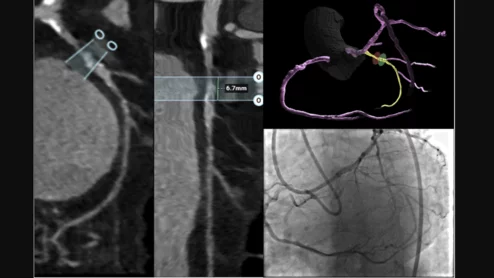
CCTA characterization of a chronic total occlusion with angiographic correlation during percutaneous coronary intervention.

Researchers reviewed dozens of studies to evaluate the long-term value of using CCTA guidance to perform PCI on patients with complete blockages.

Society of cardiovascular computed tomography (SCCT) President Kavitha Chinnaiyan, MD, FACC, MSCCT, a cardiologist and professor of medicine at Oakland University William Beaumont School of Medicine in Royal Oak, with is part of Corewell Health, explains some of the key trends in coronary computed tomography angiography (CCTA) and how this is being translated into educational programming at the SCCT 2026 annual scientific meeting (ASM). #SCCT2026

As CCTA sees rapid adoption across cardiology, SCCT is working to address the education required to sustain the expansion.

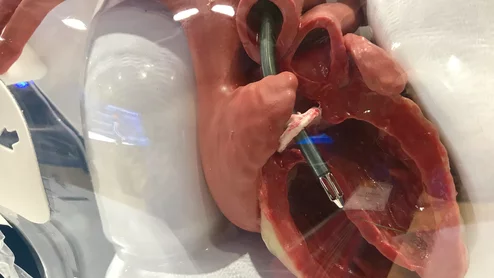
Model in the Abiomed booth showing placement of the Impella 5.5 liters per minute catheter heart pump. This is used for patients who need more support than a conventional Impella CP can offer, but does not require level of supported from ECMO.

New data out of the AATS Annual Meeting identified significant potential for a new treatment strategy. 

Innovation at work

Follow-up care after a successful heart transplant can be challenging—both for providers and their patients. Consider, for example, the fact that so many patients who develop complications never actually present with symptoms.  

In cooperation with CareDx