CVB homepage

Product Recall

The new recall includes nearly 4,500 devices. There have been 134 incidents so far, including 5 adverse events.  

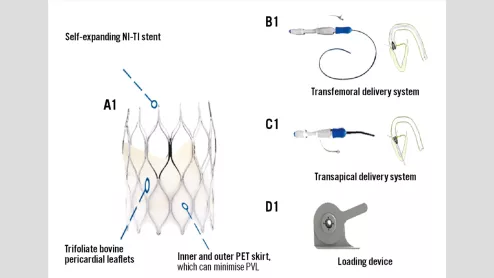
A team in China treated 10 patients—split evenly between men and women—with the SinoCrown TAVR valve developed by Lepu Medical Technology Company. The average patient age was 77.5 years old.

It is still early for this new-look TAVR valve, but initial findings out of China include a procedural success rate of 100% and no deaths, disabling strokes or myocardial infarctions after 30 days. Read a full analysis from the team using the device. 

New data from the American Heart Association (AHA), published Jan. 25, 2023, in Circulation, suggests it resulted in a significant increase in the number of patients dying from cardiovascular disease (CVD) and a higher age-adjusted mortality rate. Oxygen Mask

Researchers explored updated data from the AHA, noting that the number of CVD-related deaths increased from more than 874,000 in 2019 to more than 928,000 in 2020.

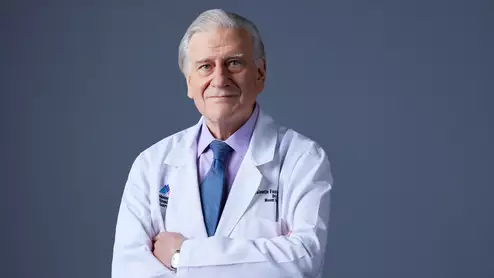
Valentin Fuster, MD, PhD, director of Mount Sinai Heart and general director of the Spanish National Center for Cardiovascular Research.

Fuster, one of the world’s most prominent cardiologists, said the award was a "great honor," especially since he was born in Barcelona. 

Thomas E. MacGillivray elected president of Society of Thoracic Surgeons. #STS

“There has never been a more exciting time to be a cardiothoracic surgeon,” the veteran surgeon said in a statement. 

Artificial intelligence (AI) has been one of the biggest stories in healthcare for years, but many clinicians still remain unsure about how, exactly, they should be using AI to help their patients. A new analysis in European Heart Journal explored that exact issue, providing cardiology professionals with a step-by-step breakdown of how to get the most out of this potentially game-changing technology.

Overwhelmed or confused by AI and machine learning technology? A new analysis in European Heart Journal hopes to provide some clarity. 

Innovation at work

Follow-up care after a successful heart transplant can be challenging—both for providers and their patients. Consider, for example, the fact that so many patients who develop complications never actually present with symptoms.  

In cooperation with CareDx