• Clinical
      |Clinical
    • Acute Coronary Syndromes
    • Cardiac Surgery
    • Covid-19
    • Heart Failure
    • Heart Health
    • Heart Rhythm
    • Hypertension
    • Interventional Cardiology
    • Mitral Valve
    • Pharmaceutics
    • Structural Heart Disease
    • TAVR
    • Tricuspid Valve
    • Vascular & Endovascular
  • Management
      |Management
    • Chest Pain Guidelines
    • Compensation
    • Economics
    • Education & Training
    • Legal News
    • Patient Care
    • Policy & Regulations
    • Professional Associations
    • Quality
    • Revenue
    • Staffing
  • Technology
      |Technology
    • AI
    • Cardiac Imaging
    • Cath Lab
    • CT
    • CVIS
    • ECG
    • Echo
    • EP Lab
    • Informatics
    • MRI
    • Nuclear Cardiology
    • Remote Monitoring
  • Videos
  • Conferences
      |Conferences
    • ACC
    • AHA
    • ASE
    • ASNC
    • ESC
    • EuroPCR
    • HFSA
    • HRS
    • SCAI
    • SCCT
    • SIIM
    • SNMMI
    • STS
    • TCT
    • VIVA
  • Custom Content
      |Custom Content
    • Experience Stories
    • Webinars & Videos
  • Subscribe
  • Forty Under 40 Award
      |Forty Under 40 Award
    • Class of 2026
    • Class of 2025

Search form

Home

Top 10 most popular cardiology video interviews this past month

News You Need to Know Today
Top 10 most popular cardiology video interviews this past month
Sunday, March 22, 2026
Link to Twitter Link to Facebook Link to Linkedin Link to Vimeo

Top Video Content

Cardiologist discusses Lp(a), the CVD risk factor responsible for many surprise heart attacks

Cardiologist Nathaniel Lebowitz, MD, reviews the latest updates in lipoprotein(a) awareness, testing and drug development.

READ MORE >
Nathaniel Lebowitz, MD, in charge of preventive cardiology at Hackensack University Medical Center, and assistant professor of internal medicine at Hackensack Meridian School of Medicine, gives an overview of where things are at with lipoprotein (a) awareness, testing and drug development. He and is working on the American Heart Associations (AHA) Lp(a) Discovery Project to expand awareness to both physicians and patients. #AHA #LPA
Share on Twitter Share on Facebook Share on Linkedin

Cardiologist discusses Lp(a), the CVD risk factor responsible for many surprise heart attacks

Share on Twitter Share on Facebook Share on Linkedin
Nathaniel Lebowitz, MD, in charge of preventive cardiology at Hackensack University Medical Center, and assistant professor of internal medicine at Hackensack Meridian School of Medicine, gives an overview of where things are at with lipoprotein (a) awareness, testing and drug development. He and is working on the American Heart Associations (AHA) Lp(a) Discovery Project to expand awareness to both physicians and patients. #AHA #LPA
Cardiologist Nathaniel Lebowitz, MD, reviews the latest updates in lipoprotein(a) awareness, testing and drug development.
READ MORE >

CCTA becoming an essential tool for interventional cardiologists

Ziad Ali, MD, explains how coronary computed tomography angiography is creating a major shift in cardiac care.

READ MORE >
iad Ali, MD, DPhil, director of the DeMatteis Cardiovascular Institute and director investigational interventional cardiology, St. Francis Hospital and Heart Center, explains how coronary computed tomography angiography (CCTA) offers a shift in cardiac care and interventional cardiology because of the information it offers on plaque burden and ischemia based on fractional flow reserve CT (FFR-CT). #TCT #YesCCT
Share on Twitter Share on Facebook Share on Linkedin

CCTA becoming an essential tool for interventional cardiologists

Share on Twitter Share on Facebook Share on Linkedin
iad Ali, MD, DPhil, director of the DeMatteis Cardiovascular Institute and director investigational interventional cardiology, St. Francis Hospital and Heart Center, explains how coronary computed tomography angiography (CCTA) offers a shift in cardiac care and interventional cardiology because of the information it offers on plaque burden and ischemia based on fractional flow reserve CT (FFR-CT). #TCT #YesCCT
Ziad Ali, MD, explains how coronary computed tomography angiography is creating a major shift in cardiac care.
READ MORE >

3D software helps cardiologists plan ahead for TAVR complications

Serious complications are rare after TAVR, but they can be catastrophic or fatal when they do occur. The care team at Sentara Heart Hospital found that bringing in new 3D software made it much easier to plan ahead for such issues. 

READ MORE >
Matthew Summers, MD, FACC, program director for structural heart, Sentara Heart Hospital, Norfolk, Virginia, explains how his center used a new transcatheter aortic valve replacement (TAVR) 3D CT planning software to better identify patients who are at high risk of complications. The software also enables the heart team to test the best placement of various valves to create a procedure plan tailored for each patients unique anatomy.
Share on Twitter Share on Facebook Share on Linkedin

3D software helps cardiologists plan ahead for TAVR complications

Share on Twitter Share on Facebook Share on Linkedin
Matthew Summers, MD, FACC, program director for structural heart, Sentara Heart Hospital, Norfolk, Virginia, explains how his center used a new transcatheter aortic valve replacement (TAVR) 3D CT planning software to better identify patients who are at high risk of complications. The software also enables the heart team to test the best placement of various valves to create a procedure plan tailored for each patients unique anatomy.
Serious complications are rare after TAVR, but they can be catastrophic or fatal when they do occur. The care team at Sentara Heart Hospital found that bringing in new 3D software made it much easier to plan ahead for such issues. 
READ MORE >

How the rise of AI could lead to efficiency issues and lower reimbursement payments

AI has shown the potential to transform patient care. However, there are more details to consider than many health systems and policymakers realize. 

READ MORE >
Friederike Keating, MD, professor of medicine at the Larner College of Medicine, and director of nuclear cardiology at University of Vermont Health, said artificial intelligence (AI) in medical imaging may actually increase costs and make workflows less efficient in some instances. She said this is a key thing for health systems and policy makers to keep in mind if there is not clear data showing it helps.
Share on Twitter Share on Facebook Share on Linkedin

How the rise of AI could lead to efficiency issues and lower reimbursement payments

Share on Twitter Share on Facebook Share on Linkedin
Friederike Keating, MD, professor of medicine at the Larner College of Medicine, and director of nuclear cardiology at University of Vermont Health, said artificial intelligence (AI) in medical imaging may actually increase costs and make workflows less efficient in some instances. She said this is a key thing for health systems and policy makers to keep in mind if there is not clear data showing it helps.
AI has shown the potential to transform patient care. However, there are more details to consider than many health systems and policymakers realize. 
READ MORE >

ASE promoting 3D echo as a better way to treat congenital heart disease

The introduction of a 3D pediatric transesophegeal echo probe is having a major impact on how these pediatric congenital heart patients are being treated.

READ MORE >
Pei-Ni Jone explains ASE push for 3D TEE in congenital heart
Share on Twitter Share on Facebook Share on Linkedin

ASE promoting 3D echo as a better way to treat congenital heart disease

Share on Twitter Share on Facebook Share on Linkedin
Pei-Ni Jone explains ASE push for 3D TEE in congenital heart
The introduction of a 3D pediatric transesophegeal echo probe is having a major impact on how these pediatric congenital heart patients are being treated.
READ MORE >

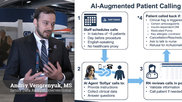
AI agent calling cath lab patients to help them prepare for treatment

Mount Sinai Hospital in New York is now using AI-powered virtual agents to call some patients before cath lab procedures. The move was designed to help nurses focus more on patient care and reduce their risk of burnout.

READ MORE >
Andriy Vengrenyuk, MS, senior data analyst for interventional cardiology at the Icahn School of Medicine at Mount Sinai, explains a pilot program where artificial intelligence (AI) virtual agents call patients prior to their cath lab procedures to save nursing staff time doing administrative tasks.
Share on Twitter Share on Facebook Share on Linkedin

AI agent calling cath lab patients to help them prepare for treatment

Share on Twitter Share on Facebook Share on Linkedin
Andriy Vengrenyuk, MS, senior data analyst for interventional cardiology at the Icahn School of Medicine at Mount Sinai, explains a pilot program where artificial intelligence (AI) virtual agents call patients prior to their cath lab procedures to save nursing staff time doing administrative tasks.
Mount Sinai Hospital in New York is now using AI-powered virtual agents to call some patients before cath lab procedures. The move was designed to help nurses focus more on patient care and reduce their risk of burnout.
READ MORE >

Cardiologist highlights key differences between OBLs and ASCs

Current payment policies have health systems and physicians all over the country looking to learn more about these two business models. 

READ MORE >
Samir B. Pancholy, MD, chief interventional cardiologist, Wayne Memorial Hospital in Honesdale, Pennsylvania, discusses the differences in the business models for office based labs (OBL) vs ambulatory surgical centers (ASC) and choosing the right model cardiovascular and vascular procedures. #TCT #SCAI #OBL #ASC
Share on Twitter Share on Facebook Share on Linkedin

Cardiologist highlights key differences between OBLs and ASCs

Share on Twitter Share on Facebook Share on Linkedin
Samir B. Pancholy, MD, chief interventional cardiologist, Wayne Memorial Hospital in Honesdale, Pennsylvania, discusses the differences in the business models for office based labs (OBL) vs ambulatory surgical centers (ASC) and choosing the right model cardiovascular and vascular procedures. #TCT #SCAI #OBL #ASC
Current payment policies have health systems and physicians all over the country looking to learn more about these two business models. 
READ MORE >

CPT code updates in 2026 will change how interventional cardiologists get paid

A variety of CPT code changes take effect in 2026, and many of them will make a direct impact on interventional cardiology. Arnold Seto, MD, spoke to Cardiovascular Business about these updates for a new video interview.

READ MORE >
Arnold Seto, MD, MPA, FACC, FSCAI, cath lab director, Long Beach VA Medical Center, professor of medicine at Charles Drew University, Society for Cardiovascular Angiography and Interventions (SCAI) treasurer and chair of the SCAI Advocacy Committee, explains the new CPT reimbursement codes being introduced in January 2026 and their impact on practice.
Share on Twitter Share on Facebook Share on Linkedin

CPT code updates in 2026 will change how interventional cardiologists get paid

Share on Twitter Share on Facebook Share on Linkedin
Arnold Seto, MD, MPA, FACC, FSCAI, cath lab director, Long Beach VA Medical Center, professor of medicine at Charles Drew University, Society for Cardiovascular Angiography and Interventions (SCAI) treasurer and chair of the SCAI Advocacy Committee, explains the new CPT reimbursement codes being introduced in January 2026 and their impact on practice.
A variety of CPT code changes take effect in 2026, and many of them will make a direct impact on interventional cardiology. Arnold Seto, MD, spoke to Cardiovascular Business about these updates for a new video interview.
READ MORE >

Cardiologist became paralyzed after wearing heavy aprons in the cath lab for decades—but he fought back

Dean J. Kereiakes, MD, was left paralyzed after battling severe orthopedic issues for his entire career. Back in the cath lab after a long recovery, he is now stressing the importance of workplace safety among interventional cardiologists.

READ MORE >
Dean Kereiakes, a nationally renowned interventional cardiologist and president of The Christ Hospital Heart and Vascular Institute, has long been recognized for his groundbreaking work in cardiovascular research and intervention. But in 2024, his career and his life were permanently altered when decades of wearing heavy lead protection in the cath lab left him paralyzed.
Share on Twitter Share on Facebook Share on Linkedin

Cardiologist became paralyzed after wearing heavy aprons in the cath lab for decades—but he fought back

Share on Twitter Share on Facebook Share on Linkedin
Dean Kereiakes, a nationally renowned interventional cardiologist and president of The Christ Hospital Heart and Vascular Institute, has long been recognized for his groundbreaking work in cardiovascular research and intervention. But in 2024, his career and his life were permanently altered when decades of wearing heavy lead protection in the cath lab left him paralyzed.
Dean J. Kereiakes, MD, was left paralyzed after battling severe orthopedic issues for his entire career. Back in the cath lab after a long recovery, he is now stressing the importance of workplace safety among interventional cardiologists.
READ MORE >

How to choose between CABG and PCI when treating coronary artery disease

John Puskas, MD, chief of cardiothoracic surgery at Emory University Hospital Midtown, noted that both treatment options have their own benefits. It often depends on the patient's age and comorbidities, though there are other factors to consider as well. 

READ MORE >
John D. Puskas, MD, MSc, PhD., FACS, FACC, professor of surgery, and chief of cardiothoracic surgery at Emory University Hospital Midtown, explains when patients are best served with coronary artery bypass graft (CABG) surgery rather than percutaneous coronary intervention (PCI).
Share on Twitter Share on Facebook Share on Linkedin

How to choose between CABG and PCI when treating coronary artery disease

Share on Twitter Share on Facebook Share on Linkedin
John D. Puskas, MD, MSc, PhD., FACS, FACC, professor of surgery, and chief of cardiothoracic surgery at Emory University Hospital Midtown, explains when patients are best served with coronary artery bypass graft (CABG) surgery rather than percutaneous coronary intervention (PCI).
John Puskas, MD, chief of cardiothoracic surgery at Emory University Hospital Midtown, noted that both treatment options have their own benefits. It often depends on the patient's age and comorbidities, though there are other factors to consider as well. 
READ MORE >

Innovate Healthcare thanks our partners for supporting our newsletters.
Sponsorship has no influence on editorial content.

Interested in reaching our audiences, contact our team

*|LIST:ADDRESSLINE|*

You received this email because you signed up for newsletters from Innovate Healthcare.
Change your preferences or unsubscribe here

Contact Us  |  Unsubscribe from all  |  Privacy Policy

© Innovate Healthcare, a TriMed Media brand
Innovate Healthcare

Recent Newsletters

News Alert: FDA shares new warning about Impella heart pumps after death
AHA takes on cardiac amyloidosis | Have clinicians been wrong about PAD? | FDA OKs new AI for heart failure
Insulin pods recalled | Cardiology groups support bill | Treating ‘broken hearts’ | AI delivers answers | Prasugrel after PCI
The high costs of robotic tech | Medtronic recalls thousands of devices | TAVR in younger patients | FDA approves next-gen valve
Heart pump controllers recalled | Concomitant EP procedures for AFib | FDA's update after deaths | Pacing techniques & TAVR
The risks of PFA | FDA's warning after patient death | Cardiac ablations in ASCs | Group wants TAVR changes
How TAVR implant depth impacts outcomes | A closer look at GLP-1 drugs & AFib | BATMAN technique to the rescue

Pagination

    • First page « First
    • Previous page ‹‹
    • Page 1
    • Current page 2
    • Page 3
    • Page 4
    • Page 5
    • Page 6
    • Page 7
    • Page 8
    • Page 9 …
    • Next page ››
    • Last page Last »
  • Home
  • News
  • Article Archive
  • Custom Content
  • Webinars
  • Press Releases
  • Content Studio
  • Advertising
  • Submit Press Release
  • Contact Us
  • Terms of Use
  • Privacy Policy
  • Cardiovascular Business
  • HealthExec
  • Radiology Business
 
© 2026 Innovate Healthcare | All Rights Reserved. | Terms of Use | Privacy Policy
 
Design by Adaptive Theme
Trimed Popup