• Clinical
      |Clinical
    • Acute Coronary Syndromes
    • Cardiac Surgery
    • Covid-19
    • Heart Failure
    • Heart Health
    • Heart Rhythm
    • Hypertension
    • Interventional Cardiology
    • Mitral Valve
    • Pharmaceutics
    • Structural Heart Disease
    • TAVR
    • Tricuspid Valve
    • Vascular & Endovascular
  • Management
      |Management
    • Chest Pain Guidelines
    • Compensation
    • Economics
    • Education & Training
    • Legal News
    • Patient Care
    • Policy & Regulations
    • Professional Associations
    • Quality
    • Revenue
    • Staffing
  • Technology
      |Technology
    • AI
    • Cardiac Imaging
    • Cath Lab
    • CT
    • CVIS
    • ECG
    • Echo
    • EP Lab
    • Informatics
    • MRI
    • Nuclear Cardiology
    • Remote Monitoring
  • Videos
  • Conferences
      |Conferences
    • ACC
    • AHA
    • ASE
    • ASNC
    • ESC
    • EuroPCR
    • HFSA
    • HRS
    • HRS
    • SCAI
    • SCCT
    • SIIM
    • SNMMI
    • STS
    • TCT
    • VIVA
  • Custom Content
      |Custom Content
    • Experience Stories
    • Webinars & Videos
  • Subscribe
  • Forty Under 40 Award
      |Forty Under 40 Award
    • Class of 2026
    • Class of 2025

Search form

Home

SCAI shares STEMI recommendations for cardiologists and cath labs

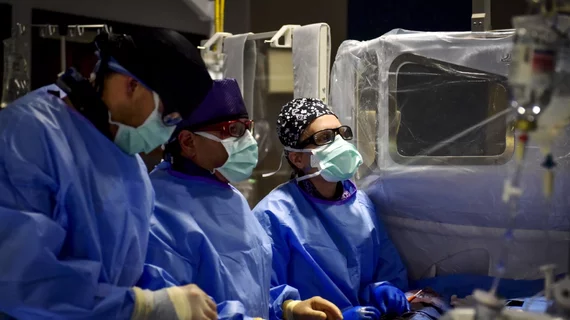
PCI can improve the odds of survival for some ischemic heart failure patients with moderate-to-severe functional mitral regurgitation, according to a new study. Image courtesy of Beaumont Hospital. Interventional cardiology procedure in a cath lab at Beaumont Hospital.

Image courtesy of Beaumont Hospital.

“This document represents a collective effort to refine and advance the standards of care in STEMI management," according to one cardiologist behind the project. 

  • Read more about SCAI shares STEMI recommendations for cardiologists and cath labs

FDA’s tirzepatide decision creates uncertainty for patients—and leads to a lawsuit

pharmaceutical drug approval process

When drugs are on the FDA’s shortage list, outsourcing facilities can produce their own compounded versions. When the FDA removed tirzepatide from that list with no warning, it created a considerable amount of chaos both behind the scenes and in pharmacies all over the country. 

  • Read more about FDA’s tirzepatide decision creates uncertainty for patients—and leads to a lawsuit

Obesity-related deaths on the rise in US—but there is good news for cardiologists

Deaths related to obesity have skyrocketed in the United States, especially among men. However, researchers identified positive progress when it came to the mortality rates for CVD, ischemic heart disease and heart failure/cardiomyopathy.

  • Read more about Obesity-related deaths on the rise in US—but there is good news for cardiologists

Use of AI opportunistic screening in CT for cardiovascular disease

Ron Blankstein, MD, Brigham and Womens Hospital, explains a study using AI opportunistic screening in non-cardiac CT scans looking for coronary artery disease.

Ron Blankstein, MD, professor of radiology, Harvard Medical School, explains the use of artificial intelligence to detect heart disease in non-cardiac CT exams.

  • Read more about Use of AI opportunistic screening in CT for cardiovascular disease

Medtronic’s OmniaSecure, the smallest ICD lead of its kind, linked to long-term durability

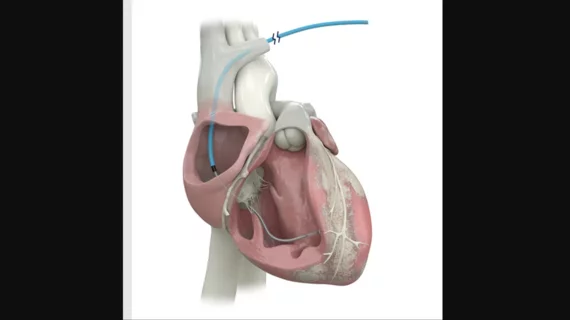
The OmniaSecure defibrillation lead, which Medtronic describes as “the world's smallest transvenous defibrillation lead,” has a size of just 4.7 French.

Reliability modeling suggests the small-diameter defibrillation lead, already linked to positive early outcomes, should last patients for at least 10 years—and likely longer. 

  • Read more about Medtronic’s OmniaSecure, the smallest ICD lead of its kind, linked to long-term durability

ACR shares guidance for radiology providers facing IV supply shortages after hurricane

IV hospital room intravenous drip solution

Baxter’s North Cove manufacturing site was significantly impacted by unprecedented rain and storm surge from Hurricane Helene hitting western North Carolina. 

  • Read more about ACR shares guidance for radiology providers facing IV supply shortages after hurricane

A closer look at how FDA's flurpiridaz approval will impact nuclear cardiology

Video of Jamshid Maddahi, MD, UCLA, explaining why flurpiridaz will change cardiac imaging and increase the adoption of PET cardiac imaging.

The newly approved PET radiotracer is expected to improve patient care significantly. “We have been able to reach the pinnacle of myocardial perfusion imaging with flurpiridaz," one expert said.

  • Read more about A closer look at how FDA's flurpiridaz approval will impact nuclear cardiology

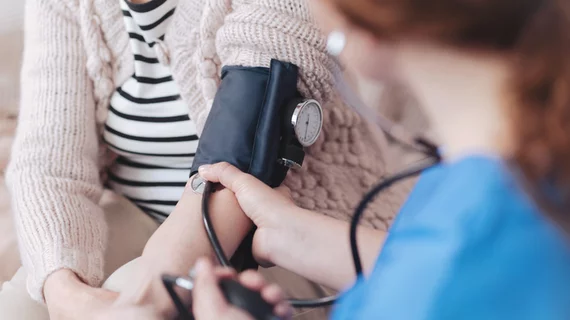
How patient positioning during blood pressure measurements impacts accuracy

Blood pressure

Something as simple as resting a patient's arm the wrong way can make their BP reading inaccurate. 

  • Read more about How patient positioning during blood pressure measurements impacts accuracy

Johnson & Johnson completes V-Wave acquisition

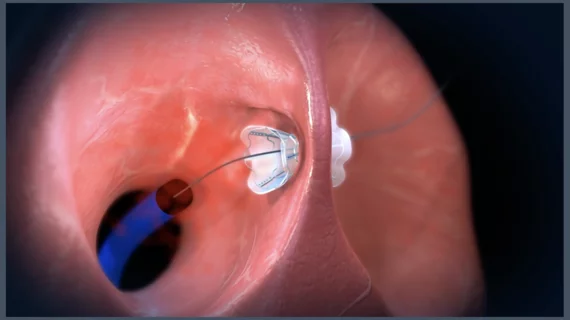
V-Wave has gained considerable attention or its Ventura Interatrial Shunt System, a small implantable device designed to reduce pressure on the left atrium and the lungs in patients with heart failure with reduced ejection fraction (HFrEF). The Ventura device includes a nitinol hourglass-shaped frame that anchors to the patient’s fossa ovalis in a way that prevents migration or embolization. It is implanted via an interventional procedure with fluoroscopy and echocardiography guidance.

Image courtesy of Johnson & Johnson MedTech.

While the initial purchase price was $600 million, the final amount could reach approximately $1.7 billion if certain milestones are met. V-Wave's Ventura Interatrial Shunt System for HFrEF has gained considerable interest in recent years, and Johnson & Johnson was an early investor in the technology back in 2016.

  • Read more about Johnson & Johnson completes V-Wave acquisition

FDA grants AI-powered ECG screening tool for aortic stenosis its breakthrough device designation

artificial intelligence in cardiology

The FDA clearly sees significant potential in this new screening software from New York-based AccurKardia.

  • Read more about FDA grants AI-powered ECG screening tool for aortic stenosis its breakthrough device designation

Pagination

    • First page « First
    • Previous page ‹ Previous
    • Page …187
    • Page 188
    • Page 189
    • Page 190
    • Current page 191
    • Page 192
    • Page 193
    • Page 194
    • Page 195 …
    • Next page Next ›
    • Last page Last »
Subscribe
  • Home
  • News
  • Article Archive
  • Custom Content
  • Webinars
  • Press Releases
  • Content Studio
  • Advertising
  • Submit Press Release
  • Contact Us
  • Terms of Use
  • Privacy Policy
  • Cardiovascular Business
  • HealthExec
  • Radiology Business
 
© 2026 Innovate Healthcare | All Rights Reserved. | Terms of Use | Privacy Policy
 
Design by Adaptive Theme