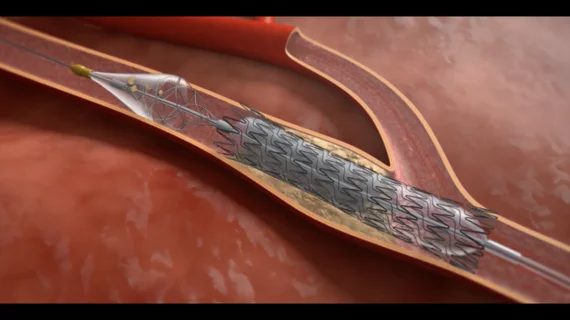
Contego Medical's Neuroguard IEP system for carotid stenting.
The newly approved system includes a stent, dilation balloon and integrated embolic protection filter. After CMS expanded Medicare coverage for carotid artery stenting in 2023, the procedures are expected to grow more and more common as time goes on.
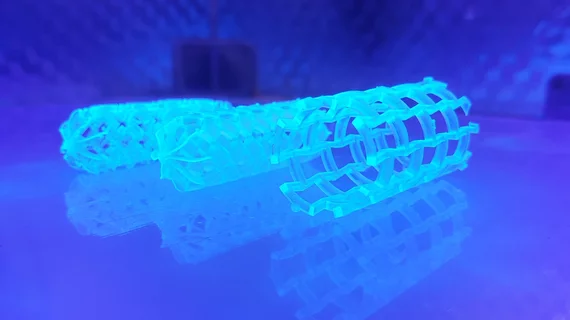
Massachusetts Institute of Technology won a $50,000 award to help commercialize its 3D printed, polymeric auxetic stent to treat pediatric aortic coarctation. It is bioresorbable so the patient can continue to grow without the need for as many reinterventions.
Most cardiac devices do not fit young children, making it especially important for growth in pediatric cardiology to continue. The FDA helped fund a contest aimed at identifying new devices that show a ton of potential.
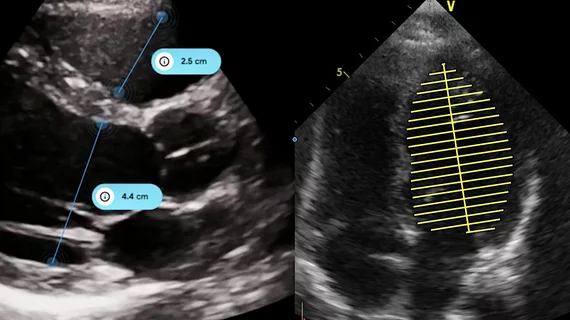
iCardio.ai, co-founded by a cardiologist, is part of the Cedars-Sinai Accelerator program. The startup has already announced new partnerships with Viz.ai, Abbott and others in the cardiac health space.
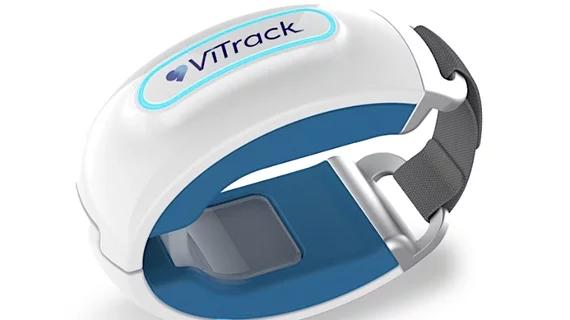
Dynocardia has now received nearly $5.1 million in funding from the NHLBI to help speed commercializing its wrist-worn monitor to avoid the need for invasive catheter BP monitoring.
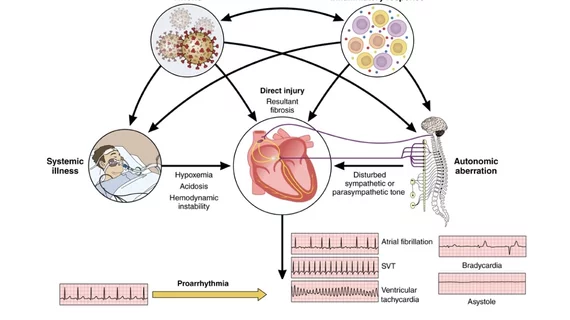
Overview of the pathophysiological mechanisms associated with arrhythmogenesis in the setting of COVID-19 infection. Image from Circulation.
The objective of the AHA scientific statement is to review the available evidence on for better management of cardiac arrhythmias from COVID causes that are still encountered on a regular basis.
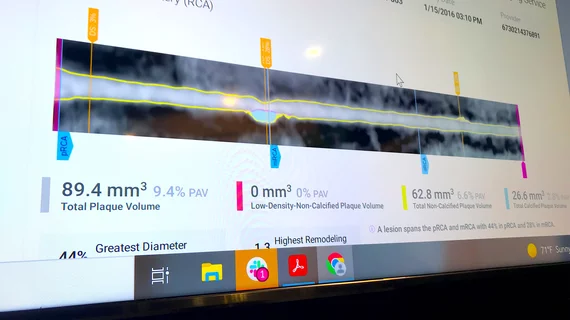
Example of the Cleerly automated artificial intelligence (AI) assessment of soft coronary plaque from a CT scan. The AI gives a very detailed report of all the plaque in all the coronary vessels.
Four of the seven Medicare Administrative Contractors (MACs) announced they will now cover artificial intelligence-enabled quantitative coronary tomography (AI-QCT) and coronary plaque analysis (AI-CPA).
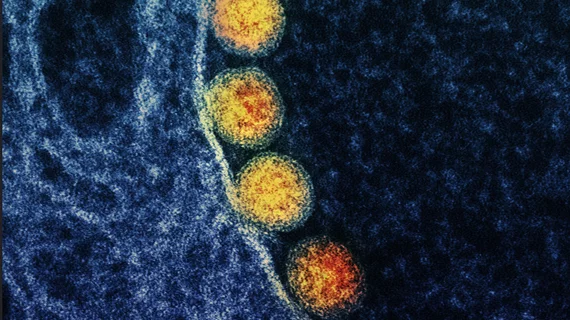
COVID increases cardiovascular events, especially in patients who are not blood type O. Image shows SARS-CoV-2 virus (gold) within endosomes of a heavily infected nasal olfactory epithelial cell. Image courtesy of NIAID.
A patient's blood type appears to play a major role in their odds of developing cardiovascular issues after COVID-19, researchers found.
(A) The patient’s chest. (B) Radiograph showing the device position. Images/captions courtesy of Bodin et al. and JACC: Case Reports.
The 49-year-old patient was not in pain or suffering any complications, but he wished to have his extravascular ICD removed once his symptoms improved. The care team agreed to extract it after a long discussion, and they said it was "easier than expected."
A new risk score shows potential to help cardiologists predict the risk of some TAVR complications before they happen, guiding important treatment decisions.

![Cardiologists have performed what they believe to be the world’s first substernal lead extraction, sharing their experience in JACC: Case Reports.[1]The device being extracted, Medtronic’s Aurora EV-ICD, received U.S. Food and Drug Administration (FDA) approval in October 2023.](/sites/default/files/styles/top_stories/public/2024-10/screenshot_2024-10-11_at_11.56.29_am.png.webp?itok=LrF0Hgk3)
