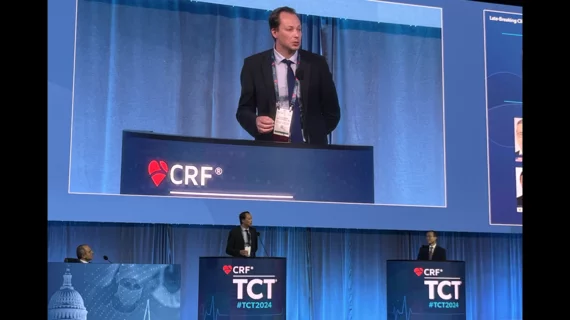
Alexander R. van Rosendael, MD, PhD, presents late-breaking data on AI-enabled coronary plaque assessments at TCT 2024.
AI-enabled coronary plaque assessments deliver significant value, according to late-breaking data presented at TCT. These AI platforms have gained considerable momentum in recent months, receiving expanded Medicare coverage in addition to a new Category I CPT code.
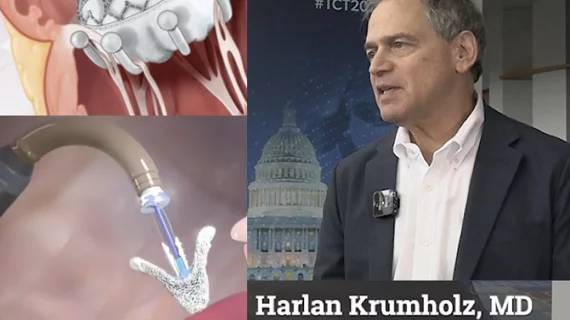
Harlan Krumholz, MD, editor-in-chief of the Journal of the American College of Cardiology, said tricuspid valve treatments are a popular topic among cardiologists right now. TAVR research, meanwhile, remains as important as ever.
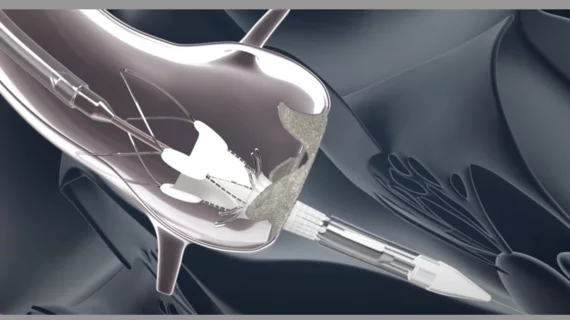
The Acurate neo2 aortic valve system. Image courtesy of Boston Scientific.
The Acurate neo2 TAVR valve has been used to treat severe aortic stenosis in other parts of the world for years. In the United States, however, the device has still not been approved for commercial use.
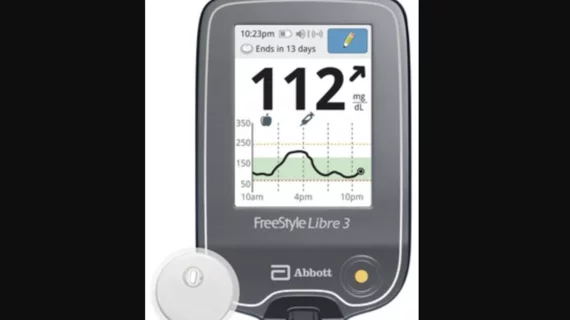
Sensors from the FreeStyle Libre 2 and Libre 3 continuous glucose monitoring systems can now be worn during X-rays, CT scans and MRI scans. The news represents a shift in policy from the FDA, one that came after the agency reviewed extensive testing data.
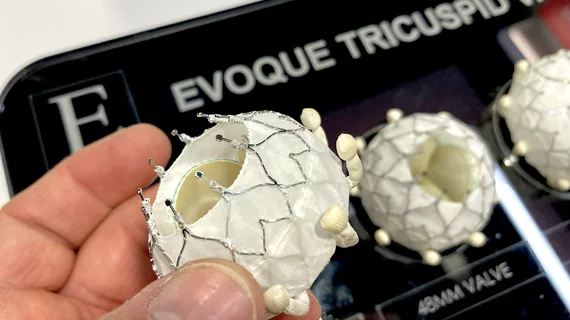
New late-breaking data presented at TCT confirmed that the first FDA-approved TTVR system for TR is associated with a much better quality of life than medical therapy alone after one year.
Didier Tchétché, MD, presents his team's pooled analysis on TAVR outcomes in women at TCT 2024.
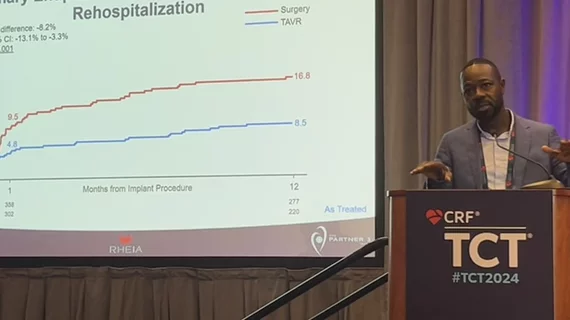
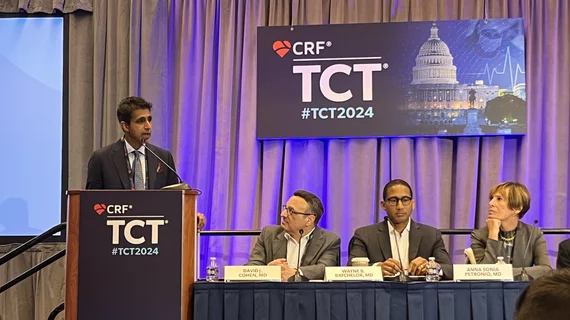
New research presented at TCT combined data from the RHEIA and PARTNER 3 trials. “TAVR is a good option, and probably the best one, for an elderly woman," cardiologist Anna Sonia Petronio, MD, explained during the conference.
Interventional cardiologist Sanjit S. Jolly, MD, MSc, discusses results from the CLEAR SYNERGY (OASIS 9) clinical trial at TCT 2024.
Treating AMI patients with colchicine is not associated with better cardiovascular outcomes, according to new data presented at TCT. The drug did help with inflammation, but that was the only benefit researchers could identify.