• Clinical
      |Clinical
    • Acute Coronary Syndromes
    • Cardiac Surgery
    • Covid-19
    • Heart Failure
    • Heart Health
    • Heart Rhythm
    • Hypertension
    • Interventional Cardiology
    • Mitral Valve
    • Pharmaceutics
    • Structural Heart Disease
    • TAVR
    • Tricuspid Valve
    • Vascular & Endovascular
  • Management
      |Management
    • Chest Pain Guidelines
    • Compensation
    • Economics
    • Education & Training
    • Legal News
    • Patient Care
    • Policy & Regulations
    • Professional Associations
    • Quality
    • Revenue
    • Staffing
  • Technology
      |Technology
    • AI
    • Cardiac Imaging
    • Cath Lab
    • CT
    • CVIS
    • ECG
    • Echo
    • EP Lab
    • Informatics
    • MRI
    • Nuclear Cardiology
    • Remote Monitoring
  • Videos
  • Conferences
      |Conferences
    • ACC
    • AHA
    • ASE
    • ASNC
    • ESC
    • EuroPCR
    • HFSA
    • HRS
    • HRS
    • SCAI
    • SCCT
    • SIIM
    • SNMMI
    • STS
    • TCT
    • VIVA
  • Custom Content
      |Custom Content
    • Experience Stories
    • Webinars & Videos
  • Subscribe
  • Forty Under 40 Award
      |Forty Under 40 Award
    • Class of 2026
    • Class of 2025

Search form

Home

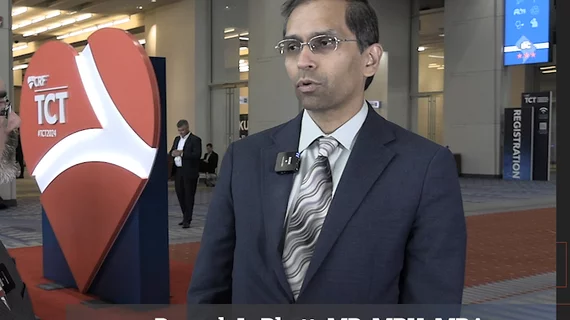
Cardiologist examines the latest breakthroughs in coronary inflammation research

Deepak Bhatt, MD, MPH, MBA, director of the Mount Sinai Fuster Heart Hospital, explains the research and therapies in development to treat coronary inflammation. In 2023, the FDA cleared the use colchicine and since there has been an explosion of interest in this area. #TCT #TCT24 #TCT2024 #AHA24

Deepak Bhatt, MD, MPH, MBA, spoke to Cardiovascular Business about the growing importance of evaluating coronary inflammation in heart patients. There has been an explosion of interest in this area since the FDA's 2023 clearance of colchicine.

  • Read more about Cardiologist examines the latest breakthroughs in coronary inflammation research

LAAC with Watchman FLX reduces bleeding risks after AFib ablation

Left atrial appendage occlusion (LAAO) with the Watchman FLX device from Boston Scientific is associated with positive outcomes and limited adverse events after one year, according to new findings published in Circulation: Cardiovascular Interventions.[1] Many prior Watchman FLX studies, including PINNACLE FLX, had focused on the device’s performance in a controlled setting. The study’s authors hoped to gain a better understanding of its real-world impact by reviewing registry data from more than 97,000 U.S

Watchman FLX image courtesy of Boston Scientific. 

The new data, presented during AHA Scientific Sessions 2024, suggest LAAC with Boston Scientific's Watchman FLX could be a safe, effective alternative to OAC for limiting post-ablation strokes.

  • Read more about LAAC with Watchman FLX reduces bleeding risks after AFib ablation

9 key takeaways from AHA 2024 in Chicago

Immediate Past President of the American College of Cardiology (ACC) Hadley Wilson, MD, FACC, executive vice chair of Atrium Health Sanger Heart and Vascular Institute and a clinical professor of medicine at Wake Forest University School of Medicine, details the top late-breaking studies at AHA 2024. #AHA24 #AHA2024

Hadley Wilson, MD, spoke to Cardiovascular Business at the three-day event to discuss key late-breaking studies and trends. Topics included new drug treatments, AI and much more.

  • Read more about 9 key takeaways from AHA 2024 in Chicago

Redo TAVR: The impact of implanting balloon-expandable valves in failed self-expanding valves

Redo TAVR: A 26-mm Sapien 3 device (Edwards Lifesciences) implanted within a 29-mm CoreValve device (Medtronic). Image courtesy of EuroIntervention.

A 26-mm Sapien 3 device (Edwards Lifesciences) implanted within a 29-mm CoreValve device (Medtronic). Image courtesy of EuroIntervention. 

Researchers took a closer look at the effectiveness of redo TAVR, implanting Sapien 3 valves into a variety of explanted CoreValve and Evolut valves.

  • Read more about Redo TAVR: The impact of implanting balloon-expandable valves in failed self-expanding valves

Edoxaban could limit blood clots, ‘make life easier’ for heart valve surgery patients

heart drugs with stethoscope

The popular DOAC was linked to more bleeding events than warfarin, but fewer reports of intracardiac thrombi and other adverse outcomes. Researchers presented their findings at the AHA's Scientific Sessions 2024 conference in Chicago.

  • Read more about Edoxaban could limit blood clots, ‘make life easier’ for heart valve surgery patients

Deep learning reconstruction cuts radiation and contrast dose by half in aortic CTA exams

Deep learning recons reduce contrast and radiation doses in aortic CTA

Image courtesy of Academic Radiology.

A new analysis in Academic Radiology dives into the importance of finding balance between reducing radiation exposure while maintaining image quality. 

  • Read more about Deep learning reconstruction cuts radiation and contrast dose by half in aortic CTA exams

Surgical devices recalled after 17 serious injuries—FDA warns of possible shortage

Recall | Product recall

Vessel harvesting devices from Getinge have been recalled due to pieces breaking off during medical procedures. In some cases, surgeons were unable to retrieve the broken pieces. 

  • Read more about Surgical devices recalled after 17 serious injuries—FDA warns of possible shortage

New balloonless IVL catheter offers an alternative to atherectomy in tight lesions, CTOs

Video interview with J.D. Corl, MD, explaining the use of the new E8 and Javelin Shockwave IVL catheters in PAD.

J.D. Corl, MD, shared his experience using two new IVL catheters from Shockwave Medical to treat patients with heavily calcified peripheral arteries. He considers both new devices a significant upgrade. 

  • Read more about New balloonless IVL catheter offers an alternative to atherectomy in tight lesions, CTOs

Treating younger patients with TAVR increases risk of death

The American College of Cardiology and American Heart Association have collaborated on a new update to the much-discussed 2021 chest pain guidelines. The American College of Emergency Physicians and Society for Cardiac Angiography and Interventions also contributed to the document.

Treating patients younger than 65 with TAVR is associated with certain risks for heart teams to consider. Fortunately, researchers found, care teams appear to be choosing patients wisely. 

  • Read more about Treating younger patients with TAVR increases risk of death

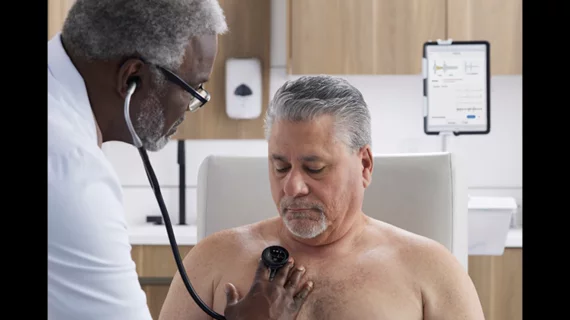
Eko Health’s AI platform for digital stethoscopes granted new CPT code

eko health digital stethoscope artificial intelligence. The combination of Eko Health’s AI-powered SENSORA platform and its digital stethoscope technology achieved a sensitivity of 94.1% and specificity of 84.5% when it came to identifying valvular heart disease.

Image courtesy of Eko Health.

The Sensora platform, which includes multiple FDA-approved algorithms, has a new Category III CPT code.

  • Read more about Eko Health’s AI platform for digital stethoscopes granted new CPT code

Pagination

    • First page « First
    • Previous page ‹ Previous
    • Page …178
    • Page 179
    • Page 180
    • Page 181
    • Current page 182
    • Page 183
    • Page 184
    • Page 185
    • Page 186 …
    • Next page Next ›
    • Last page Last »
Subscribe
  • Home
  • News
  • Article Archive
  • Custom Content
  • Webinars
  • Press Releases
  • Content Studio
  • Advertising
  • Submit Press Release
  • Contact Us
  • Terms of Use
  • Privacy Policy
  • Cardiovascular Business
  • HealthExec
  • Radiology Business
 
© 2026 Innovate Healthcare | All Rights Reserved. | Terms of Use | Privacy Policy
 
Design by Adaptive Theme