• Clinical
      |Clinical
    • Acute Coronary Syndromes
    • Cardiac Surgery
    • Covid-19
    • Heart Failure
    • Heart Health
    • Heart Rhythm
    • Hypertension
    • Interventional Cardiology
    • Mitral Valve
    • Pharmaceutics
    • Structural Heart Disease
    • TAVR
    • Tricuspid Valve
    • Vascular & Endovascular
  • Management
      |Management
    • Chest Pain Guidelines
    • Compensation
    • Economics
    • Education & Training
    • Legal News
    • Patient Care
    • Policy & Regulations
    • Professional Associations
    • Quality
    • Revenue
    • Staffing
  • Technology
      |Technology
    • AI
    • Cardiac Imaging
    • Cath Lab
    • CT
    • CVIS
    • ECG
    • Echo
    • EP Lab
    • Informatics
    • MRI
    • Nuclear Cardiology
    • Remote Monitoring
  • Videos
  • Conferences
      |Conferences
    • ACC
    • AHA
    • ASE
    • ASNC
    • ESC
    • EuroPCR
    • HFSA
    • HRS
    • HRS
    • SCAI
    • SCCT
    • SIIM
    • SNMMI
    • STS
    • TCT
    • VIVA
  • Custom Content
      |Custom Content
    • Experience Stories
    • Webinars & Videos
  • Subscribe
  • Forty Under 40 Award
      |Forty Under 40 Award
    • Class of 2026
    • Class of 2025

Search form

Home

Myval TAVR valve noninferior to similar devices from Medtronic, Edwards after 30 days

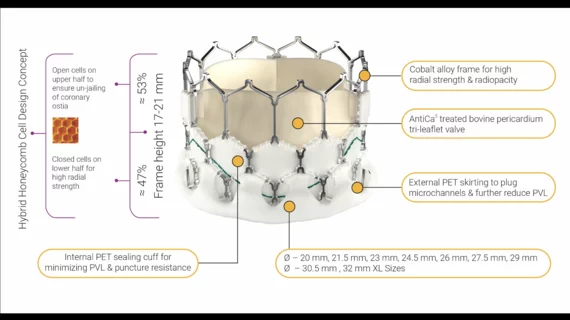
Meril Life Sciences, an India-based medical device company founded in 2006, developed the Myval TAVR valve. The Myval transcatheter heart valve (THV) is non-inferior to the Sapien 3 THV after one year, according to new transcatheter aortic valve replacement (TAVR) data published in The Lancet.

The Myval TAVR valve. Image courtesy of Merit Life Sciences.

The balloon-expandable valve is already approved for use in India and Europe. New data presented at EuroPCR 2024 in Paris compared it to contemporary devices seen by many as the gold standard for TAVR care. 

  • Read more about Myval TAVR valve noninferior to similar devices from Medtronic, Edwards after 30 days

FDA clears advanced AI model for predicting heart failure risk

The rapid rise of artificial intelligence (AI) has helped cardiologists, radiologists, nurses and other healthcare providers embrace precision medicine in a way that ensures more heart patients are receiving personalized care.

The new algorithm from Implicity evaluates implantable device data and monitors patients for changes that suggest they could experience severe heart failure symptoms in the near future. It was designed to alert clinicians up to weeks in advance.

  • Read more about FDA clears advanced AI model for predicting heart failure risk

Industry changes are making it easier for cardiologists to start families

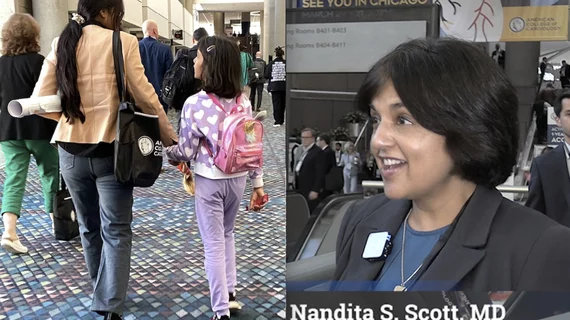
Video interview with Nandita Scott, MD, Mass General Hospital, on balancing motherhood or fatherhood as a cardiologist and how to make things work with a work-life balance. #cardiologistmom #ACC #ACC24 #ACC2024

One of the biggest decisions in a cardiologist's life is knowing when, exactly, to start a family. Nandita S. Scott, MD, co-director of the Corrigan Women's Heart Health Program at Mass General Hospital, shared her perspective on this important topic. 

  • Read more about Industry changes are making it easier for cardiologists to start families

Cardiologists examine how residual TR after transcatheter tricuspid valve repair impacts survival

cardiologist viewing heart data

Researchers tracked data from more than 600 patients, noting that heart teams may want to reconsider how they classify residual TR after treatment. 

  • Read more about Cardiologists examine how residual TR after transcatheter tricuspid valve repair impacts survival

AI-powered coronary plaque assessments show ‘strong agreement’ with IVUS

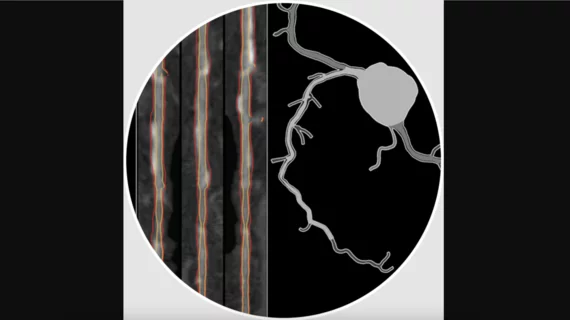
HeartFlow Plaque Analysis. A European Heart Journal – Cardiovascular Imaging study compared the noninvasive Plaque Analysis technology developed by HeartFlow, which uses advanced AI algorithms to evaluate coronary CT angiography (CCTA) images, with coronary plaque assessments achieved by using intravascular ultrasound (IVUS). The REVEALPLAQUE trial included data from 237 patients. Plaque Analysis showed strong correlation and high accuracy when compared with IVUS.

Plaque Analysis image courtesy of Heartflow.

HeartFlow's noninvasive Plaque Analysis technology, which uses AI to evaluate CCTA images, delivered assessments that mostly lined up with IVUS results. 

  • Read more about AI-powered coronary plaque assessments show ‘strong agreement’ with IVUS

Medical device startup gains FDA clearance for new RF guidewire, raises $12.5M

Atraverse Medical Hotwire radiofrequency (RF) guidewire. Atraverse Medical, a San Diego-based medical device company founded in 2022, designed the guidewire to give physicians as much freedom as possible while treating heart patients. 

Hotwire image courtesy of Atraverse Medical.

Atraverse Medical, a San Diego-based medical device company founded in 2022, designed the guidewire to give physicians as much freedom as possible while treating heart patients. 

  • Read more about Medical device startup gains FDA clearance for new RF guidewire, raises $12.5M

FDA grants breakthrough device designation to new TMVR device from 4C Medical

4C Medical Technologies AltaValve

Image courtesy of 4C Medical Technologies.

The supra-annular AltaValve System was designed to treat both primary and secondary mitral regurgitation. It is implanted via transseptal access and positioned above the native mitral valve.

  • Read more about FDA grants breakthrough device designation to new TMVR device from 4C Medical

TAVR, SAVR linked to comparable long-term outcomes, new meta-analysis confirms

Cardiologist Heart Doctor Tablet Technology

Researchers tracked data from more than 7,500 patients, sharing their findings at EuroPCR 2024 in Paris and in JSCAI.

  • Read more about TAVR, SAVR linked to comparable long-term outcomes, new meta-analysis confirms

FDA announces another new recall involving Abbott’s HeartMate 3 LVADs after 70 injuries, 2 deaths

Product Recall

Abbott issued the new recall after receiving more than 80 reports of blood or air entering the LVAD during implant procedures. Customers can still use these devices, but they are advised to follow specific steps to limit the risk of complications. 

  • Read more about FDA announces another new recall involving Abbott’s HeartMate 3 LVADs after 70 injuries, 2 deaths

World Health Organization urges countries to limit salt intake to reduce risk of CVD, hypertension

Salt substitutes are associated with a reduced risk of high blood pressure without increasing the risk of low blood pressure, according to new findings published in the Journal of the American College of Cardiology.[1]

The group wants countries to implement population-wide changes that can keep salt intake to a minimum. It estimates that such policies could save up to 900,000 lives in just a few years. 

  • Read more about World Health Organization urges countries to limit salt intake to reduce risk of CVD, hypertension

Pagination

    • First page « First
    • Previous page ‹ Previous
    • Page …223
    • Page 224
    • Page 225
    • Page 226
    • Current page 227
    • Page 228
    • Page 229
    • Page 230
    • Page 231 …
    • Next page Next ›
    • Last page Last »
Subscribe
  • Home
  • News
  • Article Archive
  • Custom Content
  • Webinars
  • Press Releases
  • Content Studio
  • Advertising
  • Submit Press Release
  • Contact Us
  • Terms of Use
  • Privacy Policy
  • Cardiovascular Business
  • HealthExec
  • Radiology Business
 
© 2026 Innovate Healthcare | All Rights Reserved. | Terms of Use | Privacy Policy
 
Design by Adaptive Theme