• Clinical
      |Clinical
    • Acute Coronary Syndromes
    • Cardiac Surgery
    • Covid-19
    • Heart Failure
    • Heart Health
    • Heart Rhythm
    • Hypertension
    • Interventional Cardiology
    • Mitral Valve
    • Pharmaceutics
    • Structural Heart Disease
    • TAVR
    • Tricuspid Valve
    • Vascular & Endovascular
  • Management
      |Management
    • Chest Pain Guidelines
    • Compensation
    • Economics
    • Education & Training
    • Legal News
    • Patient Care
    • Policy & Regulations
    • Professional Associations
    • Quality
    • Revenue
    • Staffing
  • Technology
      |Technology
    • AI
    • Cardiac Imaging
    • Cath Lab
    • CT
    • CVIS
    • ECG
    • Echo
    • EP Lab
    • Informatics
    • MRI
    • Nuclear Cardiology
    • Remote Monitoring
  • Videos
  • Conferences
      |Conferences
    • ACC
    • AHA
    • ASE
    • ASNC
    • ESC
    • EuroPCR
    • HFSA
    • HRS
    • HRS
    • SCAI
    • SCCT
    • SIIM
    • SNMMI
    • STS
    • TCT
    • VIVA
  • Custom Content
      |Custom Content
    • Experience Stories
    • Webinars & Videos
  • Subscribe
  • Forty Under 40 Award
      |Forty Under 40 Award
    • Class of 2026
    • Class of 2025

Search form

Home

Key trends in transcatheter tricuspid and mitral valve technologies

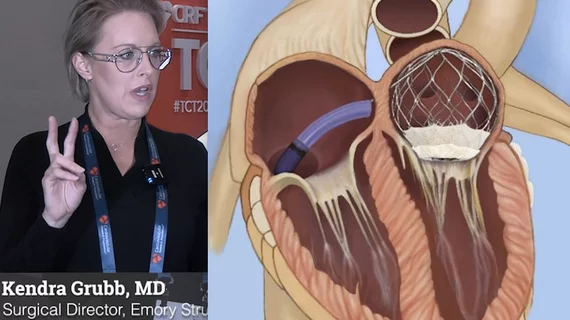
Video of Kendra Grubb discussing transcatheter tricuspid and mitral advancements at TCT 2023.

The mitral valve has been an especially challenging target for transcatheter interventions, but there are reasons to think key breakthroughs are on the horizon. We talked to Kendra Grubb, MD, about this and other ongoing trends at TCT 2023. 

  • Read more about Key trends in transcatheter tricuspid and mitral valve technologies

TAVR or SAVR? Where things stand now, from a surgeon's perspective

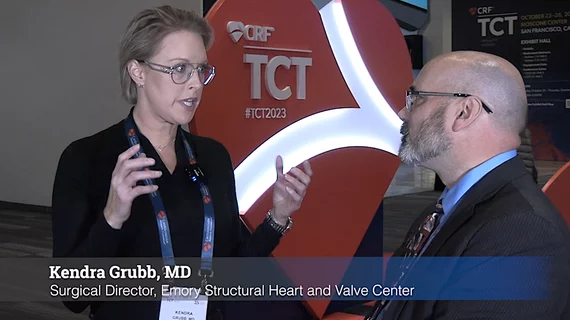
Kendra Grubb discusses TAVR vs SAVR and the most recent data to explain choices with patients.

Kendra Grubb, MD, one of the country's leading experts on cardiac surgery, discussed what she tells her patients when they ask if TAVR is better than SAVR for treating severe aortic stenosis. 

  • Read more about TAVR or SAVR? Where things stand now, from a surgeon's perspective

CMS increases reimbursement for CVRx’s implantable Barostim device for heart failure

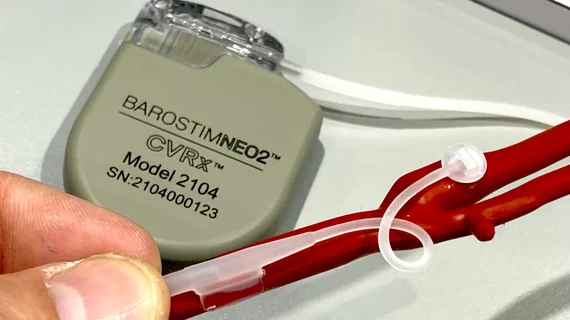
Barostim Neo 2 CVRx heart failure nerve stimulator on display at HRS 2023. Photo by Dave Fornell

The Barostim Neo 2 CVRx heart failure nerve stimulator on display at Heart Rhythm 2023.

Implanting the Barostim device is now associated with an average payment amount of $45,000, up significantly from the previous average of $29,000.

  • Read more about CMS increases reimbursement for CVRx’s implantable Barostim device for heart failure

Cardiologists, heart surgeons and imaging experts push for changes that could prevent ‘permanent and unjustifiable Medicare cuts’

Medicare money payment reimbursement dollar decline. More than 100 U.S. medical societies are throwing their support behind a new proposal that could reform out-of-date Medicare policies and help limit future payment cuts. 

More than 100 U.S. medical societies are throwing their support behind a new proposal that could reform out-of-date Medicare policies and help limit future payment cuts. 

  • Read more about Cardiologists, heart surgeons and imaging experts push for changes that could prevent ‘permanent and unjustifiable Medicare cuts’

Next-gen RF catheter from Biosense Webster improves QOL in patients with paroxysmal AFib

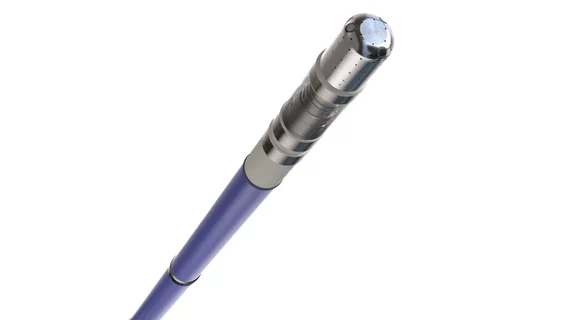
QDOT MICRO Biosense Webster Johnson and Johnson. The QDOT MICRO catheter is contact force-sensing device designed for temperature-controlled RF ablation. It received CE mark approval in 2020 and U.S. Food and Drug Administration approval in 2022. When in the QMODE+ setting, the device delivers high-power ablation for up to four seconds per burst, a feature designed to improve the ablation’s likelihood of success.

After 12 months, researchers found that the device was associated with control of AFib in 99% of patients and relief from AFib symptoms in 93.1% of patients.

  • Read more about Next-gen RF catheter from Biosense Webster improves QOL in patients with paroxysmal AFib

IVUS-guided PCI boosts 2-year survival, reduces need for bypass surgery

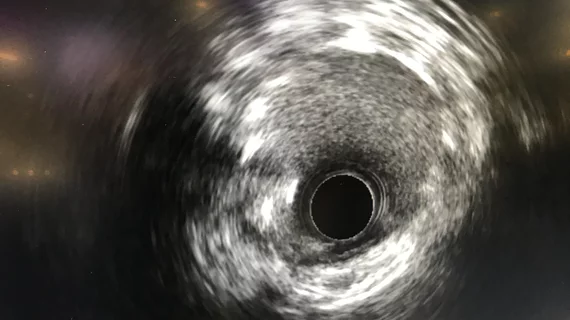
Example of intravascular ultrasound (IVUS) shown as part of the multimodality imaging capability on the Fujifilm CVIS.

Example of intravascular ultrasound (IVUS) shown as part of the multimodality imaging capability on the Fujifilm CVIS.

IVUS was especially effective when treating patients with a complex coronary anatomy, researchers found. 

  • Read more about IVUS-guided PCI boosts 2-year survival, reduces need for bypass surgery

TAVR and LAAO at the same time? Samir Kapadia breaks down the WATCH-TAVR trial

Samir Kapadia, MD, Cleveland Clinic, explains the WATCH TAVR study results that combined LAAO with transcatheter aortic valve replacement at TCT 2023. #TCT2023 #TAVR #Watchman #LAAO

Could this late-breaking clinical trial from TCT 2023 be a sign of things to come in the years ahead? Samir Kapadia, MD, explored the topic in a new interview. 

  • Read more about TAVR and LAAO at the same time? Samir Kapadia breaks down the WATCH-TAVR trial

FDA grants breakthrough device designation to AI-powered, retinal imaging-based CVD assessments

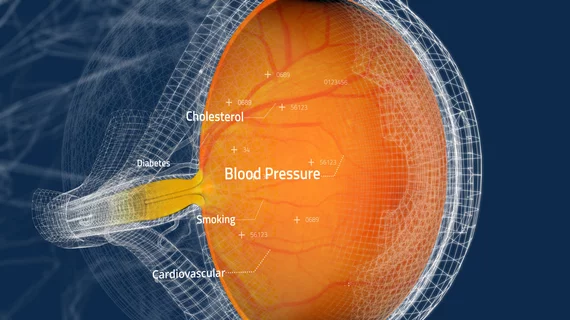
Toku's AI-powered CLAiR technology offers physicians another way to evaluate a patient’s cardiovascular health with noninvasive retinal images captured during routine eye exams.

Image courtesy of Toku.

CLAiR offers physicians another way to evaluate a patient’s cardiovascular health: non-invasive retinal images captured during routine eye exams.

  • Read more about FDA grants breakthrough device designation to AI-powered, retinal imaging-based CVD assessments

TAVR patients with cancer face higher risks of hospital readmission, serious bleeding

Doctor patient

Short-term mortality, however, does not appear to change when TAVR patients present with active cancer. 

  • Read more about TAVR patients with cancer face higher risks of hospital readmission, serious bleeding

Second patient in history to receive a pig heart transplant dies after 6 weeks

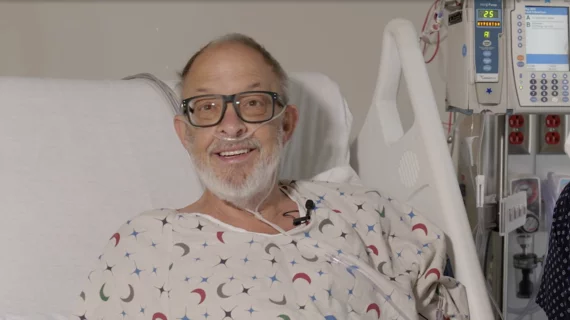
Lawrence Faucette, the pig heart transplant patient who died after six weeks.

Lawrence Faucette. Image courtesy of the University of Maryland Medical Center.

Lawrence Faucette, the second patient to ever receive a genetically modified pig heart, died on Oct. 30. “He can never be forgotten," his wife said in a statement. 

  • Read more about Second patient in history to receive a pig heart transplant dies after 6 weeks

Pagination

    • First page « First
    • Previous page ‹ Previous
    • Page …266
    • Page 267
    • Page 268
    • Page 269
    • Current page 270
    • Page 271
    • Page 272
    • Page 273
    • Page 274 …
    • Next page Next ›
    • Last page Last »
Subscribe
  • Home
  • News
  • Article Archive
  • Custom Content
  • Webinars
  • Press Releases
  • Content Studio
  • Advertising
  • Submit Press Release
  • Contact Us
  • Terms of Use
  • Privacy Policy
  • Cardiovascular Business
  • HealthExec
  • Radiology Business
 
© 2026 Innovate Healthcare | All Rights Reserved. | Terms of Use | Privacy Policy
 
Design by Adaptive Theme