“Unless we as a profession have a dialogue about burnout more broadly, all the things we do in training will have a limited impact,” Tait Shanafelt, MD, chief wellness officer at Stanford Medicine, told Kaiser Health News.
Researchers with LSU Health New Orleans School of Medicine believe they’ve discovered a molecular explanation for why hypoxia increases the risk for blood clots.
Lowering LDL cholesterol (LDL-C) beyond guideline-recommended levels further reduces cardiovascular events without compromising safety, according to a meta-analysis published Aug. 1 in JAMA Cardiology.
More than three-fourths of patients who received percutaneous balloon mitral valvuloplasty (PBMV) at a center in Brazil maintained procedural benefit over a median follow-up of 8.3 years, researchers reported in JACC: Cardiovascular Interventions.
That estimate alone should be enough to drive the goal of routine genomic screening in healthcare forward, a researcher wrote in the Annals of Internal Medicine, but hurdles remain with implementing that plan into clinical care.
Healthcare advocacy groups expressed concern with the Trump administration’s final rule on short-term insurance plans, saying the decision to extend those limited plans for up to three years could destabilize other insurance markets and leave patients covered by such plans exposed to catastrophic costs.
A protein known to protect brain function in the setting of Duchenne muscular dystrophy may also have a positive impact on the heart, according to preliminary research presented at the American Heart Association’s Basic Cardiovascular Sciences scientific sessions on Aug. 1 in San Antonio.
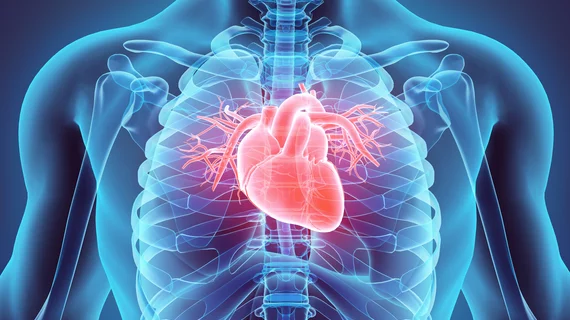
Continually updated mortality models based on adverse events and end-organ function are better at showing which transplant candidates most urgently require a new heart, according to a study published in the Journal of the American College of Cardiology.
New analysis in the Journal of the American College of Cardiology notes an increase in the proportion of female senior and first authors in cardiology literature.
Researchers have developed an online tool to more accurately calculate which middle-aged individuals are at the highest risk of heart attack or stroke during the next 10 years.