
AI turns mammograms into CVD risk assessments—no outside data required
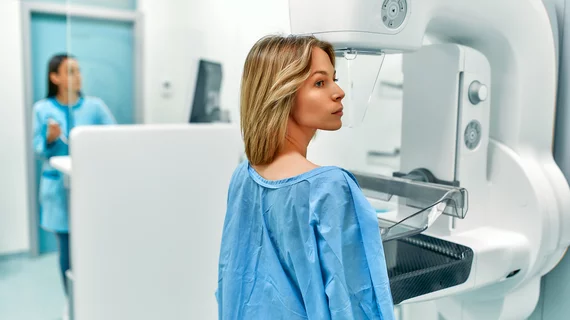
Advanced artificial intelligence (AI) models can predict a patient’s risk of cardiovascular disease (CVD) through the use of routine mammography images, according to new research published in Heart.[1]
“In addition to early cancer diagnosis, mammograms offer information about cardiovascular risk,” wrote first author Jennifer Yvonne Barraclough, PhD, a cardiologist with The George Institute for Global Health in Sydney, and colleagues. “Breast arterial calcification (BAC) has been shown to correlate with the risk of cardiovascular events and with vascular risk factors such as diabetes, hypertension and hypercholesterolemia. However, BAC is not associated with obesity and is inversely associated with smoking, suggesting using BAC alone to predict cardiovascular risk may have limitations. Other mammographic features, including microcalcifications and breast density, have also been shown to be associated with cardiometabolic disease risk and mortality, but are yet to be evaluated together.”
Barraclough et al. developed and tested a deep learning algorithm that predicts a patient’s cardiovascular risks based on their age and screening mammogram. The group focused on data from more than 49,000 women who underwent screening in Australia from 2009 to 2020. The median follow-up period was 8.8 years, and more than 3,300 participants experienced their first major cardiovascular event during that time. These adverse events included atherosclerotic disease, heart failure, myocardial infarction and stroke.
Overall, the team’s AI model was associated with a concordance index of 0.72, integrated Brief score of 0.06 and integrated binomial log-likelihood of -0.21. This was comparable to existing risk prediction models, suggesting mammography images alone are all clinicians need to gain a better understanding of a patient’s cardiovascular risks.
“A key advantage of the mammography model we developed is that it did not require additional history taking or medical record data and leveraged an existing risk screening process widely used by women,” the authors wrote. “Because of its simplicity, a mammography model may have the capacity to serve as a cardiovascular risk prediction tool for women in diverse communities across Australia and around the world. Mammography has potential as a ‘two-for-one’ risk assessment tool, offering efficiencies for both community and the healthcare system. A future prospective implementation trial with health economic evaluation is recommended to establish the clinical utility, acceptability and cost-effectiveness of mammography-based cardiovascular risk prediction.”
Click here to read the full study.

Michael has more than 19 years of experience as a professional writer and editor. He has written at length about cardiology, radiology, artificial intelligence and other key healthcare topics.