
Whole-body MRI provider starts offering AI-powered CCTA scans
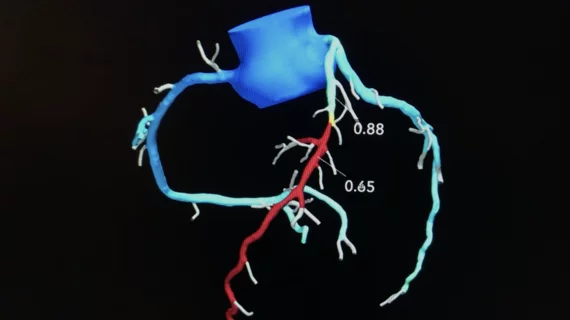
TrueScan, a whole-body MRI facility in St. Petersburg, Florida, is now offering its patients artificial intelligence (AI)-powered coronary CT angiography (CCTA) evaluations from Heartflow. The advanced heart scans can be ordered separately or as part of a package with a whole-body MRI.
Michael Andoniades, TrueScan’s founder and CEO, told Cardiovascular Business he believes they are one of the first whole-body MRI providers in the United States to offer these scans. He said the decision to start offering CCTA came after receiving multiple requests from patients and physicians alike. The more he looked into it, the more impressed he was with Heartflow and its FFR-CT capabilities.
“We were very interested in offering this new study because it's gaining a lot of popularity,” he said. “The technology is great, and it’s really helpful for screening people.”
'A great picture of your health'
Whole-body MRI providers such as TrueScan have gained considerable momentum in recent years. Insurance does not cover the exams, but more and more patients are choosing to pay out of pocket to undergo the test as a preventive measure. Andoniades sees CCTA as the perfect add-on for these patients.
“With whole-body MRI, we image from the brain all the way down to the ankle,” he said. “So we're looking at all of the major organs, the soft tissue. We look at the arteries of the brain, we look at the carotid arteries … the one area that we're not getting with MR is the coronary arteries. So when you combine these, it really gives you a great picture of your health.”
Andoniades noted that a cardiologist reviews every CCTA exam. In addition, Robert Lazzara, MD, a veteran cardiothoracic surgeon, meets with each patient to discuss the entire process and answer any questions.
CCTA makes an immediate impact
TrueScan started offering Heartflow scans in early February. After just a few weeks, Andoniades said the technology has already detected signs of heart disease in multiple patients who would have otherwise had no idea anything was wrong.
“They were very unaware of their current situation,” he said. “Now they’ll end up getting catheterization done and probably percutaneous coronary intervention or another intervention.”

Michael has more than 19 years of experience as a professional writer and editor. He has written at length about cardiology, radiology, artificial intelligence and other key healthcare topics.