
AI detection of cardiac amyloidosis on ECG granted patent
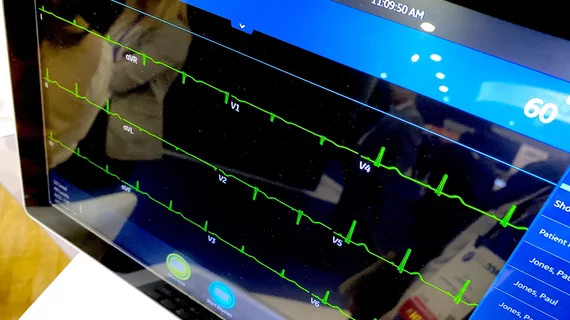
AccurKardia said it was granted a U.S. patent for its machine-learning-based algorithm that can identify cardiac amyloidosis from a standard 12-lead ECG. Use of ECG to identify cardiac amyloidosis could offer a paradigm shift with a much less expensive diagnostic test than the current standard of nuclear imaging.
The company said its artificial intelligence (AI) can identify all major amyloidosis subtypes, including AL amyloidosis, wild-type and hereditary ATTR amyloidosis.
AccurKardia said the technology is designed top help solve the under diagnosis issue, where many times amyloidosis is simply diagnosed as heart failure and patients do not receive what could be life-saving drug therapy. The company said there are studies estimating that between 13-15% of patients at heart failure clinics have undiagnosed cardiac amyloidosis. Identifying the disease early is critical for treatment efficacy and survival, as the available drugs can stop abnormal amyloid protein deposition, but they cannot reverse the cumulative damage already done to heart tissue.
"Cardiac amyloidosis hides in plain sight, and because the symptoms are quite similar to other causes of heart failure, we have historically relied on expensive, late-stage imaging to diagnose what is already advanced disease, often after conventional medical therapy has failed to improve symptoms," said Jason Lazar, MD, PhD, MPH, executive vice dean, chair of the Department of Medical Education and director of non-invasive cardiology at SUNY Downstate in a statement. “A reliable ECG-based screening signal, leveraging information the human eye simply cannot extract, has the potential to redefine when and how we intervene, particularly as therapeutic options continue to expand. Simply put, earlier diagnosis leads to much better outcomes.”
U.S. Patent No. 12,620,488 establishes an intellectual property foundation across all major amyloidosis subtypes. The company said the algorithm joins a growing pipeline of AccurKardia AI-ECG biomarkers that includes FDA Breakthrough Device-designated algorithms for aortic stenosis and hyperkalemia, alongside the company's FDA-cleared automated ECG interpretation platform.
Competitor Anumana, co-founded by Mayo Clinic, received U.S. Food and Drug Administration (FDA) clearance in April for its AI algorithm to detect signs of cardiac amyloidosis on 12-lead ECG. Read more.

Dave Fornell has covered healthcare for more than 17 years, with a focus in cardiology and radiology. Fornell is a 5-time winner of a Jesse H. Neal Award, the most prestigious editorial honors in the field of specialized journalism. The wins included best technical content, best use of social media and best COVID-19 coverage. Fornell was also a three-time Neal finalist for best range of work by a single author. He produces more than 100 editorial videos each year, most of them interviews with key opinion leaders in medicine. He also writes technical articles, covers key trends, conducts video hospital site visits, and is very involved with social media. E-mail: [email protected]