
Chest tube-clearing device improves recovery, limits readmissions after heart surgery
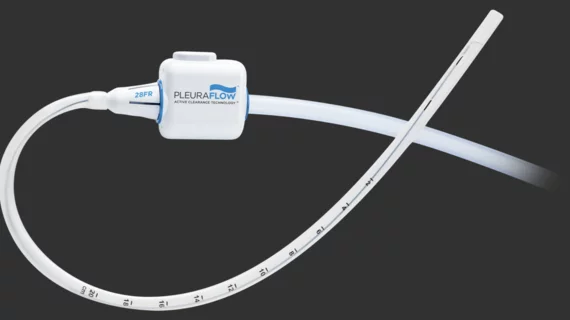
Using an advanced chest tube-clearing device can help care teams improve patient outcomes and reduce the risk of ICU readmission following heart surgery, according to new data published in Innovations: Technology and Techniques in Cardiothoracic and Vascular Surgery.[1]
The FDA-approved PleuraFlow Active Clearance Technology (ACT) System from ClearFlow is used in the ICU to help maintain chest tube patency. It was designed to proactively remove blood clots, reducing the risk of chest tube occlusion and helping ensure blood and fluid are effectively removed from the surgical site. This process reduces the risk of retained blood, which has been associated with surgical complications, resource utilization and even longer lengths of stay.
This study focused on more than 1,000 adult cardiac surgery patients treated from January 2020 to August 2023 at a single high-volume private practice. Researchers wanted to track the PleuraFlow System’s impact after it received a class 1, level B-NR rating in the 2019 Enhanced Recovery After Cardiac Surgery (ERAS) guidelines.
While 684 patients underwent treatment with the PleuraFlow System, another 650 patients underwent usual care and served as the study’s control group. Overall, using the PleuraFlow System was associated with a 41% reduction in the rate of retained blood syndrome (RBS), a 17% decrease in the rate of postoperative atrial fibrillation (POAF), a 23% decrease in total chest drainage and significant reductions in both ICU hours and ICU readmissions.
“The unequivocal positive results have led to significantly fewer complications and hospital days,” principal investigator Marc Gerdisch, MD, chief of cardiovascular and thoracic surgery and co-director of the Heart Valve Center at Franciscan Health Indianapolis, said in a prepared statement. “More recently, we have leveraged our confidence the chest is well drained to achieve a median time to extubation of zero hours. Perhaps most importantly, the bedside nurse is able to ensure the chest drain is patent.”
“Conventional chest tubes are prone to clogging, which can hinder recovery,” added co-author Louis Perrault, MD, PhD, a cardiac surgeon at the Montreal Heart Institute. “This study, alongside prior research, strongly supports incorporating PleuraFlow’s active clearance into ERAS Cardiac Surgery programs to reduce RBS, POAF, and ICU time.”
Click here to read the full analysis.

Michael has more than 19 years of experience as a professional writer and editor. He has written at length about cardiology, radiology, artificial intelligence and other key healthcare topics.