
CVRx hopes new research will expand access to heart failure therapy
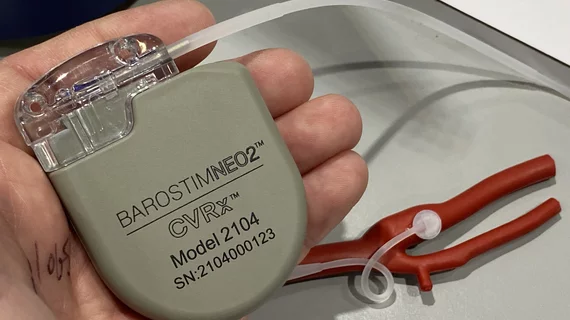
Enrollment in one of the largest therapeutic cardiac device trials ever performed in the field of heart failure could begin in the next few months. CVRx said 2,500 patients will be randomized at 150 centers in the United States and Germany to evaluate the use of neuromodulation on morbidity and mortality in a broader heart failure population.
The earlier BeAT-HF trial for the CXRx implantable Barostim device showed clear improvement in symptoms and functional status. The new BENEFIT-HF trial will look at safety and effectiveness, with a composite endpoint of all-cause mortality and heart failure decompensation events. If successful, this trial could possibly triple the size of the indicated patient population for Barostim therapy.
The trial will include patients in NYHA Functional Class II or III with LVEF below 50% and NT-proBNP below 5,000 pg/mL despite being treated with guideline-directed medical therapies that can include both drugs and devices.
CVRx said this will be a landmark randomized study supported by Centers for Medicare and Medicaid Services (CMS) Category B IDE coverage. This support from CMS covers the costs in the IDE study to remove any financial barriers that could otherwise discourage Medicare patients from participating.
“The BENEFIT-HF trial represents an important evolution in our clinical strategy to treat patients with heart failure,” Philip Adamson, MD, chief medical officer of CVRx, said in a statement. "It is designed to rigorously evaluate morbidity and mortality in a broader heart failure population already being treated with standard of care.”
Barostim is a pacemaker-like device with electrodes that deliver electrical signals to baroreceptors located on the carotid artery. These signals increase baroreflex signaling to rebalancing the autonomic nervous system and improve heart failure symptoms. The technology received U.S. Food and Drug Administration (FDA) clearance in 2019.
It also earned the FDA's breakthrough device designation, because the technology had the potential to greatly reduce heart failure hospitalizations. Heart failure is among the highest cost drivers in the Medicare program, costing tens of billions of dollars each year.
Seeing considerable value in the technology, CMS increased payments for Barostim from approximately $20,000 to more than $40,000 in 2024.
CVRx said it plans to provide additional details on the trial design, site activation and enrollment timelines during its upcoming February earnings call.

Dave Fornell has covered healthcare for more than 17 years, with a focus in cardiology and radiology. Fornell is a 5-time winner of a Jesse H. Neal Award, the most prestigious editorial honors in the field of specialized journalism. The wins included best technical content, best use of social media and best COVID-19 coverage. Fornell was also a three-time Neal finalist for best range of work by a single author. He produces more than 100 editorial videos each year, most of them interviews with key opinion leaders in medicine. He also writes technical articles, covers key trends, conducts video hospital site visits, and is very involved with social media. E-mail: [email protected]