
The only heart failure treatment of its kind: Learn the latest billing recommendations for Barostim procedures
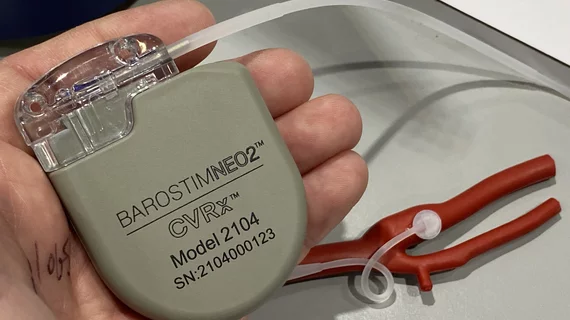
The Barostim device from CVRx is associated with significant improvements in many heart failure patients who remain symptomatic despite guideline-directed medical therapy. With big billing changes on the horizon, now is the time for heart teams to learn how to properly get reimbursed for performing these procedures.
The implantable Barostim device works by sending small electrical pulses to sensors in the neck. Those sensors then send signals to the brain that help regulate the patient’s heart, kidneys and vascular system. Those signals are typically sent without therapy, but that function is diminished in heart failure patients.
Barostim has already gained both U.S. Food and Drug Administration and CE mark approval, and it has been the subject of one positive policy announcement after another in the last two years. In 2024, for example, the device received new Category 1 CPT codes from the American Medical Association that go into effect in January 2026. This update confirms that Barostim has made a noticeable impact on patient care, one that no previous device has been able to provide.
Now, a team of experts who specialize in the Barostim technology are joining Cardiovascular Business for an exclusive webinar focused on how to implement these new CPT codes. Topics will include the science behind the Barostim procedure, billing recommendations, prior authorization resources and much more. The webinar was developed for clinicians, billing specialists, surgeons, cardiovascular service line directors, executives and anyone else interested in learning more about this state-of-the-art procedure.
The free webinar, “Implementing the New Barostim Category 1 Codes: A Clinical and Billing Perspective”, is scheduled for Wednesday, Dec. 17, at 12:30 p.m. ET. It will be available on demand to registrants once it is done.
Click here for more information, including registration details.

Michael has more than 19 years of experience as a professional writer and editor. He has written at length about cardiology, radiology, artificial intelligence and other key healthcare topics.