
‘Some activity is better than none’: Cardiologists should urge all heart patients to exercise

Regular exercise is an essential piece of the puzzle when trying to prevent or manage cardiovascular disease (CVD), according to a new scientific statement from the American College of Cardiology. The team behind the document recommends prescribing exercise to patients whenever appropriate, explaining even a little bit of movement can make a major impact.
“The most important message is that some activity is better than none,” Jonathan N. Myers, PhD, chair of the statement’s writing committee and a health research scientist with the Palo Alto VA Healthcare System, said in a statement. “Patients do not need to become athletes to improve their cardiovascular health. Small increases in physical activity can produce meaningful benefits, particularly for those who are currently inactive.”
Myers et al. emphasized that poor cardiorespiratory fitness is a “powerful and independent predictor” of adverse health outcomes. In fact, the risks of poor cardiorespiratory fitness are comparable to what clinicians see with smoking, hypertension, diabetes and other well-known risk factors.
To this day, however, cardiologists and other cardiovascular care professionals often meet with patients without prescribing any kind of regular exercise routine.
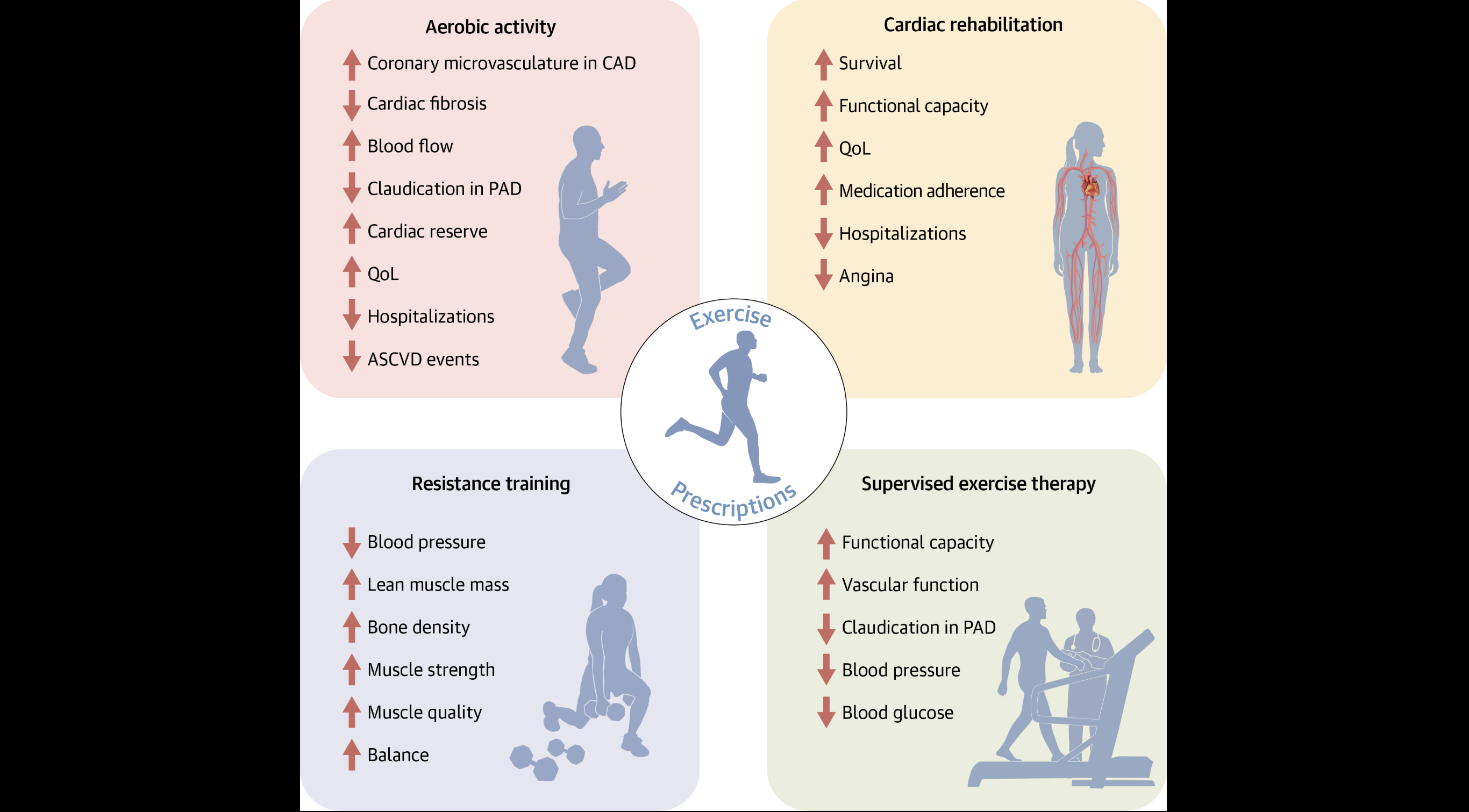
Graphic courtesy of JACC and the American College of Cardiology.
One key takeaway from the new scientific statement was that patients do not necessarily need to take 10,000 steps or more every day to experience the protective benefits of staying active. The updated belief is that approximately 7,000 steps per day can achieve the same benefits for patients. In fact, even 2,000 steps can make a major impact if the patient typically lives a sedentary lifestyle that involves little to no movement at all.
The statement notes that exercise prescriptions should be individualized based on each individual patient’s cardiovascular health, functional capacity, symptoms and treatment goals. Personal preferences should also play a role, because patients will be much more likely to carry through with a plan if they at least somewhat enjoy the experience.
The authors also noted that most asymptomatic or clinically stable patients do not need to undergo routine exercise testing before they start exercising. It can, however, provide valuable information when clinically appropriate.
“Exercise is one of the most effective therapies available for preventing and managing CVD, yet it remains underutilized in routine care,” Myers added. “This statement provides clinicians with practical tools to help patients safely incorporate exercise into their treatment plans and improve long-term cardiovascular health.”
How different exercise types will benefit patients
The new scientific statement also explores the many benefits associated with each category of exercise. Aerobic activity, for example, increases blood flow and quality of life while reducing the risks of hospitalization and atherosclerotic cardiovascular disease. Cardiac rehab, meanwhile, has been associated with improved survival, functional capacity, quality of life and medication adherence while reducing the risks of hospitalization and angina. In addition, resistance training is linked to improvements in blood pressure, muscle mass, bone density, muscle strength, muscle quality and balance. Finally, supervised exercise therapy is great for vascular function as well as reducing blood pressure and blood glucose levels.
Click here to read the full scientific statement in JACC.

Michael has more than 19 years of experience as a professional writer and editor. He has written at length about cardiology, radiology, artificial intelligence and other key healthcare topics.