
AliveCor device nearly doubles arrhythmia detection compared to traditional ambulatory monitoring
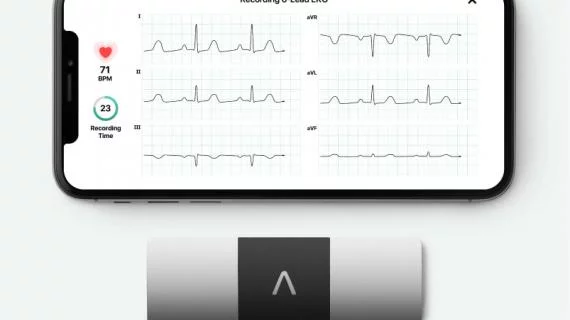
A new prospective study showed that the 30-day use of a handheld KardiaMobile 6L (KM6L) ECG device outperformed traditional short-duration ambulatory ECG monitoring alone, nearly doubling the number of clinically significant arrhythmias found. The study was published in published in JACC Advances.[1]
Researchers at the University of Rochester Clinical Cardiovascular Research Center found that clinically significant arrhythmias were detected in 66 patients (18.9%) overall across both monitoring types. Traditional ambulatory monitors identified arrhythmias in only 27 patients (7.7%), but the KM6L device detected arrhythmias in 52 patients (14.9%).
"The study showed that the KM6L handheld device enabled patient-initiated ECG recordings with 88% of participants—across a broad range of ages and with two-thirds being women—evaluating the device as easy to use," Wojciech Zareba, MD, PhD, of the Clinical Cardiovascular Research Center at the University of Rochester, said in a statement. "Symptom-triggered ECG recordings obtained over 30 days were superior to standard 24- or 48-hour Holter recordings and to prolonged multi-day recordings in detecting clinically significant arrhythmias. KM6L might be considered as the first line of diagnostic process in individuals with uncertain causes of cardiac symptoms."
The study included 350 adults who presented with unexplained heart palpitations, dizziness or lightheadedness. They were concurrently tracked using both a physician-ordered standard ambulatory monitor (24/48-hour Holter or an extended patch ECG monitor) and a KM6L device for 30 days.
There were 39 arrhythmia episodes (11.1%) that were captured only on the KM6L device and completely missed by conventional continuous monitoring options. In an exploratory analysis of patients wearing extended patch-type ECG monitors for seven days or longer, the patch devices only found 9.8% of patients (9 out of 93), but the KM6L device detected arrhythmias in 23.9% (22 out of 93).

Dave Fornell has covered healthcare for more than 17 years, with a focus in cardiology and radiology. Fornell is a 5-time winner of a Jesse H. Neal Award, the most prestigious editorial honors in the field of specialized journalism. The wins included best technical content, best use of social media and best COVID-19 coverage. Fornell was also a three-time Neal finalist for best range of work by a single author. He produces more than 100 editorial videos each year, most of them interviews with key opinion leaders in medicine. He also writes technical articles, covers key trends, conducts video hospital site visits, and is very involved with social media. E-mail: [email protected]