
FDA-approved PFA system linked to positive 1-year data, ‘impeccable’ durability
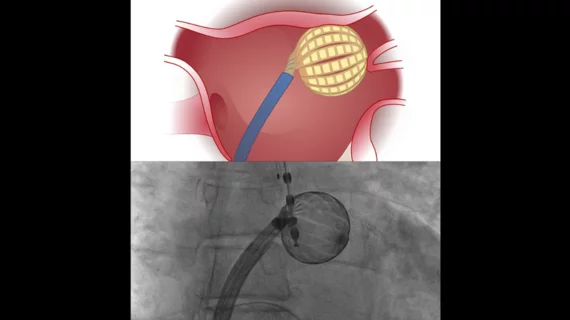
The Globe Pulsed Field System, a new pulsed field ablation (PFA) system from Vancouver-based Kardium, is a safe, effective treatment option for paroxysmal atrial fibrillation (AFib), according to new findings published in the Journal of the American College of Cardiology (JACC).[1]
The Globe Pulsed Field System, which gained U.S. Food and Drug Administration (FDA) approval in September 2025, is capable of both high-density mapping and PFA. It features a 122-electrode spherical array designed to deliver single-shot pulmonary vein isolation (PVI).
Reviewing 1-year data from PULSAR
The FDA’s decision to approve this technology was largely based on results from the Kardium-funded PULSAR clinical trial. One-year data from PULSAR is now available in full.
The study’s authors tracked 183 patients with a mean age of 65 years old. The primary effectiveness endpoint—freedom from atrial arrhythmias or other failure modes for one year—was seen in 77.8% of patients. The primary safety event rate, meanwhile, was 0.6% due to a single stroke in a patient with severe hypertension and polycystic kidney disease. There were no device-related primary safety events.
Another key takeaway from PULSAR was the fact that PVI durability rates were quite high. PVI durability is sometimes a significant issue with PFA, but these one-year results suggest cardiologists using the Globe Pulsed Field System may have better luck with avoiding the need for redo procedures. The authors did warn that more research is still needed to determine if this durability will remain outside of a pivotal study made up of high-volume operators.
“The Globe Pulsed Field System has the potential to transform how we treat AFib by delivering durable pulmonary vein isolation with remarkable efficiency and safety,” said Vivek Reddy, MD, PULSAR principal investigator and a prominent electrophysiologist from Mount Sinai Fuster Heart Hospital, said in a statement. “These results show that this technology can make a real difference for patients, offering them better outcomes and a safer path to long‑term relief from arrhythmias.”
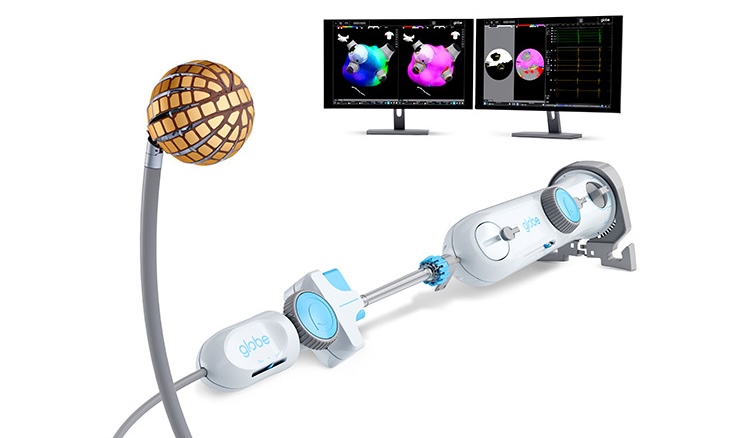
Image courtesy of Kardium.
“The publication of the PULSAR pivotal trial results in JACC is a tremendous validation of the safety, efficacy and efficiency of the Globe System” added Kevin Chaplin, CEO of Kardium. “At Kardium, we are committed to delivering the most advanced system for the treatment of AFib.”
Read the full analysis here.
An outside perspective on Kardium’s PFA technology
Two electrophysiologists out of Germany—Boris Schmidt, MD, and K.R. Julian Chun, MD, both of Cardioangiologisches Centrum Bethanien in Frankfurt—wrote an editorial that accompanied the one-year PULSAR data.[2] Schmidt and Chun did not participate in the trial and have no connection to Kardium, providing readers with an outside perspective of this new technology.
Overall, Schmidt and Chun celebrated the “remarkable” one-year outcomes of this study. They pointed to the “favorable safety profile” and the “impeccable” PVI durability rates.
The two co-authors did note that the Globe Pulsed Field System almost appears to be “overengineered” at first due to its advanced features. However, they highlighted the technology’s potential to provide additional value not seen with other PFA systems.
“The most innovative potential of the global array lies in the capability to simultaneously record intracardiac electrograms from 122 distinct electrodes,” they wrote. “This will allow us to improve our understanding of electrical phenomena present during atrial fibrillation and may help to identify drivers, rotors, and other arrhythmogenic sources. Thus, it may be a unique mapping and ablation solution for patients with persistent AFib or with AFib independently from the pulmonary veins.”
The co-authors concluded by looking ahead, saying only time will tell whether this is “just another single-shot ablation tool, or if these sophisticated features will add substantial benefit.”
Click here to read their full editorial.

Michael has more than 19 years of experience as a professional writer and editor. He has written at length about cardiology, radiology, artificial intelligence and other key healthcare topics.