
Safety update: New recommendations for managing patients with high-risk defibrillation leads
The Heart Rhythm Society (HRS) has published additional details to help its member manage an ongoing safety concern with hundreds of thousands of Boston Scientific defibrillation leads.
While a previous guidance addressed leads paired with Boston Scientific’s own implantable cardioverter defibrillator (ICD) generators, this update also covers leads paired with generators from other medtech vendors.
Boston Scientific’s initial warning
In July 2025, Boston Scientific warned healthcare providers about a risk of rising low-voltage shock impedance (LVSI) with certain single- and double-coil Reliance defibrillation leads coated with expanded polytetrafluoroethylene (ePTFE). The issue, seemingly caused by calcification, can make these devices less effective over time and even lead to failed shock therapies.
Some patients may require early lead replacement, the company announced, and adverse events are possible in more extreme scenarios.
Boston Scientific estimated that more than 350,000 devices potentially impacted by this issue could still be in service. This includes dozens of different models of the company’s Endotak Reliance, Reliance 4-SiteFront and Reliance 4-Front defibrillation leads.
Updated management recommendations from HRS experts
At the time, HRS responded with a thorough analysis of the situation. Because that initial advisory only focused on Boston Scientific ICD generators, the group spent several months on an update covering “mixed systems” that pair Boston Scientific defibrillation leads with ICD generators manufactured by Medtronic, Abbott or Biotronik.
The updated recommendations from HRS, first published Feb. 3, examine the issue with more detail than before.
“Elevated or out-of-range LVSI and/or high-voltage shock impedance (HVSI) measurements may reduce shock efficacy,” according to the update. “If HVSI exceeds 145Ω, BSC ICD generators limit shock duration of the first shock phase to 20ms. In this context truncation of the biphasic waveform might occur, leading to delivery of a monophasic shock and a potential reduction in shock efficacy. A high delivered shock impedance alert (Code-1005) is observed on device check after these shock instances.”
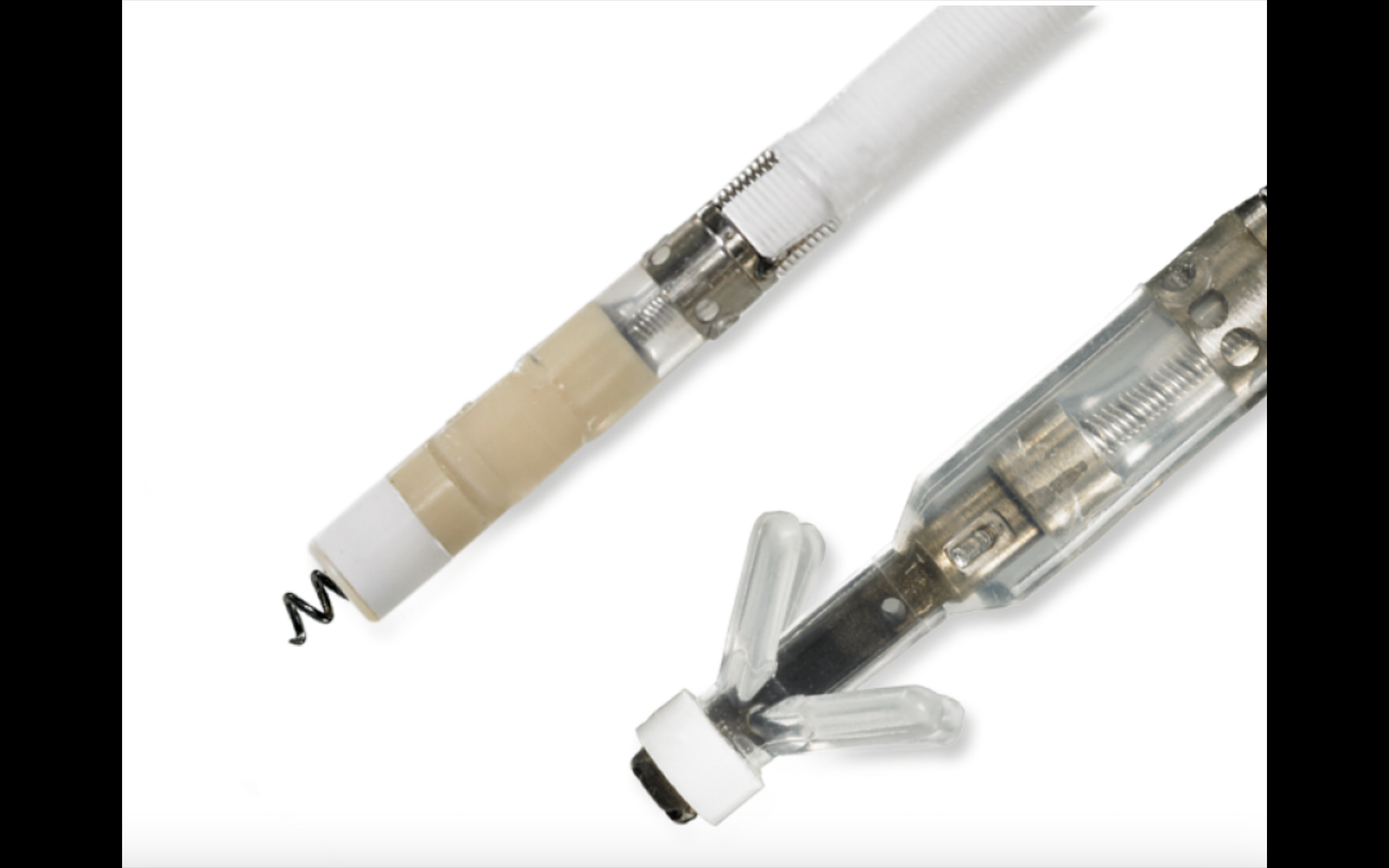
Boston Scientific's Reliance 4-Front defibrillation leads.
The group also noted that the sensing and pacing performance of these leads is not thought to be impacted.
“For leads with LVSI < 150 ohms programmed in initial polarity, first appropriate shock success rates remain quite high and are consistent with historical controls,” they wrote.
HRS emphasized that the recommended follow-up schedule for patients with these devices has not changed. During routine follow-up appointments, however, it may be determined that a replacement is necessary. To learn more about each patient, care teams should identify the most recent 28-day average of LSVI that was not influenced by the delivery of shock in addition to reviewing HVSI data for all shocks from the most recent episode.
The group noted that problems may arise that are completely unrelated to this specific issue. Providers will need to work together to determine the best course of action.
Medtronic ICD generators
Medtronic’s ICD generators are built differently enough—they have a lower tilt, for example—that there should be no increased risk of Code-1005 alerts. Medtronic representatives also told HRS that shock therapy success rates appear to be the same for mixed systems using Medtronic generators, but that finding is “considered non-definitive.” For that reason, care teams should still treat the issue seriously and follow all HRS recommendations when ePTFE lead replacement may be necessary.
Abbott ICD generators
Abbott representatives have also indicated their ICD generators should not be at risk of Code-1005 alerts. They have recommended “no change” in shock polarity. Replacement may still be necessary; users should consult the full HRS recommendations for more specific details.
Biotronik ICD generators
Biotronik’s ICD generators are similar in design to the Boston Scientific's. The HRS recommendations highlight the similarities and tell users which settings they specific settings they need to know.
“In the event of a failed shock due to a Shockphase timeout, detailed episode information and a clinical event message is generated and available on the programmer and uploaded to the Home Monitoring Service Center,” HRS warned. “Unlike Boston Scientific systems, a specific alert code (Code-1005) is not generated in the Biotronik system.”
Additional information
Click here for much more detail. HRS worked with the European Heart Rhythm Association, U.S. Food and Drug Administration and several other stakeholders to craft this update.

Michael has more than 19 years of experience as a professional writer and editor. He has written at length about cardiology, radiology, artificial intelligence and other key healthcare topics.