
Mavacamten fails to boost outcomes for patients with nonobstructive HCM

Mavacamten is not associated with any significant benefits for patients presenting with symptomatic nonobstructive hypertrophic cardiomyopathy (HCM), according to a new analysis published in The New England Journal of Medicine.[1]
Mavacamten, sold by Bristol Myers Squibb under the name Camzyos, was approved by the U.S. Food and Drug Administration (FDA) in 2022 for the treatment of symptomatic obstructive HCM. No drugs are currently approved by the FDA for nonobstructive HCM.
“There is an unmet medical need for safe and more-effective treatments for patients with symptomatic nonobstructive HCM that increase functional capacity, reduce symptoms and improve quality of life,” wrote first author Milind Y. Desai, MD, a cardiologist with the Hypertrophic Cardiomyopathy Center at Cleveland Clinic, and colleagues.
For the ODYSSEY-HCM clinical trial, Desai et al. randomly assigned 289 patients to receive mavacamten and another 291 to receive a placebo. Each patient presented to one of 201 HCM referral centers from December 2022 to March 2024. All study participants were diagnosed with nonobstructive HCM, which means they presented with a peak left ventricular outflow tract gradient of less than 30 mm Hg at rest and less than 50 mm Hg with provocation. They also presented New York Heart Association functional class II or III heart failure and a left ventricular ejection fraction of at least 60%. The mean age of the cohort was 56 years old.
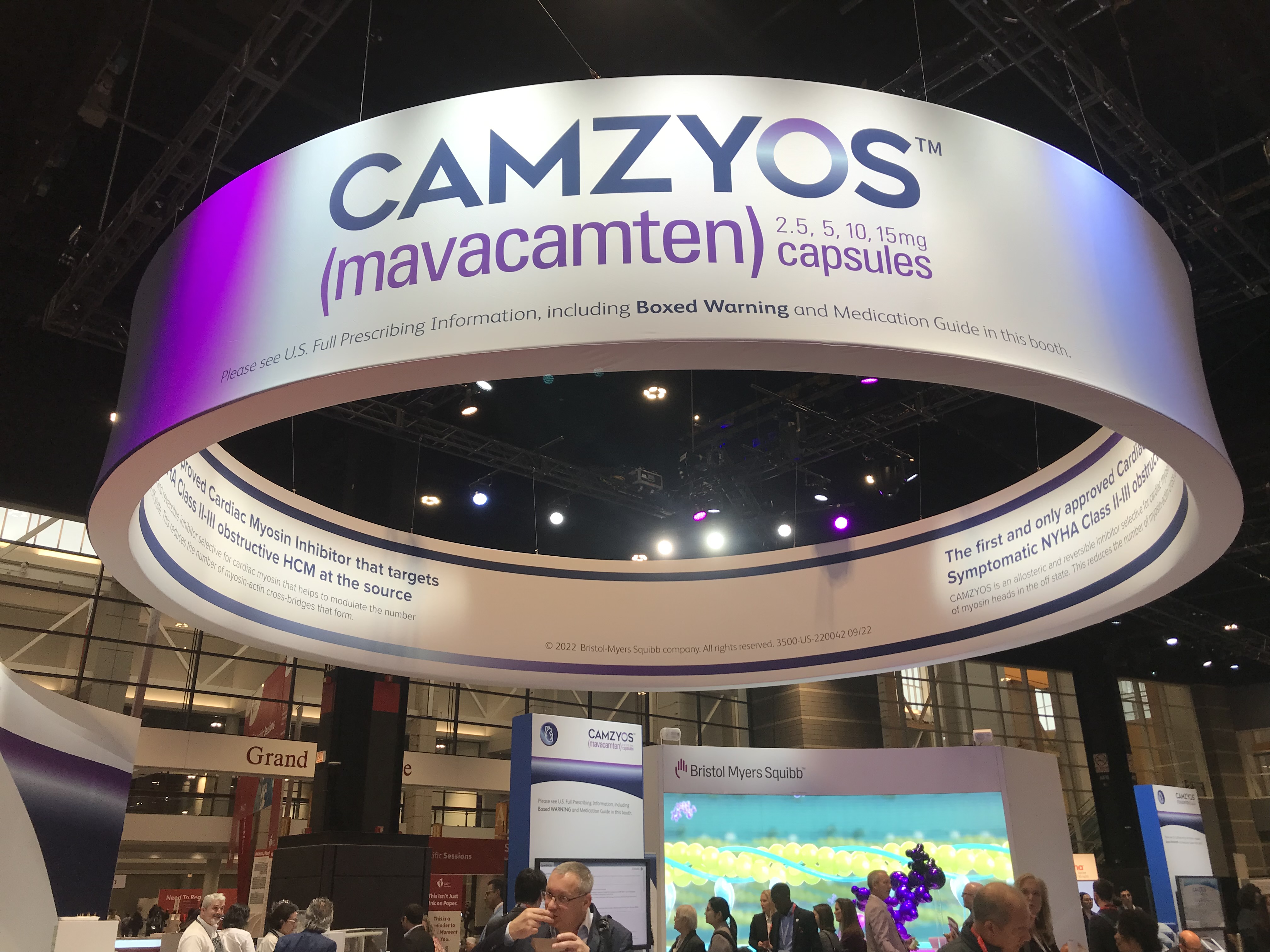
Photo from AHA 2022.
Overall, after 48 weeks, mavacamten failed to outperform the placebo in terms of peak oxygen uptake. In addition, Kansas City Cardiomyopathy Questionnaire clinical summary (KCCQ-CSS) scores showed that mavacamten did not significantly decrease symptoms compared to the placebo.
“The lack of a difference between the mavacamten and placebo groups in peak oxygen uptake or KCCQ-CSS in the current trial differs from what has been reported in previous studies involving patients with obstructive HCM,” the authors wrote. “This difference in study findings suggests that dynamic left ventricular outflow tract obstruction may have a greater effect on exercise capacity and patient-reported health status in patients with obstructive HCM than in patients with nonobstructive HCM. In patients with nonobstructive HCM without left ventricular outflow obstruction, the plausible dominant contributors to symptoms and impaired exercise capacity are the presence of subendocardial ischemia, diastolic dysfunction, left ventricular noncompliance and aberrant cellular energetics. In that context, cardiac myosin inhibitors may have a limited effect on improving hemodynamics or energy efficiency, thereby reducing the likelihood of clinically meaningful improvements in exercise capacity or patient-reported health status.”
This research was funded by Bristol Myers Squibb. Click here to read the full analysis.

Michael has more than 19 years of experience as a professional writer and editor. He has written at length about cardiology, radiology, artificial intelligence and other key healthcare topics.