
ASE leading push to revise CPT code for interventional echocardiography
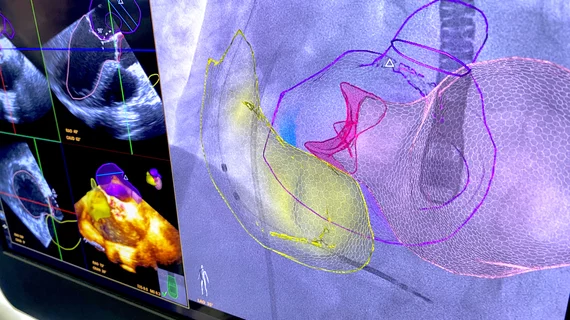
The American Society of Echocardiography (ASE) is working on a proposal to create new CPT coding structure for interventional echocardiography during structural heart procedures.
CPT code 93355 is used to report transesophageal echo (TEE) services during transcatheter intra-cardiac therapies. It is used for diagnostic TEE and ongoing manipulation of the TEE transducer to guide sizing and/or placement of implants, determination of adequacy of the intervention and assessment for potential complications. But ASE said the code is used more like a catch-all that covers a variety of TEE uses and procedures.
There has been rapid a growth in the use of this code in recent years, which corresponds to a rise in the usage of interventional echo, used to guide transcatheter aortic valve replacement (TAVR) and left atrial appendage occlusion (LAAO) procedures. TAVR cases alone went from zero percent of aortic valve replacements prior to its approval in 2012 to more than 84% by 2023. TAVR usage has also seen rapid increases in recent years with low-surgical risk patient trials showing outcomes as good as surgery, which has opened the door to younger patients now seeking the less invasive procedure.
There are concerns the Centers for Medicare and Medicaid Services (CMS) may have concerns about the rapid growth in this one code, but there are larger issues in echocardiography on the need for more specific coding.
"There is a single CPT code for the interventional echos and it is applied across multiple interventional procedure codes. So we have one code for everything, where as our interventional colleagues have a code for TAVR, a code for mitral TEER, a code for tricuspid TEER. CMS looks at this and says, 'oh my god, there has been an explosion of imaging,' because it is all under one code," ASE President David H. Wiener, MD, director of clinical operations at the Jefferson Heart Institute and a clinical professor of medicine at Thomas Jefferson University, told Cardiovascular Business.
The American Medical Association (AMA), which creates and monitors usage of CPT codes, periodically reviews its CPT codes through its Specialty Society Relative Value Scale (RVS) Update Committee (RUC), which ASE has an advisor to. ASE is now working on a proposal for new interventional echo coding structures to better reflect the work done in the field.
CPT code 93355 was created in 2015 for medically necessary situations. It was being used for TAVR and LAAO procedures by 2017. Prior to this, hospitals performing these procedures had to eat the cost of the interventional echocardiographer, because there was no reimbursement. While the CPT code helped offset these costs, ASE said it does not cover all of the costs in terms of time and having an echocardiographer tied up in one procedure that can take several hours. There has been interest in working on a new code for some time to help correct this, especially as echocardiographers are now increasingly needed to guide even more mitral and tricuspid transcatheter procedures.
"It's a big problem, because the number of RVUs according to the interventional echocardiographer TEE code are fairly small. Institutions look very closely at RVU production and sometimes it is hard to convince them this is a good value proposition when you are only earning a handful of RVUs for someone spending half a day in the cath lab doing a case, which cannot be done without them. So it is a very thorny issue," Wiener explained.
ASE has plans to work through this process over the next year. The AMA RUC process would require a RUC survey that would ask interventional echocardiographers detailed questions on what is entailed in delivery of services. If the AMA process moves ahead and these surveys are sent, ASE said it would be extremely important for providers to fill these surveys out electronically and return them quickly. The relative value units are calculated based on these surveys and if few are filed, the pay is based on inadequate data.
ASE will coordinate on this issue with the American College of Cardiology, Society for Cardiovascular Angiography and Interventions, American Society of Anesthesiologists (ASA) and other medical societies on the new code revisions to ensure any changes incorporate their feedback.

Dave Fornell has covered healthcare for more than 17 years, with a focus in cardiology and radiology. Fornell is a 5-time winner of a Jesse H. Neal Award, the most prestigious editorial honors in the field of specialized journalism. The wins included best technical content, best use of social media and best COVID-19 coverage. Fornell was also a three-time Neal finalist for best range of work by a single author. He produces more than 100 editorial videos each year, most of them interviews with key opinion leaders in medicine. He also writes technical articles, covers key trends, conducts video hospital site visits, and is very involved with social media. E-mail: [email protected]