
First-in-human data highlight IVL’s potential to treat more challenging lesions

The continued success of Shockwave Medical, now a part of Johnson & Johnson MedTech, has helped make intravascular lithotripsy (IVL) one of the most in-demand technologies in healthcare. At TCT 2025 in San Francisco, for example, several clinical trials either explored IVL’s potential or compared it to other therapies cardiologists may want to use in the cath lab.
New first-in-human data is now available from both Shockwave Medical and another vendor in the increasingly competitive IVL space, FastWave Medical. In both cases, the data foreshadow positive things for these companies.
Early data on Shockwave Medical’s Coronary IVL Catheter
Shockwave Medical’s Javelin Coronary IVL Catheter appears to be a safe and effective treatment option for patients with highly complex, difficult-to-cross lesions, according to first-in-human data published in JACC: Cardiovascular Interventions.[1]
These initial data came from 20 patients with a mean age of 71.2 years old. Patients presented with de novo, angiographically moderate-to-severely calcified lesions with more than 90% stenosis from May 2023 to April 2025. Target vessels were in the right coronary artery for 50% of patients, left anterior descending coronary artery for 45% of patients and left circumflex coronary artery for the remaining 5% of patients. There were 11 chronic total occlusions. The mean lesion length was 41.6 mm.
Overall, the Javelin Coronary IVL Catheter—which features a single IVL emitter adjacent to the distal tip instead of a conventional balloon—was associated with a procedural success rate of 90%. The primary safety endpoint was achieved in 90% of cases, with the only adverse events being two periprocedural non-Q-wave myocardial infarctions. For 65% of patients, the Javelin Coronary IVL Catheter was the only device required for successful crossing and sufficient modification. For the other 35%, an additional balloon-based IVL device was also required. One patient did require bailout atherectomy.
“This study included a highly complex lesion subset with heavy calcification and very severe stenoses, with the majority of lesions involving chronic total occlusions,” wrote senior author James S. Spratt, MD, with St. George’s University Hospitals NHS Foundation Trust, and colleagues. “The novel Javelin IVL catheter offers a simpler, precrossing modification approach and demonstrated acceptable safety and efficacy in this early experience.”
Additional research is already underway as part of the FORWARD CAD study, as Shockwave Medical announced back in April.
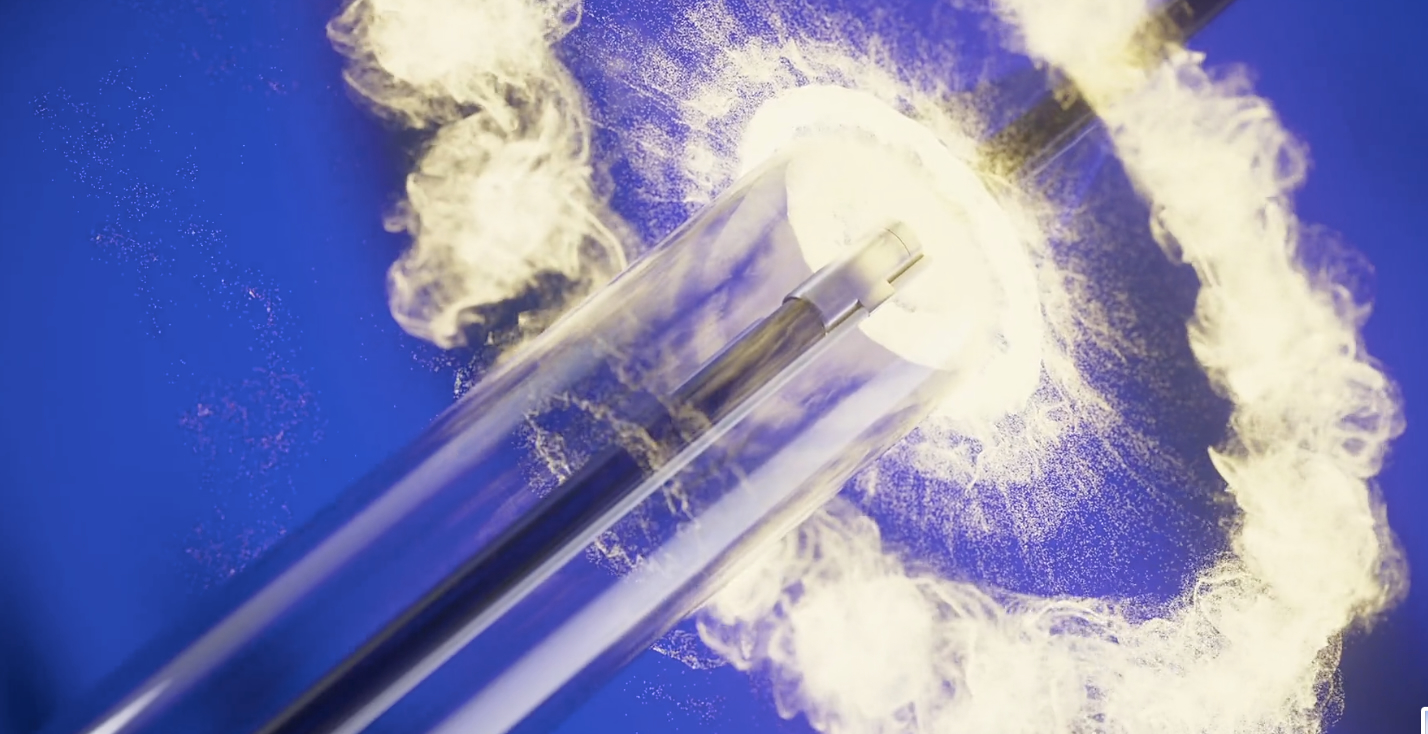
New data on next-generation IVL system presented at TCT 2025
FastWave Medical’s Sola Coronary Laser IVL (L-IVL) System, which uses laser energy to target and fracture calcified lesions, is associated with positive safety and efficacy data, according to new findings presented at TCT 2025.
The first-in-human data covered nine patients treated with the technology. All procedures were a success, and each patient was free from major adverse cardiac events after 30 days. FastWave Medical previously reported the completion of these early procedures in June.
“The Sola system demonstrated consistent and effective calcium modification across a range of challenging coronary lesions,” co-author Arthur Lee, MD, director of vascular services at The Cardiac & Vascular Institute (TCAVI) and a consultant to FastWave Medical, said in a statement. “These early results show the potential for FastWave's laser-based IVL to deliver precise, controllable energy while maintaining the safety and simplicity physicians value in existing IVL platforms.”
FastWave Medical has made the TCT presentation available online. Click here to view the slides.

Michael has more than 19 years of experience as a professional writer and editor. He has written at length about cardiology, radiology, artificial intelligence and other key healthcare topics.