
Interventional cardiologists implant new-look heart device for first time in US
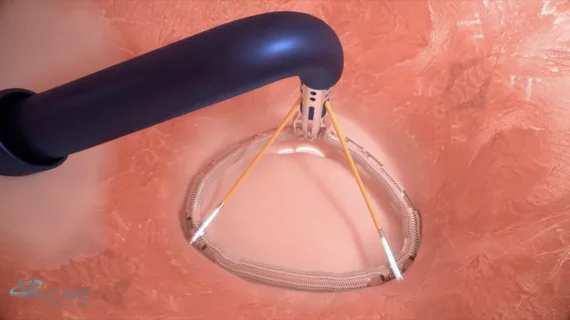
A care team at Banner – University Medical Center Phoenix has made a bit of history, implanting a new mitral valve repair device for the first time in the United States. Interventional cardiologist Paul Sorajja, MD, led the way, implanting Valcare Medical’s Amend Transseptal System in a patient with mitral regurgitation (MR).
The Amend device has a closed ring shape designed to mimic the annuloplasty rings used to treat MR during open-heart surgeries. It was built to work on its own or in tandem with other interventional therapies.
The device has not yet been approved by the U.S. Food and Drug Administration (FDA), but the agency did sign off on an early feasibility study (EFS) back in March 2025. The EFS plans to enroll patients with moderate-to-severe or severe functional MR at seven different U.S. facilities.
“For many patients living with a leaky heart valve, the thought of open-heart surgery can be overwhelming or simply not an option due to age or other health conditions,” Sorajja said in a Banner Health statement. “This new procedure offers a minimally invasive alternative that could help patients get back to living their lives with less pain, faster recovery, and better outcomes.”
These first patients treated with the device will be followed for a total of five years, following up with researchers at predetermined times to ensure the device remains safe and effective.
“We're proud to be at the forefront of cardiac care, working to ensure that no patient has to choose between living with debilitating symptoms or facing major surgery,” Sorajja said.
Why the Amend Transseptal System stands out compared to other TMVr devices
According to Sorajja, this new offering from Valcare Medical offers care teams value they can’t get from other devices developed for mitral transcatheter edge-to-edge repair.
“The Amend ring is different from other interventional treatment options for mitral valve repair in a number of ways,” he told Cardiovascular Business. “First, it is the first annuloplasty ring that is the same shape as what is implanted at the time of open cardiac surgery, but this device is implanted through a tiny incision through the groin. The Amend ring enables future options because one can do valve-in-ring therapy, edge-to-edge repair or even percutaneous chordal repair through the ring should the patient have residual or recurrent MR that needs treatment. The Amend ring both treats MR and also preserves treatment flexibility as an initial platform. Importantly, that platform is not associated with stenosis as its main method of action is reducing the anterior posterior diameter.”

Michael has more than 19 years of experience as a professional writer and editor. He has written at length about cardiology, radiology, artificial intelligence and other key healthcare topics.