
Medicare now covers renal denervation for patients with uncontrolled hypertension

The U.S. Centers for Medicare and Medicaid Services (CMS) has finalized its decision to provide Medicare coverage on a national level for the use of renal denervation (RDN) in patients with uncontrolled hypertension. The policy update, first proposed back in July, covers both ultrasound RDN and radiofrequency RDN.
This update from CMS expands the use of RDN to many more patients throughout the United States. While decisions on whether or not to cover RDN were previously made on a case-by-case basis, they will now be consistently covered for all qualifying Medicare patients.
RDN is a minimally invasive procedure that involves using ultrasound or radiofrequency pulses to target certain points in a patient’s renal arteries. One recent analysis suggested approximately 35 million U.S. patients may be eligible for RDN.
The use of RDN for uncontrolled hypertension has already gained significant momentum thanks to Recor Medical's Paradise Ultrasound RDN system and Medtronic’s Symplicity Spyral RDN system both gaining U.S. Food and Drug Administration (FDA) approval in 2023. Other medtech companies are currently developing their own RDN technologies.
Medtronic officially requested a national coverage determination for RDN in 2024. To make its decision, CMS reviewed a variety of clinical trials focused on the safety and efficacy of RDN in patients with uncontrolled hypertension. The agency was clearly impressed with what it found.
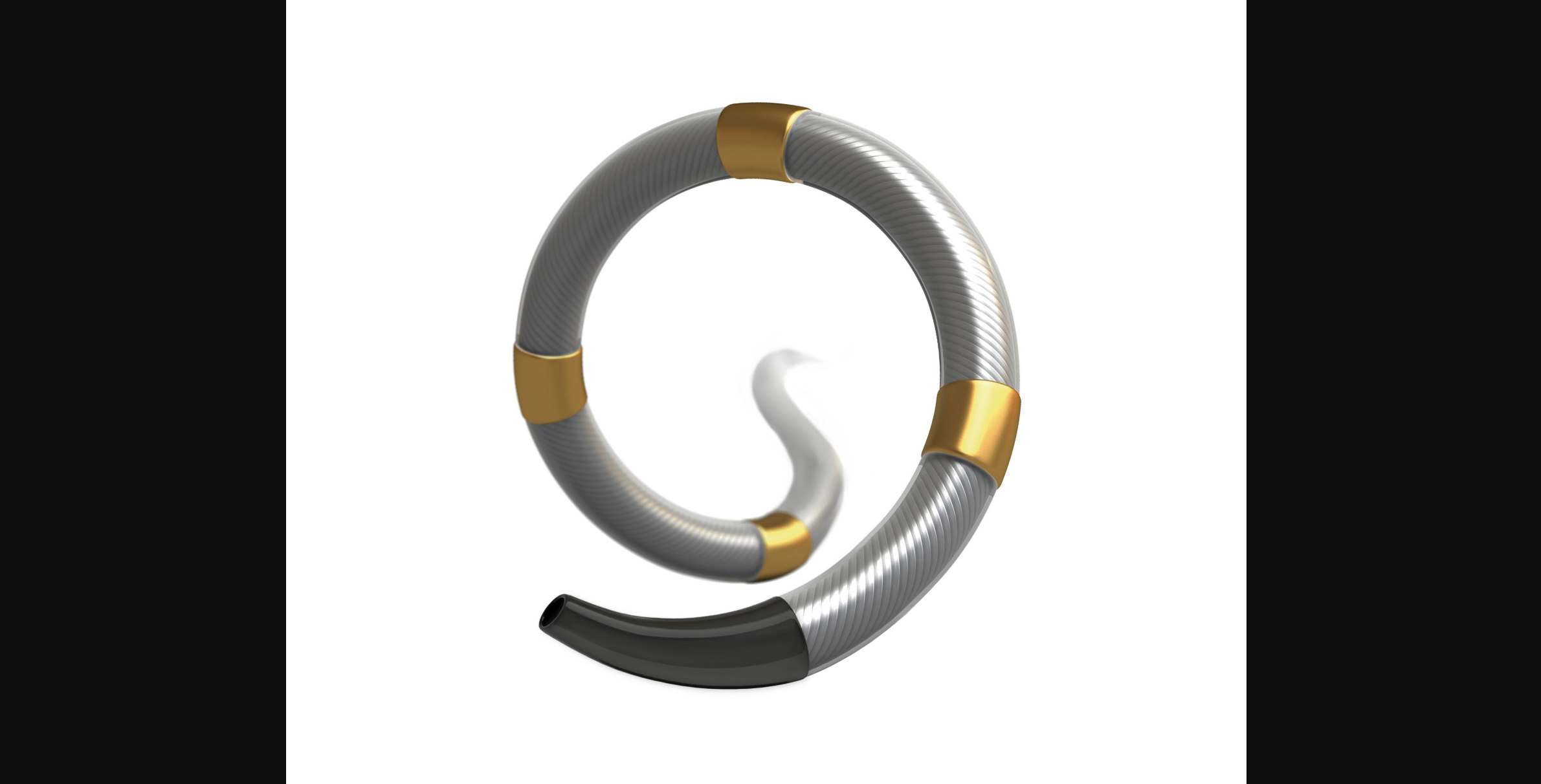
Symplicity Spyral image courtesy of Medtronic.
“Collectively, these trials demonstrate that second-generation RDN devices are effective for lowering blood pressure in some, but not all, patients with hypertension, achieving modest reductions comparable to those seen with a single antihypertensive medication,” the agency wrote. “The findings also suggest that RDN is safe, with minimal impact on renal function and consistent efficacy across the studied patient populations and device types. The benefit of these devices is mainly that they function as an ‘always on’ treatment, which is useful for patients who may have difficulty adhering to or have contraindications to medical treatment; they do not appear to produce side effects that challenge some medication options.”
Click here to read the full decision memo from CMS.
Medtech companies welcome the update
Medtronic was quick to issue a statement once the national coverage determination was finalized.
“We are very pleased with the final national coverage determination, which opens up patient access to renal denervation with the Symplicity Spyral RDN system, a safe and durable blood pressure-lowering procedure for patients who have not succeeded with medication or lifestyle changes alone,” said Jason Weidman, senior vice president and president of Medtronic’s coronary and RDN business. “This milestone enables physicians to offer patients more choices when managing hypertension, potentially leading to better outcomes for a population in urgent need of new options. We congratulate CMS and recognize all the work it took to get to this point.”
“This determination represents a significant opportunity to improve care for patients and opens a novel and meaningful market for Medtronic, positioning our renal denervation technology as one of the most exciting growth drivers for the company,” added Skip Kiil, executive vice president and president of Medtronic’s cardiovascular portfolio.
Medtronic emphasized that the Symplicity Spyral RDN technology is already approved for use in nearly 80 countries.
Recor Medical then shared its own statement celebrating the decision.
“By formally recognizing the proven clinical value of renal denervation and extending Medicare coverage, CMS is paving the way for broader, more equitable access to this breakthrough therapy," said Lara Barghout, CEO of Recor Medical. "This decision not only reinforces the robust body of evidence supporting the Paradise uRDN system as a safe and effective adjunctive treatment but also delivers renewed hope to patients striving for better hypertension control and improved cardiovascular health.”
“This CMS coverage decision represents a powerful recognition of the rigorous body of evidence supporting the Paradise uRDN system,” added Helen Reeve-Stoffer, PhD, the company's chief clinical officer. “Years of clinical research have demonstrated the impact of the Paradise uRDN system in lowering blood pressure in patients with uncontrolled hypertension, one of the most persistent challenges in cardiovascular medicine.”

Michael has more than 19 years of experience as a professional writer and editor. He has written at length about cardiology, radiology, artificial intelligence and other key healthcare topics.