
Old age, RBBB help predict when TTVR patients may require a permanent pacemaker
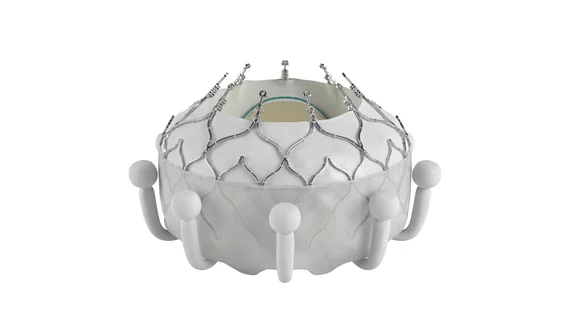
Older patients and those who present with baseline right bundle branch block (RBBB) are more likely to require permanent pacemaker implantation (PPMI) following transcatheter tricuspid valve replacement (TTVR), according to a new analysis published in The American Journal of Cardiology.[1]
“Conduction system damage is not uncommonly seen in other transcatheter valve replacement procedures, such as transcatheter aortic valve replacement (TAVR),” wrote first author Michael Albosta, MD, a cardiology fellow with Mayo Clinic, and colleagues. “At present, little is known regarding what patient or procedure-related characteristics might predict the need for a pacemaker after TTVR.”
Albosta et al. explored data from 78 patients who underwent TTVR with the Evoque device from Edwards Lifesciences at a single facility. Fifty of those patients already had pacemakers at the time of treatment, so they were excluded from this specific study.
Of those remaining 28 patients, a total of 25% ultimately required PPMI. The mean age for patients who required PPMI was significantly higher (84.3 years old) than the mean age of patients who did not require PPMI (76.9 years old). In addition, 71% of patients with RBBB and 24% of patients without RBBB required PPMI after TTVR.
These were the only significant predictors of PPMI identified by the study’s authors.
“In TAVR, RBBB is a well-established predictor of the need for a pacemaker post-procedurally,” the authors wrote. “This is likely due to the proximity of the left bundle to the aortic annulus and membranous septum. During valve implantation, mechanical compression from the implanted valve, as well as procedure-related edema and inflammation, may affect the left bundle, leading to conduction disturbances. In contrast, the tricuspid valve lies in closer proximity to the atrioventricular node, the bundle of His, and right bundle. Therefore, we expected that greater degrees of preexisting conduction system disease (PR/QRS duration, atrioventricular block), as well as left bundle branch block, would be significant predictors of the need for a pacemaker.”
The authors did note that the size of the implanted valve or the degree of oversizing did not appear to influence a patient’s risk of requiring PPMI.
“Moving forward, it is worth continuing to evaluate the relationship between valve size and degree of oversizing to determine whether this may predict risk for procedure-related conduction disturbances,” they wrote.
Albosta and colleagues closed by calling for more research on this topic. They also recommended rhythm monitoring—in the inpatient setting and following discharge—to assess patients for the development of RBBB.
Click here to read the full study.

Michael has more than 19 years of experience as a professional writer and editor. He has written at length about cardiology, radiology, artificial intelligence and other key healthcare topics.