
Pascal system from Edwards Lifesciences linked to key benefits after M-TEER, T-TEER

In two separate clinical trials, the Pascal Precision system from Edwards Lifesciences has been linked to positive one-year outcomes for patients with moderate functional mitral regurgitation (FRM) undergoing mitral transcatheter edge-to-edge repair (M-TEER) and patients with severe tricuspid regurgitation (TR) undergoing tricuspid TEER (T-TEER). The findings from both studies were published in EuroIntervention.[1, 2]
In Europe, the Pascal system has received CE mark approval for both T-TEER and M-TEER procedures. In the United States, meanwhile, the technology is approved by the U.S. Food and Drug Administration (FDA) for M-TEER, but not yet T-TEER.
Each of these two international trials focused on one-year outcomes following treatment with the versatile device.
Treating moderate functional mitral regurgitation with M-TEER
The MiCLASP study focused on 101 patients with moderate FMR (grade 2+) at baseline. Researchers wanted to see if this could potentially represent a new patient population for the Pascal system, which is more traditionally used to treat severe symptoms.
“Current clinical guidelines do not recommend M-TEER for patients with moderate FMR, which may reflect an earlier phenotype in the disease spectrum,” wrote first author Philipp Lurz, MD, PhD, a researcher with University Medical Center Mainz in Germany “The MiCLASP study enrolled patients with symptomatic moderate FMR and provided a unique opportunity to evaluate the implications of M-TEER in this population.”
Overall, 89.8% of patients with grade 2+ FMR achieved significant MR reduction that was sustained for the full year. These patients were also linked to “significant improvements” in functional capacity and quality of life. The one-year MAE rate was 13.9%.
“Outcomes from this MiCLASP study subanalysis suggest that select patients with symptomatic moderate baseline FMR can be safely and effectively treated M-TEER. At one year, patients with moderate FMR experienced significant and sustained MR reduction after treatment with the Pascal system.”
Click here for the full analysis.
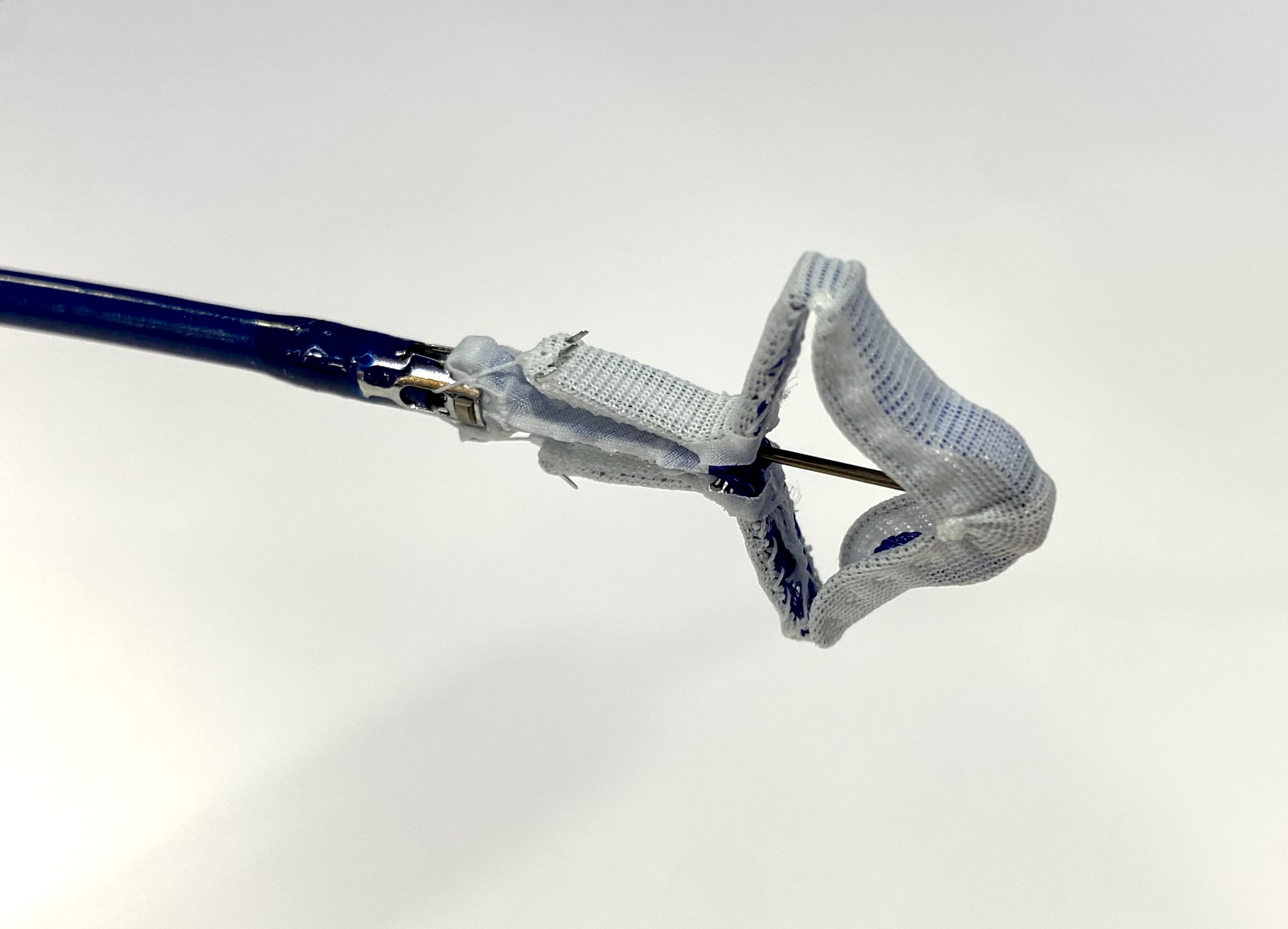
Device image taken during TCT 2024.
Treating tricuspid regurgitation with T-TEER
The TriCLASP study, meanwhile, included 300 patients who underwent T-TEER, also known as transcatheter tricuspid valve repair. The mean patient age was 80.1 years old, 52% were women and 75.8% presented with severe or greater TR.
“Outcomes from post-market and real-world use of T-TEER therapy will help further elucidate its long-term benefits and risks,” wrote first author Stephan Baldus, MD, with the University of Cologne in Germany, and colleagues.
Overall, the study confirmed that treatment was both safe and effective for these patients. The major adverse event (MAE) rates were 1.7% after 30 days and 12.7% after one. Year. TR was reduced to at least moderate in 87.7% of patients.
“Patients also experienced favorable right heart remodeling and significant and sustained clinical improvements in New York Heart Association Class, Kansas City Cardiomyopathy Questionnaire score, and six-minute walk distance,” the authors added.
Click here for the full analysis.
Both of these studies were sponsored by Edwards Lifesciences.

Michael has more than 19 years of experience as a professional writer and editor. He has written at length about cardiology, radiology, artificial intelligence and other key healthcare topics.