
Pioneer cardiologist Amir Lerman remembered as a ‘true giant’ of the specialty
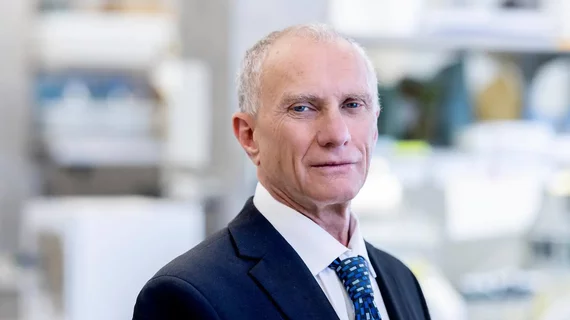
Amir Lerman, MD, a veteran cardiologist with Mayo Clinic, died unexpectedly on Feb. 23. He was 69 years old.
Lerman was known as a leading voice in interventional cardiology, writing nearly 1,000 peer-reviewed publications and holding several leadership positions during his long tenure with Mayo Clinic. He helped found the hospital’s Chest Pain and Coronary Physiology Clinic, for example, and served as the director of its Cardiovascular Research Center at the time of his death. He has also been cited more than 69,000 times, highlighting the critical impact his work had on generations of cardiologists.
Lerman’s research covered a variety of subjects, but he is perhaps best known as a pioneer in the treatment of nonobstructive coronary artery disease (CAD), particularly those with coronary microvascular dysfunction (CMD).
Colleagues share loving tributes
Since the news of his passing was first announced, Lerman has been honored and celebrated by colleagues all over the world.
In European Cardiology Review, for example, Professor Juan-Carlos Kaski, DSc, MD, DM, remembered Lerman as a “pioneer in cardiovascular medicine and a creative thinker whose work in the field of coronary physiology and endothelial function has contributed substantially to the understanding of microvascular angina and its treatment.”[1]
Kaski, a professor with the University of London and consultant cardiologist at St. George’s University Hospitals NHS Trust, also described Lerman as a “charismatic leader.”
“I fondly remember meeting him on several occasions to discuss ways of improving our understanding of diseases affecting the coronary microcirculation,” he wrote. “He was always available to friends and colleagues, ready to listen and provide sound advice, and generously contributed his knowledge and expertise as an editorial board member of European Cardiology Review.”
In JSCAI, meanwhile, Bruce Samuels, MD, a cardiologist with the Smidt Heart Institute at Cedars-Sinai Medical Center, shared his own tribute.[2]
“Our interventional community lost a true giant in February,” Samuels wrote, describing Lerman as a “consummate scholar, teacher, mentor and friend to those who were lucky enough to work with him.”
Samuels also highlighted how gracious and helpful Lerman was when it came to helping other cardiologists get started in the field of cardiology.
“Amir was more than a consummate physician scientist,” he wrote. “He was an incredible teacher, training dozens of fellows who have gone on to work at the highest levels in our field. He was a mentor, helping many of us—myself included—to set up our own programs and letting us know we could reach out for the difficult cases. He was most of all an evangelist, encouraging all of us to push ourselves in the service of these forgotten patients.”
Samuels also pointed to the significant progress clinicians have made in the treatment of nonobstructive CAD. What was once a minor topic among cardiologists has gained considerable momentum in recent years, and Samuels believes Lerman deserves a lot of credit for that trend.
“Amir had his hand in all of these developments, and over the past few years, we laughed about how we had finally moved from the smallest room to the largest stages at the convention center,” he wrote.
Lerman’s colleagues at Mayo Clinic also shared a tribute to the cardiologist’s lasting legacy. Lerman first arrived at Mayo Clinic in 1987 as a resident and went on to call it his home for nearly 40 years.
“Dr. Lerman touched so many lives in so many ways,” Charanjit S. Rihal, MD, an interventional cardiologist with Mayo Clinic, explained. “He fostered innovation through internal grants, AI initiatives, faculty development programs and novel models of philanthropic and corporate partnership. He led his mentees to leadership positions around the world, particularly in his native Israel, encouraging them to keep their focus always on the patients whose lives they could improve.”
In 2024, Lerman was named a Distinguished Mayo Clinic Investigator, the highest honor a Mayo Clinic researcher can receive. Rihal, a member of the Mayo Clinic Board of Trustees, nominated him for that award.
Michael has more than 19 years of experience as a professional writer and editor. He has written at length about cardiology, radiology, artificial intelligence and other key healthcare topics.