
Medtronic studying safety, effectiveness of its self-expanding TAVR valves in patients with moderate AS
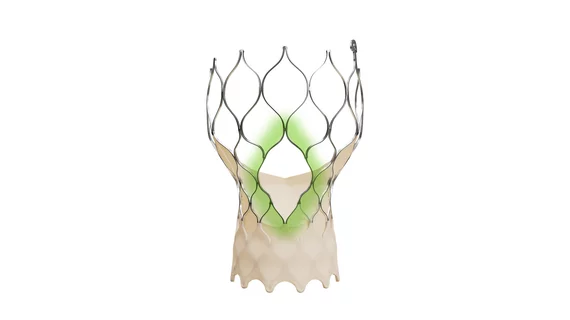
Medtronic has launched a new randomized trial focused on tracking the safety and effectiveness of transcatheter aortic valve replacement (TAVR) with one of the company’s self-expanding transcatheter heart valves (THVs) in patients with moderate aortic stenosis (AS).
The EXPAND TAVR II trial includes nearly 700 patients with moderate AS randomized to either undergo TAVR with a self-expanding, supra-annular Evolut valve in addition to guideline-directed medical therapy (GDMT) or just GDMT alone. The mean patient age is 78.4 years old, and more than 42% are women.
Medtronic presented the design and baseline characteristics of EXPAND TAVR II at TCT 2026 in San Diego. The study was built to evaluate at 30 days and effectiveness at two years. In addition, patients will be followed for up to 10 years to help clinicians learn more about the long-term impact of this strategy. The primary effectiveness endpoint—a composite of all-cause mortality, heart failure hospitalizations and events or medical instability leading to an aortic valve replacement or reintervention—will be evaluated for both treatment groups.
“Moderate aortic stenosis can be accompanied by symptoms and cardiac damage, yet important questions remain about when to intervene,” Paul Sorajja, MD, interventional cardiologist and co-principal investigator of the study, said in a statement. “Understanding the clinical and anatomic characteristics of the EXPAND TAVR II population will provide essential context for interpreting the trial’s future results and determining whether earlier TAVR can improve outcomes in these patients.”
“EXPAND TAVR II is designed to generate rigorous evidence to help clinicians address meaningful gaps in patient care and make informed decisions about when to intervene in moderate aortic stenosis,” added Kendra Grubb, MD, vice president and chief medical officer of Medtronic’s structural heart division. “EXPAND II investigates whether intervening earlier in the progression of aortic stenosis can make a difference for patients at increased risk. The presentation today establishes the foundation by defining who is enrolled and detailing the trial designed to assess safety and effectiveness.”

TAVR for moderate AS? New research part of a bigger ongoing trend
Performing TAVR on patients with moderate AS is a hot topic in cardiology right now. TAVR has traditionally been reserved for patients with symptomatic severe AS, but that all changed in September with the announcement that it would be covered by Medicare for patients with asymptomatic severe AS. Now, researchers have started exploring the potential of treating AS before the symptoms are even severe—and the early data has been encouraging.
In fact, one of the most highly anticipated late-breaking clinical trials at TCT 2026 was PROGRESS, which explored the potential benefits of treating moderate AS with a balloon-expandable Sapien 3 THV from Edwards Lifesciences. The early results from PROGRESS were positive, suggesting that TAVR may be both safe and effective for select patients with moderate AS.
“Moderate AS is not benign,” lead author Philippe Généreux, MD, director of the structural heart program at Atlantic Health Morristown Medical Center, said when he shared the PROGRESS data. “These patients would benefit from earlier referral to a valve clinic for comprehensive evaluation to establish the optimal management strategy. Rather than waiting for progression to severe AS, PROGRESS supports TAVR for patients with moderate AS and at-risk features.”

Michael has more than 19 years of experience as a professional writer and editor. He has written at length about cardiology, radiology, artificial intelligence and other key healthcare topics.